
What you eat for dinner has a more direct effect on your sleep than most people realise. The relationship runs deeper than simply avoiding a heavy curry before bed. The composition of your evening meal, the timing, and even the portion size all influence the hormonal cascade that either eases you into sleep or keeps you staring at the ceiling. Getting this right doesn’t require expensive supplements or a complicated protocol. It requires understanding a few straightforward nutritional principles and applying them with some consistency.
Why dinner shapes your sleep quality
Sleep is not a passive state your body drifts into when it’s tired enough. It’s an active, orchestrated process governed largely by hormones, particularly melatonin and serotonin. Both of these depend on the availability of specific nutrients, many of which come directly from your evening meal. Serotonin, the precursor to melatonin, is synthesised from tryptophan, an amino acid found in food. Without adequate tryptophan crossing the blood-brain barrier, the production chain stalls.
Digestion also plays a direct role. Your body temperature naturally drops as you approach sleep, a process that signals the brain to release melatonin. A large, fat-heavy dinner keeps your digestive system working overtime, raising core body temperature and effectively sending the wrong signal. This is one reason why people who eat late and heavily often describe feeling restless even when they’re genuinely exhausted.
Blood sugar stability matters too. A dinner that causes a sharp glucose spike followed by a rapid drop can trigger stress hormones like cortisol in the early hours of the morning, fragmenting sleep even if the initial falling-asleep process felt fine. The good news is that the same dietary choices that support stable blood sugar also tend to support sleep more broadly.
The best foods for sleep at dinner
Carbohydrates: which kind and why?
Carbohydrates have an interesting and often misunderstood role in sleep. When you eat carbs, insulin is released, which helps clear competing amino acids from the bloodstream, leaving tryptophan a clearer path to the brain. This is partly why a dinner with a moderate portion of complex carbohydrates tends to support better sleep onset than a meal that’s entirely protein-and-fat.
The key word is complex. Wholegrains, sweet potato, brown rice, legumes, and root vegetables release glucose gradually, avoiding the sharp spike-and-crash pattern. Refined carbohydrates (white bread, sugary sauces, processed foods) can trigger that unstable blood sugar cycle mentioned above. A small 2016 study published in the American Journal of Clinical Nutrition found that high glycaemic index meals consumed about four hours before bed reduced the time it took participants to fall asleep, though the researchers noted that the quality of carbohydrate and overall meal composition remained important variables. This suggests a moderate, complex-carb dinner may offer the benefits without the blood sugar downsides.
Protein: which types and how much?
Protein is the source of tryptophan, so it absolutely belongs at dinner. Turkey, chicken, fish (particularly oily fish like salmon or sardines), eggs, dairy, tofu, pumpkin seeds, and chickpeas are all solid sources. The catch is that protein also contains other amino acids that compete with tryptophan for absorption. A very high-protein, low-carb dinner can paradoxically reduce the amount of tryptophan reaching the brain.
A sensible target for most adults is somewhere around 20 to 30 grams of protein at the evening meal, paired with a similar or slightly larger portion of complex carbohydrates. For context, a fillet of salmon (around 150g) provides roughly 30g of protein. Dairy products like Greek yoghurt or warm milk are worth mentioning separately: they contain both tryptophan and calcium, which plays a supporting role in melatonin synthesis. For broader guidance on foods that help you sleep naturally, the picture extends well beyond any single macronutrient.
Fats: limit them or not?
Dietary fat isn’t the enemy at dinner, but quantity and timing matter. Fat slows gastric emptying considerably, meaning a high-fat meal keeps your digestive system active for longer. A small amount of healthy fat (olive oil used in cooking, half an avocado, a handful of nuts) adds flavour and satiety without significantly disrupting the digestive timeline. A large portion of fried food, a creamy pasta dish, or a rich meat casserole is a different story entirely.
Omega-3 fatty acids deserve a specific mention. Found in oily fish, walnuts, flaxseeds, and chia seeds, they have been associated in observational research with longer sleep duration and better sleep efficiency, possibly through their role in serotonin signalling. Including these fats in your diet regularly, not just on one evening, appears to be where the benefit lies.
Key micronutrients for sleep
Magnesium is the one mineral that comes up repeatedly in sleep research, and for good reason. It helps regulate the nervous system, supports the GABA receptors that promote relaxation, and is involved in melatonin production. Good dinner sources include dark leafy greens (spinach, Swiss chard), pumpkin seeds, black beans, whole grains, and dark chocolate (yes, genuinely). Vitamin B6 is also part of the serotonin synthesis pathway, with sources including chicken, fish, potatoes, and bananas.
Tart cherry is worth its own mention. Research has repeatedly shown that Montmorency cherries contain both melatonin precursors and compounds that reduce inflammation, which can interfere with sleep. Whether consumed as a small portion of fruit or as a juice, the evidence is genuinely compelling. There’s a full breakdown of the mechanism and dosing in this piece on tart cherry juice for sleep.
Timing: when to eat dinner for better sleep
The two-to-three hour window before bed is the most consistently recommended interval between dinner and sleep, and there’s a solid physiological rationale. By that point, the main digestive work is largely done, blood sugar has stabilised, and the mild sedative effect of tryptophan conversion can begin to work with the body’s natural melatonin rise rather than against it.
Eating within 90 minutes of bedtime compresses the digestive process in a way that tends to elevate core body temperature and increase the likelihood of acid reflux, both of which disrupt sleep architecture. Very early dinners (before 5:30pm) can work, but only if there’s a small, light snack later that prevents a blood sugar drop in the middle of the night. For those on a later schedule, finishing dinner by 8pm and sleeping around 11pm hits that sweet spot comfortably.
Athletes and those who train in the evening face a genuine tension here. Post-exercise recovery nutrition is important, and the window is real. In these cases, a moderate recovery meal immediately after training, followed by a lighter sleep-focused snack an hour before bed, can thread the needle. A small bowl of oats with a spoonful of almond butter and some warm milk accomplishes both goals without overloading the digestive system.
Ideal portions and balance at dinner
A sleep-friendly dinner doesn’t need to be small. It needs to be appropriately sized and correctly proportioned. A reasonable visual guide is half the plate filled with vegetables (including one or two that provide magnesium or B vitamins), a quarter with complex carbohydrates, and a quarter with lean or tryptophan-rich protein. A small amount of healthy fat is used in preparation.
Going to bed hungry is just as disruptive as going to bed overfull. When blood sugar drops too low overnight, the body releases adrenaline and cortisol to compensate, which is precisely the kind of hormonal environment that leads to 3am wakefulness. If dinner feels genuinely insufficient, a small pre-bed snack of a banana with a few walnut halves, or a small bowl of warm oat porridge, can stabilise blood sugar without placing a heavy digestive load on the body.
Example sleep-friendly dinner menus
Translating nutritional principles into actual meals is where things become practical. The following examples aren’t rigid prescriptions. They’re illustrations of how the principles above come together in different dietary contexts.
Sample menus for different profiles
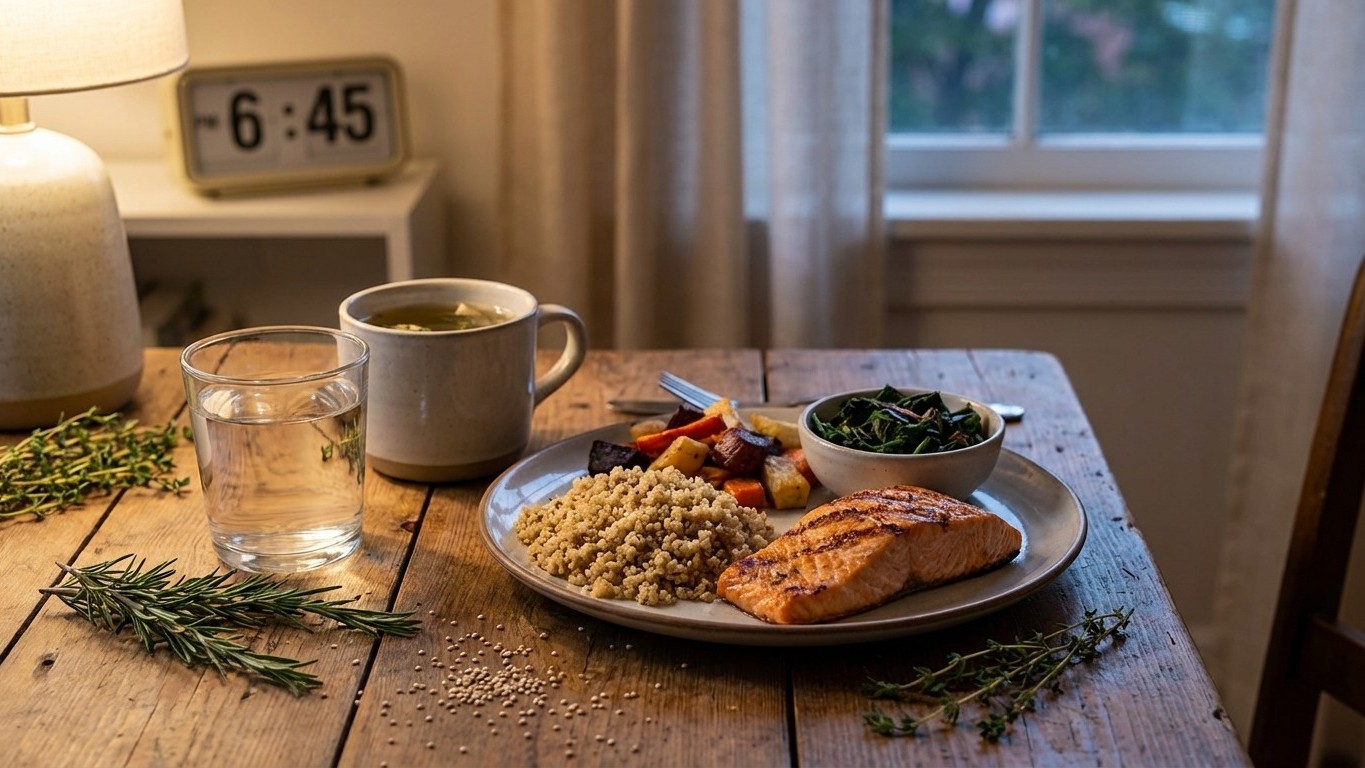
For a standard omnivore dinner, a fillet of baked salmon with a portion of brown rice and a large serving of wilted spinach with garlic covers tryptophan, omega-3s, magnesium, and complex carbohydrates in one plate. Simple and genuinely effective.
A vegetarian option might be a lentil and sweet potato dhal served with wholegrain flatbread and a small dollop of natural yoghurt. Lentils provide both protein and B vitamins; sweet potato delivers complex carbs and potassium; yoghurt adds tryptophan and calcium. For those avoiding gluten, replacing the flatbread with a portion of quinoa or steamed rice works seamlessly.
Seniors, who often experience earlier melatonin secretion and more fragmented sleep, can benefit from slightly smaller portions and a greater emphasis on easily digestible proteins (fish, eggs, soft legumes) to reduce the digestive burden. A warm soup made with chicken, chickpeas, and root vegetables achieves this without sacrificing nutritional density.
For those exploring other evening beverages to complement their meal, there’s useful detail in this guide on what to drink to sleep better naturally, covering everything from herbal teas to warm milk options.
Foods and habits to avoid at dinner
The most common disruptive choices at dinner aren’t always obvious. Alcohol is perhaps the biggest misconception: it may help you fall asleep faster but consistently reduces REM sleep and leads to more fragmented rest in the second half of the night. A glass of wine with dinner occasionally is unlikely to cause major harm, but using it as a sleep aid reliably backfires.
High-fat, high-protein meals (think a large steak with cream sauce and fried potatoes) create a prolonged digestive demand that elevates core temperature and pushes peak digestion into the sleep window. Spicy food, particularly chilli-based dishes, can raise body temperature and trigger reflux in susceptible individuals. Caffeine is well understood, but it’s worth noting that it hides in places people don’t always expect: dark chocolate in large quantities, some herbal teas marketed as “digestif,” and certain energy or sports drinks.
Skipping dinner entirely in favour of intermittent fasting is a choice some people make deliberately, but it’s worth understanding the trade-off. On low-calorie or fasted evenings, tryptophan availability drops and blood sugar tends to become less stable overnight, both of which can compromise sleep quality. If evening fasting is part of your pattern, ensuring that earlier meals contain adequate tryptophan and magnesium sources goes some way to compensating.
FAQ: common questions and misconceptions
Does eating carbohydrates at night cause weight gain? The evidence doesn’t support the idea that carbohydrates eaten at night are inherently more fattening. Total daily intake and quality of food matter far more than timing. Complex carbs at dinner, in sensible portions, support sleep without adversely affecting body composition for most people.
Can you eat too little at dinner and still sleep well? Yes, this is a genuine issue. A dinner that’s too light leaves blood sugar vulnerable to overnight drops, which triggers cortisol release. The right quantity depends on your overall daily intake, activity level, and metabolic needs, but consistently under-eating at dinner is a surprisingly common cause of early-morning waking.
Are there specific foods that act as natural sleep aids? Rather than a single magic ingredient, it’s the pattern that works. Tryptophan-rich proteins paired with complex carbohydrates, in a meal that includes magnesium-rich vegetables and moderate fat, consistently provides the best nutritional environment for sleep. Tart cherry, warm milk, and oats are among the individual foods with the strongest evidence base. A wider exploration of the topic is covered in this comprehensive guide to natural sleep remedies.
Sleep nutrition is one of those areas where small, consistent changes compound meaningfully over time. A dinner that prioritises the right macronutrient balance, eaten at a reasonable hour and in a sensible portion, won’t transform your sleep overnight. But done regularly, it removes friction from a process that should be natural, and gives your body the raw materials it needs to do what it’s designed to do.