
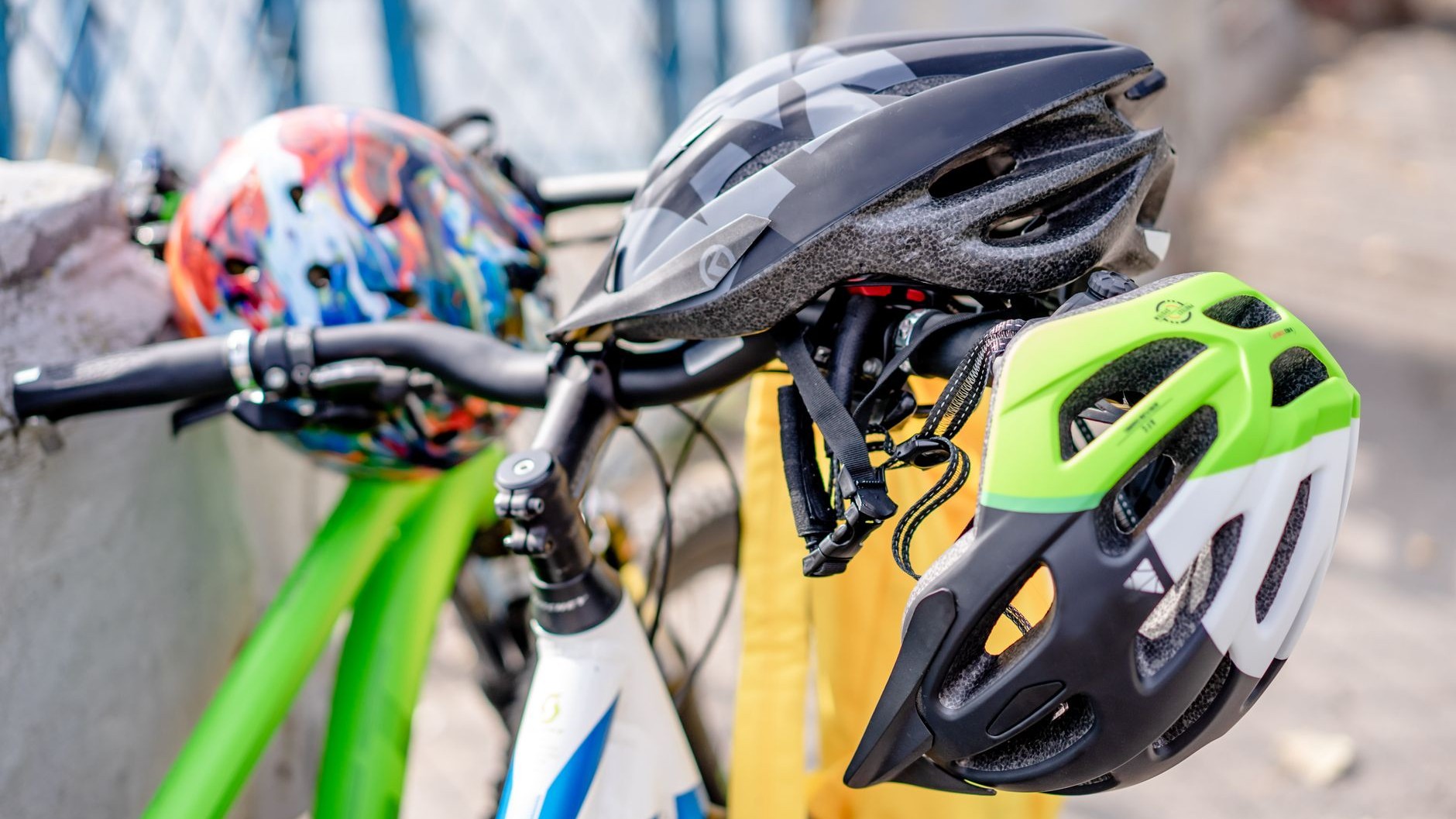
An expanded polystyrene (EPS) liner does its job once, then it’s finished, whether or not the shell shows a single mark. That’s the uncomfortable truth behind stories of riders who kept using a helmet after a tumble because the outside looked untouched, only to discover, when a shop technician sliced the foam open, a crushed, brittle mess where a smooth white block used to be.
It’s a more common scenario than most cyclists or motorcyclists realise. Unlike other pieces of equipment that show visible wear and tear, the damage to a helmet’s protective capabilities isn’t always apparent to the naked eye, and even if a helmet looks intact after a crash, the internal structure may be compromised in ways you cannot see. The shell, whether polycarbonate or fibreglass, is designed to flex and spread force. The real work happens underneath, in a layer most of us never look at until it’s too late.
Key takeaways
- A helmet’s protective foam crushes permanently on first impact—it cannot recover or protect again
- The outer shell often shows no damage while the inner structure is completely compromised
- Visual inspection is meaningless; internal destruction is invisible to the naked eye
How a perfectly good-looking helmet can already be dead
Most helmets use expanded polystyrene foam that crushes during impact to absorb and disperse the energy that would otherwise reach your head, and this crushing action is what provides the protection during a crash. The catch is that this crushing is permanent. Once those expanded polystyrene beads collapse, they do not regain their shape or their ability to absorb energy, which is why EPS is strictly suited to single impacts.
Motorcycle helmets work on exactly the same principle, just at higher forces. The hard outer shell spreads out the force of a crash, while the expanded polystyrene foam inner liner crushes to absorb the rest, and that foam liner is what saves your life, but it only works once. Riders often assume that if the shell hasn’t cracked, the helmet has “passed the test”. It hasn’t. The microscopic structure that gave the foam its protective capacity is gone, yet the foam may look the same, the helmet may look the same, but the liner has already done its work and it will not do it again in a second impact. This is precisely why, when a workshop finally cuts a “fine-looking” helmet open after a customer insists on getting it checked, they tend to find a compressed, sometimes fractured, honeycomb of collapsed foam cells directly under the point of impact, invisible from outside because a bicycle helmet is designed with a specific purpose: to protect your head during a single impact.
Why manufacturers and safety bodies all say the same thing
This isn’t marketing caution dressed up as safety advice. The National Highway Traffic Safety Administration and every major helmet manufacturer recommend replacement after any crash in which the helmet made contact with a hard surface, and passing a visual inspection is not a substitute for that replacement. The Snell Foundation, one of the most rigorous independent testing bodies in the world, takes the same position: its helmet FAQ explains that the crushable liner absorbs impact by collapsing and that a helmet involved in an impact while in use should be replaced.
A 2022 study published on PubMed Central looked directly at this gap between appearance and reality, testing helmets dropped at both concussion-threshold and standard impact heights and then surveying members of the public on whether they could spot the difference between damaged and undamaged helmets from photographs. The researchers noted that any helmet involved in an accident should be replaced regardless of appearance after impact, though consumer compliance and interpretation of this recommendation is unclear, with additional ambiguity for lesser impacts. the people most likely to skip replacement are exactly the ones who’ve had a “minor” fall, the low-speed tumble that doesn’t feel dramatic enough to warrant a new lid.
It’s worth being fair to the sceptics on this point, because not every knock is equal. Dropping an empty helmet off a shelf onto carpet is not the same event as your head hitting tarmac at speed. Dropping an empty helmet from a seat is not the same event, and if you felt your helmet strike the ground, a vehicle, a barrier, or a curb, assume the EPS may have loaded. The distinguishing factor is whether your head was inside the helmet, and whether the helmet made hard contact with a surface, not whether the paintwork got scuffed.
Age matters even without a crash
Falls aside, helmets don’t last forever sitting on a hook in the shed either. Most major helmet manufacturers, including Giro, POC, and Sweet Protection, recommend replacing helmets every 3 to 5 years, the Snell Memorial Foundation recommends every 5 years, and the Consumer Product Safety Commission suggests every 5 to 10 years. The range exists partly because heat, sweat and UV exposure degrade the shell’s adhesives and the foam’s structural integrity at different rates depending on how the helmet is stored and used. That said, an unused helmet gathering dust in a cupboard ages far more gracefully than one that’s been strapped to a bike rack in the sun every week. Unused helmets stored in good condition do not automatically expire after five years, according to the Snell Foundation’s own FAQ, and interestingly, studies have found helmet liners unchanged after up to 26 years, according to research by Kroeker and colleagues in 2016 and DeMarco and colleagues in 2017. So the five-year figure is a sensible default for a helmet in active use, not a hard expiry date stamped on unopened stock.
If you’ve had a fall, the sensible move is simple: stop wearing that helmet immediately, don’t finish the ride “just to get home”, and get a replacement before your next trip out. Many helmet manufacturers offer crash replacement programmes, and it’s worth checking with your helmet’s manufacturer to see if they offer a discount if you can show proof of purchase and describe the incident. It’s a small saving that makes the right decision easier, and considerably cheaper than what’s sitting inside that “untouched” foam.
This article is for general information and does not replace professional advice. If you’ve had a fall and are experiencing headaches, dizziness or confusion, contact your GP or NHS 111 promptly.
Sources : julbo.com | schefmanlaw.com