
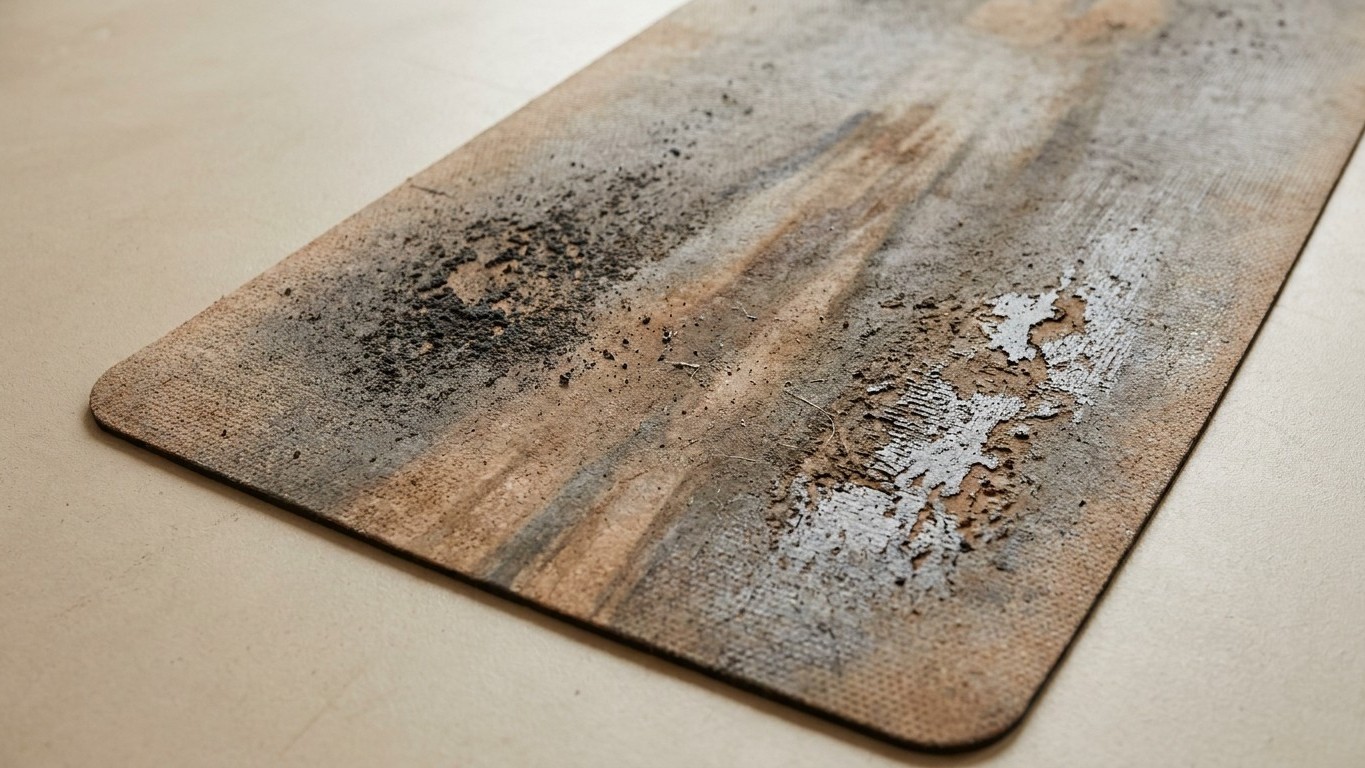
Rubber yoga mats and antibacterial sprays are a genuinely bad combination, and most people find this out the hard way. After four months of what felt like diligent hygiene practice, the evidence was right there on the underside: a sticky, degraded surface that had lost its grip entirely, with patches of rubber that crumbled at the touch. The mat hadn’t just aged. It had been chemically worn down, week by week, by the very product meant to keep it clean.
Key takeaways
- A four-month cleaning routine with standard antibacterial spray left the yoga mat’s underside sticky, degraded, and completely non-functional
- Isopropyl alcohol and bleach-based cleaners chemically break down rubber polymers slowly but relentlessly—damage goes unnoticed until it’s too late
- The solution exists in your cupboard already, and it costs pennies compared to replacing a ruined mat
Why antibacterial sprays eat through rubber
Most antibacterial sprays sold in UK supermarkets contain either isopropyl alcohol, bleach derivatives, or quaternary ammonium compounds (often listed as “quats” on the label). These agents are highly effective at killing bacteria on hard, non-porous surfaces like kitchen counters and bathroom tiles. Rubber is a different material entirely. It’s porous, and it absorbs what you put on it.
Isopropyl alcohol, even at concentrations as low as 70%, breaks down the polymer chains in natural and synthetic rubber over time. The mat doesn’t fall apart overnight, which is precisely why the damage goes unnoticed for months. What happens instead is a slow process of surface degradation: the rubber loses its plasticisers (the compounds that keep it flexible and grippy), becomes brittle in some areas and tacky in others, and eventually loses the structural integrity that stops you sliding mid-Warrior II. The underside deteriorates faster because it’s pressed against the floor and any residual spray pools there rather than evaporating.
Bleach-based products are worse. Sodium hypochlorite oxidises rubber aggressively, and even diluted formulations can cause visible surface cracking after repeated use. One study published in the journal Polymer Degradation and Stability examined the effects of oxidising agents on natural rubber and found measurable changes in tensile strength after relatively short exposure periods. The structural damage isn’t cosmetic.
What you’re actually trying to clean off a yoga mat
The concern is legitimate. Yoga mats genuinely do harbour bacteria, fungi, and viruses, particularly if shared or stored in warm, humid environments like gym bags. Research from the American College of Sports Medicine has flagged gym equipment including mats as vectors for skin infections such as athlete’s foot, ringworm, and staphylococcal infections. So the impulse to reach for the strongest cleaner in the cupboard makes sense.
But the biology of what lives on a yoga mat is worth understanding before choosing a cleaning method. Most of the microorganisms present are transferred from skin, which means they’re largely surface-dwelling rather than embedded deep in the material. A gentle cleanser that disrupts the cell membrane of bacteria doesn’t need to be nuclear-strength to do the job. The goal is to remove sweat (which is the primary food source for odour-causing bacteria), dead skin cells, and surface contaminants, not to sterilise a surgical instrument.
Tea tree oil diluted in water has some evidence behind it as an antimicrobial agent. A review published in Clinical Microbiology Reviews confirmed its activity against a range of bacteria and fungi, including Staphylococcus aureus and Candida species. A few drops in a spray bottle with water and a tiny amount of mild washing-up liquid is, by most accounts, the most mat-friendly option that still delivers real antimicrobial action.
How to actually clean a yoga mat without destroying it
The material your mat is made from changes everything. PVC mats are the most forgiving and can tolerate a slightly wider range of cleaners, though alcohol is still best avoided. Natural rubber mats are the most vulnerable to chemical degradation and should never come into contact with alcohol-based sprays or bleach. TPE (thermoplastic elastomer) mats sit somewhere in between but are also damaged by prolonged exposure to harsh solvents.
For routine cleaning after every session, a damp cloth with a tiny amount of mild soap is genuinely all that’s needed. Wipe both sides, hang to air dry fully before rolling (moisture trapped inside a rolled mat creates the exact warm, damp environment that encourages bacterial growth), and keep it away from direct sunlight, which degrades rubber independently of any cleaning product.
For a deeper clean, most mat manufacturers recommend submerging the mat in a bathtub with cool water and a small amount of gentle detergent, then rinsing thoroughly and air drying flat. This is worth doing every few months. Some mats are machine washable on a cold gentle cycle, though check the manufacturer’s guidance before attempting this with a high-quality mat.
The spray-and-wipe approach isn’t inherently wrong, it’s the formula that matters. Products marketed specifically for yoga mats do exist, and the better ones use mild surfactants with low or zero alcohol content. If you’re using a general-purpose antibacterial spray from the cleaning aisle, the label is almost certainly not written with porous rubber in mind.
The lifespan question
A decent natural rubber mat, properly maintained, should last between three and five years with regular use. Chemical degradation from inappropriate cleaning products can cut that lifespan roughly in half, which matters both practically and financially given that quality mats aren’t cheap. The degraded surface is also a safety issue: a mat that’s lost its tack provides less grip than a bare wooden floor in some conditions, and the crumbling rubber can transfer to skin and clothing.
One detail that catches most people by surprise: heat is as damaging as chemical exposure. Leaving a rubber mat in a hot car, near a radiator, or drying it with a hairdryer all accelerate the same polymer breakdown that antibacterial sprays cause. The mat deteriorates through a combination of insults, and each one compounds the others. Gentle soap, room temperature drying, and a dark storage spot add up to a meaningful difference over the life of the mat.
Always consult your GP if you have any skin concerns related to gym equipment or equipment hygiene.