
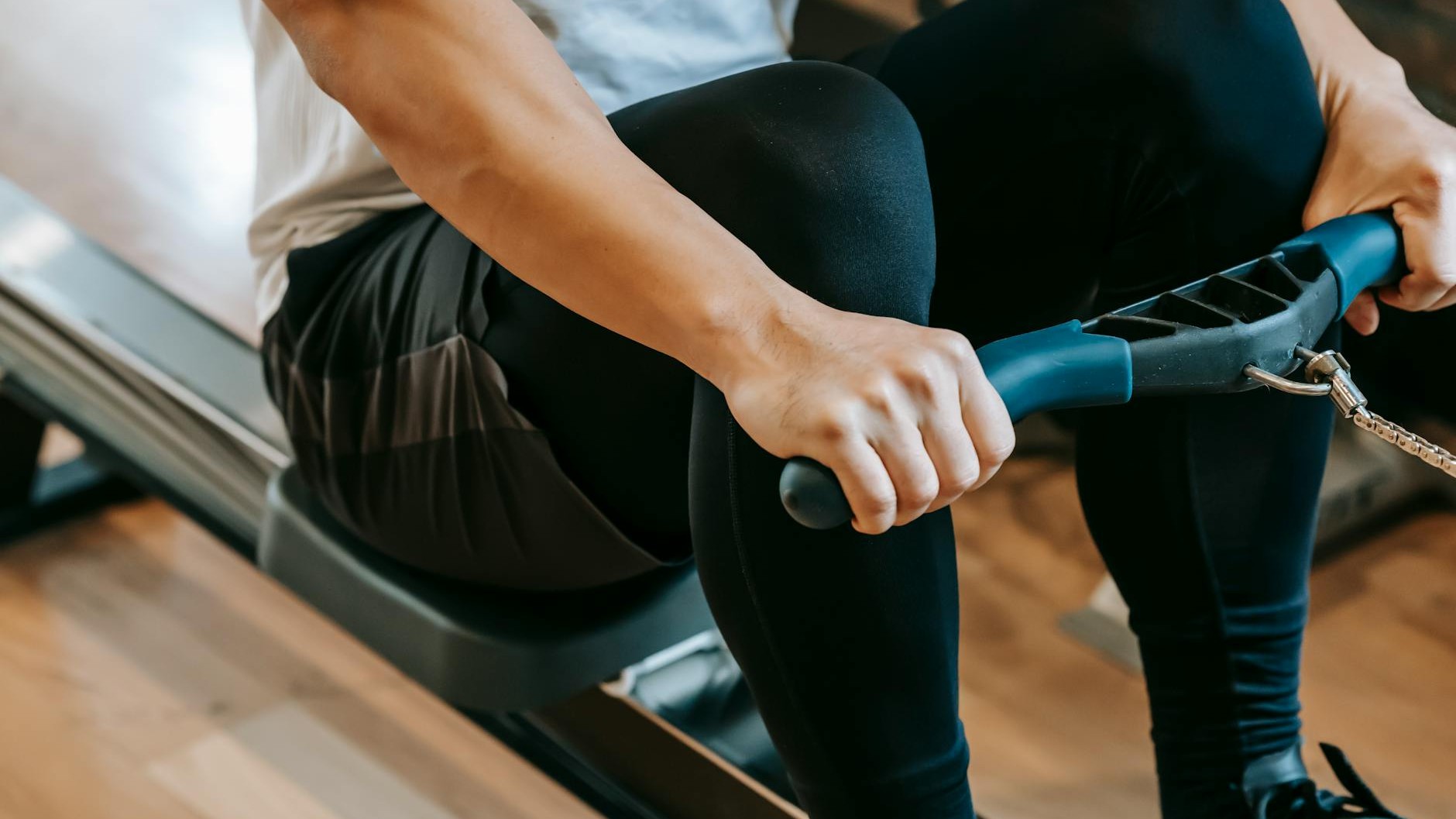
Rowing machines are often held up as one of the most complete forms of cardio exercise available, working roughly 86% of the major muscle groups in a single movement. The problem is that this completeness comes with a catch: the technique is genuinely complex, and the most common mistakes are almost invisible to the person making them. Pulling the handle up to the collarbone is a textbook example. It feels powerful. It feels like effort. And it is quietly wrecking your neck and shoulders every single time.
Key takeaways
- A seemingly small detail in rowing form can cause serious neck tension in just seven days
- Your body’s fatigue response naturally makes you pull higher—but that’s exactly when injury risk peaks
- The correct finish position feels less satisfying than the extreme range you think you should reach
Why the high pull feels so natural (and why that’s the problem)
The rowing machine mimics on-water rowing, where the finish position sits with the handle drawn to the lower chest or just below the sternum. On the water, a rower’s posture, the angle of the oars, and the resistance of the water all conspire to keep the movement honest. On an ergometer in a gym, none of those constraints exist. You can pull the handle anywhere you like, and if you’ve ever watched someone sprint through the final few hundred metres of a session, you’ll often see the handle creeping upward with each stroke as fatigue sets in and the arms take over from the legs.
The mechanics of what happens when the handle rises above the lower chest are worth understanding. The moment the handle climbs toward the collarbone, the shoulder joint moves into internal rotation with the arms raised, which places the rotator cuff tendons in a compressed position. The trapezius and the levator scapulae, the muscles that run along the back of the neck and into the upper shoulders, begin to bear load they were never designed to sustain at that angle, and they respond with increasing tension. Do this for an hour a week and you may not notice much. Do it for five or six sessions in a row, as I did, and by day seven your neck will have a great deal to say about it.
What correct technique actually looks like at the finish
The finish of a rowing stroke is where technique tends to unravel, so it deserves more attention than most beginners give it. At the end of the drive, the legs should be fully extended, the torso leaned back to roughly eleven o’clock (just past vertical), and the handle drawn in to just below the sternum, with elbows tucking back and slightly down rather than flaring outward. The wrists should remain flat, not curled upward to hike the handle into position.
A useful check is to look at where your forearms are at the finish. They should be roughly horizontal or angled very slightly downward. If your elbows are above your wrists and the handle is anywhere near chin level, the chain of compensation has already begun. Some coaches suggest thinking of the movement as pulling toward a point just above your navel rather than pulling the handle to your body, which naturally discourages the upward drift.
The sequencing of the drive matters too. Many people treat the rowing stroke as a simultaneous full-body heave, which encourages the arms to overcompensate at the end. The correct sequence is legs, then body swing, then arms: the legs push first and generate the majority of the power, the torso opens from its forward lean, and the arms simply finish the movement. When the arms do less work, they don’t strain to reach upward to feel productive.
The neck pain itself: what’s happening and what to do about it
The discomfort that accumulates from a week of high pulls typically presents as tension across the upper trapezius, sometimes with a pulling sensation that runs from the base of the skull down to the top of the shoulder blade. It can feel like a stiff neck from sleeping in an odd position, which is why many people initially miss the connection to their gym sessions. The key difference is that it tends to worsen progressively across the week rather than resolving after a day or two, and it’s often bilateral, affecting both sides, because both arms are pulling symmetrically.
If you’re currently experiencing this kind of tension, the sensible first step is a few days away from the rowing machine to allow the tissue to calm down. Gentle range-of-motion exercises for the neck, such as slow lateral tilts and chin tucks, can help ease the tightness, though if your pain is severe, persistent, or accompanied by any tingling or numbness in the arms, that warrants a conversation with your GP rather than self-management. Upper trapezius tension from poor rowing form is common and usually resolves quickly, but cervical nerve irritation needs professional assessment.
When you return to the machine, rowing at a lower resistance or slower stroke rate for the first session or two allows you to focus on the finish position without fatigue pushing the handle northward again. A mirror positioned to your side, or a brief phone recording of yourself rowing, is surprisingly informative. Most people are genuinely startled by how high the handle sits when they see themselves from outside.
The broader lesson about compound movements
Rowing is not unusual in this regard. Most compound exercises that involve pulling, whether on a cable machine, a barbell, or an ergometer, have a finish position that feels less satisfying than a more extreme range of motion. The instinct to pull further, higher, harder is deeply human. The problem is that joints and tendons operate within specific biomechanical tolerances, and repeatedly loading them outside those tolerances doesn’t build strength, it builds injury.
One detail that surprises many people returning to rowing after an injury: the recovery phase, the slow slide back to the catch position, carries almost as much injury risk as the drive when technique is poor. Dropping the handle too low on the way back, or letting the shoulders roll forward aggressively, can load the neck and upper back differently but just as effectively. Good rowing technique is a complete loop, not just a well-executed finish.
Always consult your GP or a qualified physiotherapist if you are experiencing persistent pain or discomfort.