
The brand on your feet this summer is almost certainly not the one a podiatrist would choose for their own. Ask a foot specialist what they actually wear when the weather gets warm and you’ll hear the same names repeated: cork-footbed sandals, sport sandals with adjustable straps, recovery slides, the occasional maximally cushioned trainer. What you will not hear is the generic flip-flop you probably bought at the supermarket checkout for £3.99.
This isn’t snobbery. It’s anatomy. Your feet carry your entire body weight, and poorly designed or ill-fitting shoes can cause a chain reaction of discomfort, in your feet. Also, in your knees, hips, and back. Summer is the season when most of us make our worst footwear decisions, and foot specialists see the consequences every single September.
Key takeaways
- Five podiatrists were asked what they wear in summer—and not one mentioned the popular brand you probably own
- Flip-flops cause a chain reaction of injury that extends far beyond your feet, affecting your knees, hips, and back
- The specific shoe features that separate foot specialist picks from supermarket checkout impulse buys
Why flip-flops are a podiatrist’s least favourite patient
The humble flip-flop is the footwear equivalent of skipping breakfast. Quick, convenient, and ultimately something you pay for later. Flip-flops, flats and other warm-weather shoes are typically so unsupportive that some podiatrists describe the transition from summer to autumn as “plantar fasciitis season.” That’s not an exaggeration. Plantar fasciitis affects approximately 2 million people each year, according to the American Academy of Orthopaedic Surgeons.
The mechanics of why this happens are worth understanding. The flat, flimsy soles of flip-flops provide almost no arch support. Without proper support, your feet are forced to strike the ground flat rather than rolling from heel to toe. Over time, this unnatural motion can irritate the plantar fascia, the thick band of tissue that runs along the bottom of your foot. There’s also the gripping problem. Your toes tend to over-grip when you wear flip-flops because the thin straps don’t securely hold the shoes in place. This over-gripping, along with the lack of arch support, can lead to inflammation in the plantar fascia ligament.
While they’re lightweight and convenient, flip-flops offer little support, leaving your feet and ankles vulnerable to injuries like plantar fasciitis, tendonitis, and even stress fractures. The list doesn’t stop there. The excessive bending of the toes to hold the flip-flop in place can lead to a hammertoe deformity. Wear them every day through summer, and you’re essentially running a slow experiment in how much punishment your feet can absorb. The answer, for most people, is less than they think.
The good news: flip-flops are an acceptable shoe choice when heading to the beach or lounging by the pool, and are alright to wear in moderation when you’re not walking too much. Pool to towel is fine. Two miles around a Spanish old town is not.
What podiatrists actually reach for
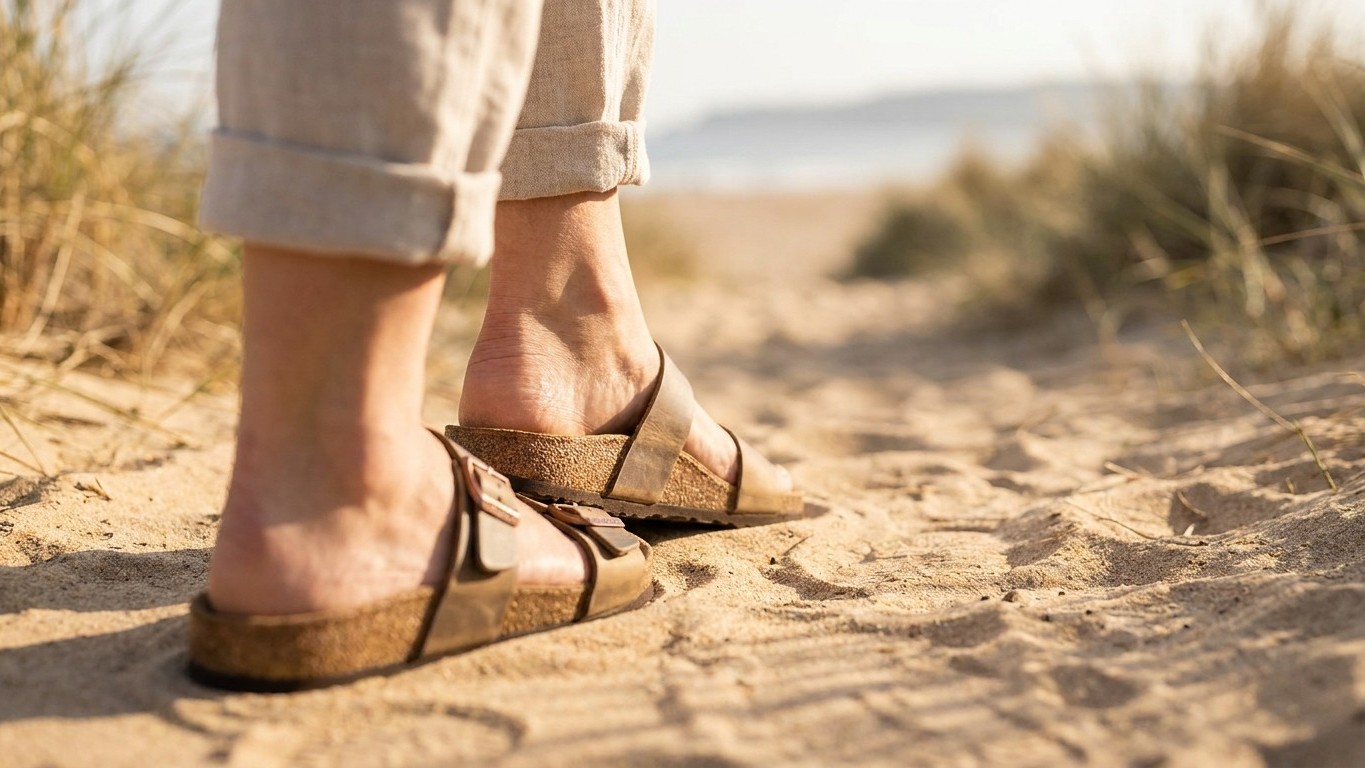
Cork-footbed sandals come up again and again in podiatric circles, and the reason is structural. The original Birkenstock footbed, made from a mix of cork and latex, features a deep heel cup, arch support, and a roomy toe box. The deep heel cup gives stability and can also help control pronation, whereas the average sandal or flip-flop offers little to no support and has a flat footbed. Podiatrists in general approve of this style of sandal, not because of the brand name, but because the design principles are sound.
That said, cork footbeds come with a caveat that many people skip past. Birkenstocks with the original footbed should be broken in gradually, like an over-the-counter orthotic. Wear them for 2 hours on the first day, increasing your wear time by 1 hour each day, at the end of 7 days, you should be able to wear them for 8 hours. Jump straight to a full day’s walking and you may well end up with arch pain, particularly if you have a lower arch. Birkenstock’s cork footbed provides decent midfoot contouring, but it is a rigid flat platform — it does not provide the dynamic arch support that a semi-rigid orthotic insole delivers. A useful tool, then, but not a substitute for proper clinical assessment if you have significant foot issues.
For anyone who spends time on their feet outdoors, walking the coast path, chasing children, exploring new cities — sport sandals with adjustable straps earn consistent praise. A sport sandal that offers sculpted heel cups and a substantial midfoot provides better stability and shock absorption than flip-flops or clogs. Any pair with adjustable heel straps will also help align the ankle. The adjustability matters more than most people realise: feet swell in the heat, sometimes by a full shoe size by the end of the day, and a sandal you cannot adjust will either restrict circulation or slip off your heel entirely.
The non-negotiables, whatever style you choose
Podiatrists are largely agnostic about brand names. What they care about is structure. Every shoe that meets a robust podiatric standard nails four non-negotiables: a structured heel counter that keeps the rearfoot from wobbling, torsional rigidity through the midfoot so the arch doesn’t collapse, and forefoot flex grooves positioned at the metatarsal heads for a natural toe-off.
There’s a simple test you can do in the shop: try to bend the sandal from toe to heel. Many podiatrists recommend trying to bend sandals and shoes from the toes to the heels to see if the models maintain shape. “A good rule of thumb is that if the sandal can twist excessively, so can your foot, which increases strain on the muscles and ligaments,” as one podiatrist puts it. If the sandal folds in half like a piece of paper, put it back. Breathable materials matter too. Shoes made of stiff or non-breathable materials can traumatise the nail beds and surrounding skin, and moisture build-up from non-breathable materials increases the risk of fungal infections.
Recovery slides have also moved firmly into everyday summer wear for foot specialists. Recovery sandals are designed to promote blood flow, boost comfort, and provide support to help relieve soreness and alleviate pain. These models typically use contoured footbeds, shock-absorbing foam, and arch support to provide relief. Originally positioned as post-run footwear, many podiatrists now wear them as their default around-the-house option and for short errands, the kind of low-intensity wearing that tempts most of us into flip-flops.
Fitting your feet properly in the summer heat
One practical note that gets overlooked: measure your feet at day’s end, ensure a thumb’s width at the toes, and consider lacing or strap techniques to secure the fit. Your feet are at their largest in the evening, especially in warm weather when blood pooling causes natural swelling. A sandal that fits perfectly at 9am in an air-conditioned shop may cut off your circulation by 4pm on a hot pavement. Always try summer footwear late in the day.
If you already have a history of heel pain, the bar rises further. Podiatrists recommend sandals with built-in arch support for anyone with any history of heel pain. And if pain persists regardless of what you put on your feet, that’s a conversation for your GP or a registered podiatrist, not a new purchase. Foot pain is one of the top reasons adults cut back on walking, exercise, and work. The right shoes can reduce pain, prevent injury, and support long-term mobility, especially if you have flat feet, high arches, bunions, diabetes, or plantar fasciitis.
One thing podiatrists are quietly consistent about: they almost never buy the cheapest option on the shelf. While orthopedic sandals may cost more upfront, they save money on medical bills and foot pain in the long run. That’s a calculation worth making before you slip on another pair of £4 flip-flops, especially given that plantar fasciitis, once established, can take up to a year for symptoms to resolve, and sometimes longer if you keep wearing the wrong shoes throughout.
Sources : abcnews.go.com | achillesfootandankle.com