
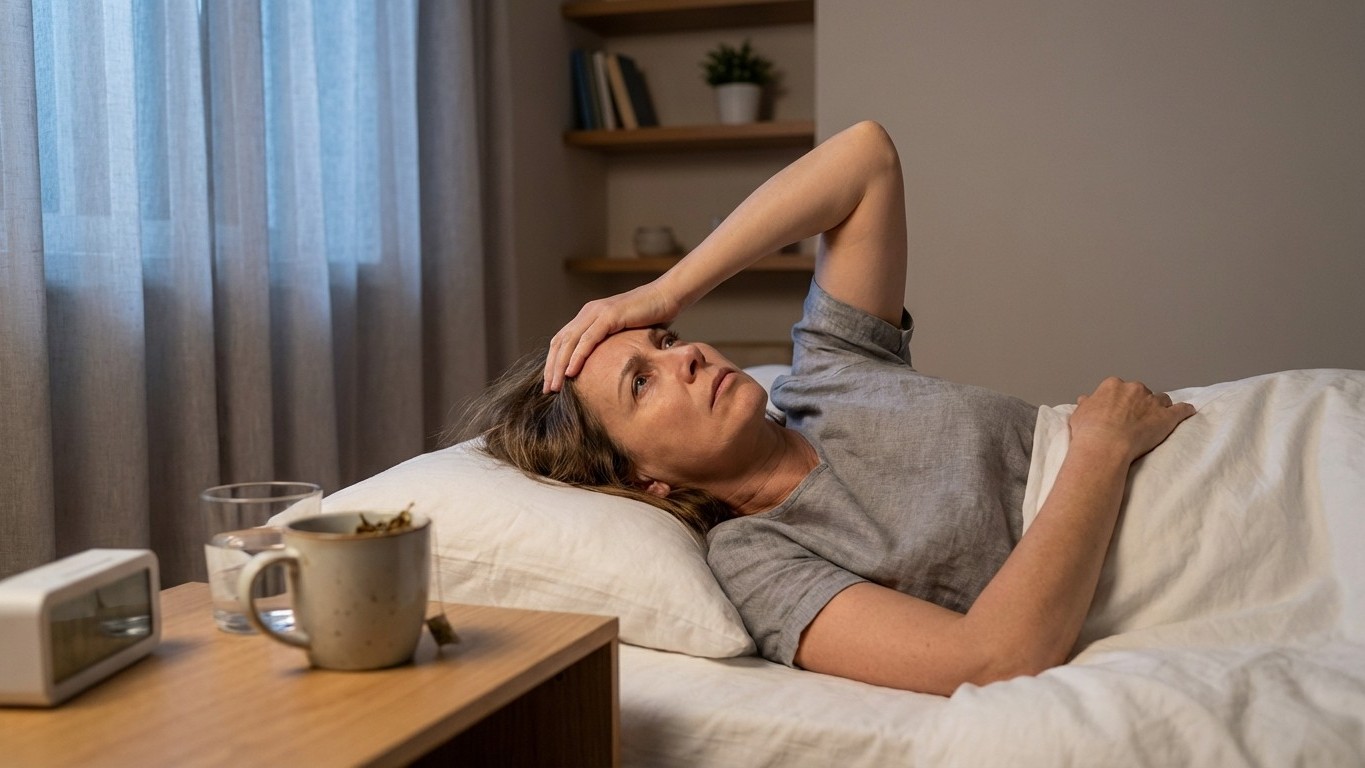
Stress doesn’t clock off at bedtime. For millions of people, the moment the lights go out is precisely when the mind decides to stage its most anxious performance, replaying the day’s tensions, rehearsing tomorrow’s worries, and making genuine rest feel almost impossible. If you recognise that pattern, you’re dealing with one of the most common forms of sleep difficulty: insomnia driven directly by stress. The good news is that natural approaches, when chosen carefully and used correctly, can make a real difference, but so can avoiding the surprisingly common mistakes that quietly sabotage even the best intentions.
Understanding Stress-Related Insomnia: Mechanisms and Symptoms
Why Does Stress Prevent Sleep?
The short answer involves cortisol, the body’s primary stress hormone. Under threat (real or perceived), your adrenal glands release cortisol to sharpen alertness, speed up heart rate, and mobilise energy. This is the fight-or-flight response, and it’s extraordinarily useful when you’re facing an actual danger. The problem is that your nervous system doesn’t always distinguish between a looming deadline and a charging predator. Both trigger the same cascade.
Cortisol follows a natural daily rhythm, rising sharply in the morning to help you wake and gradually declining through the evening to allow sleep onset. Chronic stress disrupts that curve. Studies have consistently shown that people with elevated evening cortisol take longer to fall asleep, spend less time in deep slow-wave sleep, and report poorer sleep quality overall. The brain essentially stays in a state of hypervigilance, scanning for threats rather than surrendering to rest. This is why stress-related insomnia so often manifests not just as difficulty falling asleep, but as frequent night waking or the dreaded 3am wide-awake moment, if that sounds familiar, the causes and natural remedies for waking up at 3am are worth exploring in more detail.
Recognising the Signs of Stress-Driven Insomnia
Not all insomnia looks the same. Stress-related insomnia tends to have a distinctive fingerprint: racing thoughts at bedtime, a sense of mental restlessness even when physically exhausted, and sleep that feels light or unrefreshing. You might wake between 2am and 4am with your mind already running. Jaw clenching, shallow breathing, and a tight chest at bedtime are also telling signs that the nervous system hasn’t yet shifted into rest mode.
There’s also a cruelty specific to this type of insomnia: the more you worry about not sleeping, the more cortisol you produce, the harder sleep becomes. It’s a self-reinforcing loop that purely behavioural willpower struggles to break without targeted support.
Proven Natural Remedies for Stress-Related Insomnia
Calming Herbs and Herbal Teas: Which to Choose and How to Use Them
Herbal medicine has a genuine evidence base here, though it’s worth being precise rather than reaching for any “sleep tea” from the supermarket shelf. Valerian root (Valeriana officinalis) is among the most studied; several trials suggest it can reduce the time taken to fall asleep and improve sleep quality, particularly with consistent use over two to four weeks. It works best when taken regularly rather than as a one-off. Valerian has a distinctly earthy flavour that some people find off-putting, so capsule form is a reasonable alternative.
Passionflower (Passiflora incarnata) is particularly relevant for anxiety-driven insomnia. A small clinical trial published in Phytotherapy Research found that passionflower tea improved sleep quality scores compared to placebo, with participants reporting reduced anxious thinking at bedtime. Lemon balm (Melissa officinalis), often combined with valerian, has demonstrated mild anxiolytic effects in human trials. For an accessible option, a warm cup of lemon balm or chamomile tea about an hour before bed supports the transition into a calmer state without requiring any medical supervision.
One caveat worth noting: lavender in aromatherapy form (or oral lavender oil preparations in specific standardised doses) has shown promising results in clinical settings for anxiety-related sleep disturbance. However, oral lavender supplements should be used according to product guidance, and not combined freely with sedative medications.
Useful Natural Supplements: Magnesium, Glycine, L-Theanine and Others
Magnesium deficiency is strikingly common in adults eating a typical Western diet, and low magnesium is associated with both heightened stress reactivity and poorer sleep. Magnesium glycinate or magnesium threonate forms are generally considered the most bioavailable and least likely to cause digestive discomfort. Taking 200-400mg in the evening supports muscle relaxation and helps calm the nervous system. This isn’t a sedative; think of it more as removing a physiological obstacle to sleep.
Glycine, an amino acid found in bone broth and gelatine, has intriguing evidence behind it. A Japanese study found that participants taking 3g of glycine before bed fell asleep faster, spent more time in deep sleep, and reported feeling more alert the following morning, without any next-day drowsiness. The proposed mechanism involves glycine lowering core body temperature, which is a natural signal for sleep onset.
L-theanine, extracted from green tea, promotes a calm, focused state without sedation. It’s particularly useful for people whose insomnia is driven by a wired-but-tired feeling: mentally activated yet physically drained. Doses between 100-200mg in the evening are commonly used, and it combines well with magnesium. As always, consult your GP before adding supplements if you take regular medication or have an underlying health condition.
Effective Relaxation Techniques: Breathing, Meditation, and Muscle Release
Physiological interventions often outperform supplements for the cognitive hyperarousal that drives stress insomnia. Slow, deliberate breathing directly activates the parasympathetic nervous system. The 4-7-8 technique (inhale for 4 counts, hold for 7, exhale for 8) and box breathing (4 counts on each phase) have both been used clinically to reduce pre-sleep arousal. Even five minutes of slow diaphragmatic breathing before bed produces measurable reductions in heart rate and cortisol.
Progressive muscle relaxation (PMR) involves systematically tensing and releasing muscle groups from feet to face. It’s been used in cognitive behavioural therapy for insomnia (CBT-I) programmes for decades, and the evidence for its effectiveness is solid. The process of deliberately tensing draws attention away from worried thoughts and into the body, interrupting the anxiety spiral.
Mindfulness-based approaches are also well-supported. You don’t need a formal meditation practice; a simple body scan (gently moving awareness through each part of the body without judgement) can be done lying in bed and works by redirecting a hyperactive mind. For those who find silence uncomfortable, guided sleep meditations via reputable apps offer a supported starting point.
An Anti-Stress Evening Routine: Practical Steps to Calm the Mind
Routine is underrated. The nervous system responds to predictability, and a consistent pre-sleep ritual signals safety and transition. The single most effective change many people can make is establishing a hard “wind-down window” of 45-60 minutes before bed, during which screens are dimmed or avoided entirely (the blue light argument is somewhat overstated, but the stimulating content of social media and news is a genuine issue), bright overhead lighting is replaced by warm lamps, and activating tasks such as work emails are closed down.
A warm bath or shower 60-90 minutes before bed exploits a physiological trick: the subsequent drop in core body temperature as you cool down mimics the thermal shift that naturally precedes sleep. Journaling, specifically writing down tomorrow’s tasks and assigning them to a time, rather than general worrying on paper — has been shown in research published in the Journal of Experimental Psychology to reduce bedtime cognitive intrusion. For a comprehensive approach to building these habits, the guidance on how to stay asleep naturally offers a detailed framework worth bookmarking.
Common Mistakes to Avoid When Managing Stress-Related Insomnia
Counterproductive Habits at Bedtime
Watching the clock is perhaps the most universally unhelpful behaviour during a sleepless night. Checking the time repeatedly activates the prefrontal cortex (the calculating, planning part of your brain) and triggers a cortisol release as you calculate how many hours remain before the alarm. Turn the clock face away, or remove it from the bedroom entirely.
Compensatory napping is another trap. A long afternoon nap to recover from a poor night reduces sleep pressure (the homeostatic drive to sleep), making the following night harder. Short naps of 20 minutes or less, before 3pm, are generally fine; anything longer risks perpetuating the cycle. Similarly, going to bed significantly earlier than usual in a bid to “catch up” tends to result in lying awake longer, reinforcing the association between bed and wakefulness.
Misusing Natural Remedies or Risky Self-Medication
There’s a widespread assumption that “natural” automatically means safe in any quantity, which isn’t accurate. Valerian taken in very high doses or combined with alcohol or sedative drugs can cause excessive sedation or paradoxical agitation in some individuals. Melatonin, while over-the-counter in some countries, is a hormone, and taking high doses nightly without medical guidance may interfere with the body’s own production. In the UK, high-dose melatonin is a prescription-only medicine; low-dose formulations (0.5mg-1mg) are available without prescription, but should be used short-term.
Rotating through multiple herbal supplements at once makes it impossible to identify what’s working and raises the risk of interactions. Start with one change at a time, give it two weeks, and assess. For a well-organised overview of what evidence actually supports, the natural sleep remedies guide covers the evidence base for the main options honestly and without overpromising.
When to See a Professional
Natural approaches work well for situational and mild-to-moderate stress insomnia. However, if sleep difficulties have persisted for more than three months, are affecting your daytime functioning, or are accompanied by persistent low mood, please speak to your GP. Cognitive behavioural therapy for insomnia (CBT-I) is the gold standard treatment recommended by the NHS for chronic insomnia and consistently outperforms sleep medication in long-term outcomes. It’s not about willpower; it’s about rewiring learned patterns of poor sleep, and it works even without addressing the underlying stress directly.
FAQ: Stress, Sleep and Natural Solutions
Which natural remedies are genuinely effective for stress-related insomnia? The strongest evidence supports magnesium supplementation (particularly glycinate or threonate forms), passionflower and valerian herbs, L-theanine for anxious minds, and behavioural techniques such as progressive muscle relaxation and slow breathing. A consistent evening wind-down routine often amplifies the effectiveness of any individual remedy.
Should you avoid certain plants or supplements if you’re very anxious at night? Some people find stimulating herbal products counterproductive; guarana, ginseng, and high-dose B vitamins taken in the evening can worsen restlessness. Even chamomile, while gentle for most, occasionally causes alertness rather than drowsiness in sensitive individuals. Pay attention to your own responses. If anxiety is severe or accompanied by panic attacks, natural remedies are a complement to professional support, not a substitute for it.
What mistakes commonly make stress insomnia worse despite using natural solutions? Using natural remedies while keeping counterproductive habits (late screens, clock-watching, compensatory napping, irregular sleep times) reduces their effectiveness dramatically. Expecting an instant result and abandoning a remedy after one night is another frequent error, many herbal approaches require consistent use over one to two weeks to show their full effect. For a broader look at symptom-specific approaches, natural remedies for insomnia helps match solutions to your particular pattern of sleep difficulty.
Further Reading and Related Resources
Stress-related insomnia rarely exists in a single, neat category. Some people struggle primarily with falling asleep; others fall asleep easily but wake repeatedly through the night. The strategies above address the core stress-cortisol mechanism, but your specific pattern matters when choosing where to focus first. If staying asleep is your main challenge, there’s targeted guidance on how to stay asleep naturally. If you wake consistently in the early hours, the dedicated resource on natural remedies for waking up at 3am explores the underlying causes in more depth.
Sleep and stress are locked in a bidirectional relationship. Poor sleep raises cortisol the following day, which makes the next night harder, and so the cycle continues. Breaking it doesn’t require an overnight transformation. Small, consistent changes to your evening environment, your supplementation, and your relationship with the bedroom gradually shift the nervous system back towards safety. That shift, quiet and cumulative, is where better nights actually begin.
Please consult your GP before starting any new supplement, particularly if you take regular medication or have an existing health condition. This article is for informational purposes only and does not constitute medical advice.