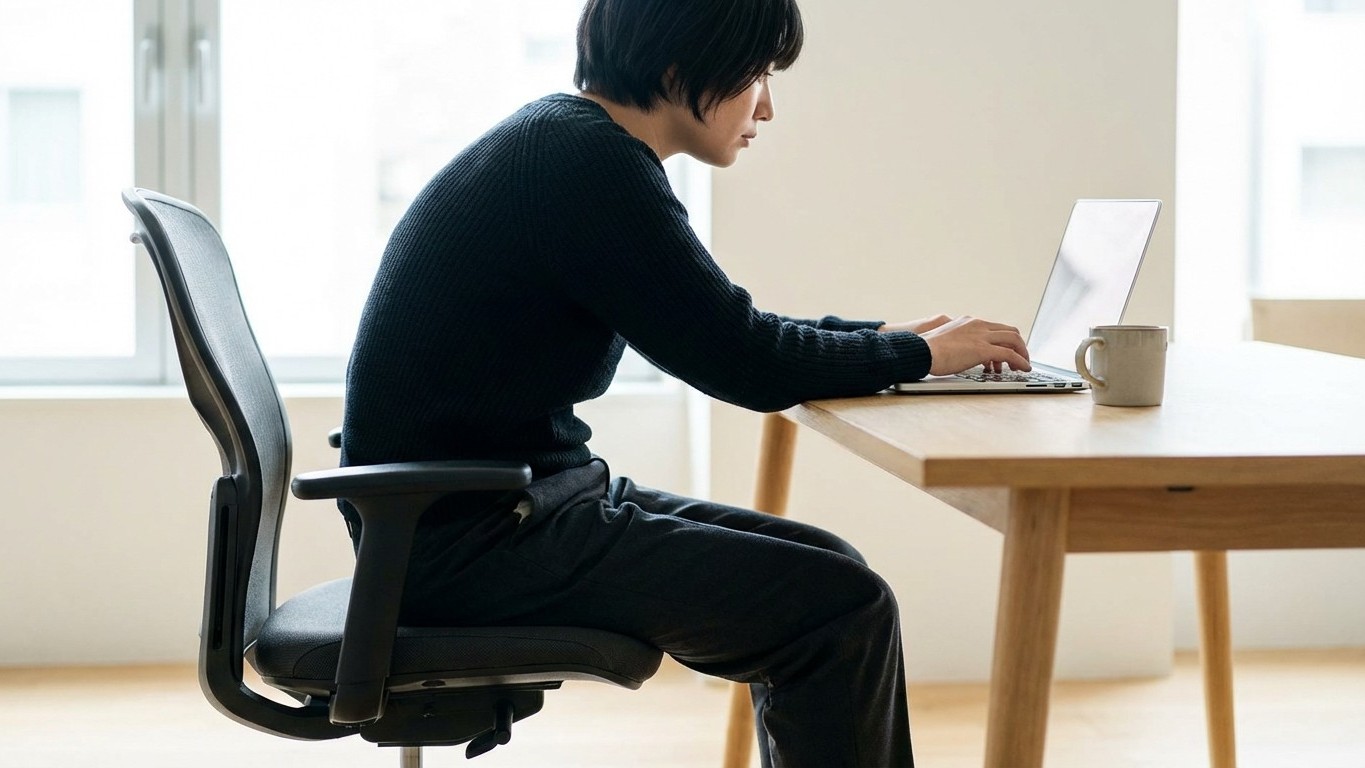
Most of us know, somewhere in the back of our minds, that we probably sit too much. But knowing and truly understanding are very different things. The moment it clicked for me wasn’t reading a study or scrolling past a wellness post, it was a physiotherapist pressing two fingers into the front of my hip and asking me to lift my leg. I couldn’t. Not properly, anyway. After years of desk work, my hip flexors had become so shortened and overworked that basic movement had quietly become compromised. And I hadn’t noticed a thing.
Key takeaways
- Your body quietly adapts to sitting by permanently shortening hip flexor muscles over months and years
- The warning signs feel innocent—morning stiffness, back pain after desk work, difficulty standing upright—until they don’t
- Simple, consistent stretches done twice daily can reverse adaptive shortening faster than you’d expect
What actually happens to your hips when you sit for hours
The hip flexors, a group of muscles that includes the iliopsoas, are responsible for drawing your knee toward your chest and stabilising your pelvis. When you’re seated, they’re held in a shortened, contracted position for hours at a stretch. The body is remarkably good at adapting to what you ask of it repeatedly, and it interprets prolonged sitting as a signal to keep those muscles in that shortened state, even when you stand up.
This is what physiotherapists often call adaptive shortening. The muscle fibres don’t technically shrink, but the tension and resting length change over time, making full extension at the hip uncomfortable, difficult, or simply impossible without compensating elsewhere. And compensate we do, usually through the lower back. That ache after a long day at your desk? There’s a reasonable chance it’s your lumbar spine picking up the slack for hip muscles that have effectively gone off-duty.
The gluteal muscles tell a similar story. When you sit, your glutes aren’t working. They’re simply… resting. Indefinitely. Over months and years, this can lead to what’s sometimes called gluteal amnesia, a genuinely unglamorous condition in which the brain-to-muscle connection weakens, and the glutes stop firing efficiently during movement. Your body then recruits the hamstrings and lower back to do work that your glutes should be handling. The chain reaction is subtle but cumulative, and by the time symptoms appear, the habits causing them are often years old.
The warning signs that are easy to dismiss
The tricky thing about hip dysfunction related to prolonged sitting is how ordinary it feels at first. A stiffness in the morning that loosens off. A vague tightness when climbing stairs. An occasional twinge in the lower back after a long drive. None of these seem alarming on their own, and most people attribute them to age, stress, or simply having slept oddly.
But there are some patterns worth paying attention to. If you struggle to stand fully upright immediately after sitting for a long period (that forward lean or shuffle as you “find your legs”), your hip flexors are likely complaining. If your lower back pain reliably appears after desk sessions rather than physical activity, the hips often deserve closer investigation. A simple home check that physiotherapists sometimes use is the Thomas test: lie on your back at the edge of a bed, hug one knee to your chest, and let the other leg hang. If that hanging leg rises off the bed or the knee bends significantly, it suggests hip flexor tightness on that side. (This is for self-awareness only, please see a qualified physiotherapist for proper assessment.)
What struck me during my own appointment was how asymmetric things had become. My right hip was considerably tighter than my left. I hadn’t sat differently on each side, but I’d apparently developed a habit of crossing my right leg underneath me when concentrating, a detail I’d completely forgotten until the physio asked about it. Bodies keep score in ways we rarely track.
Small changes that genuinely make a difference
The good news, and there is plenty, is that adaptive shortening responds well to consistent, targeted movement. You don’t need an hour at the gym or an expensive equipment setup. You need frequency and intention.
The 90-90 hip stretch is a good starting point: sit on the floor with both legs bent at roughly 90 degrees, one in front and one to the side, and gently hinge forward over your front shin. Hold for 30 to 60 seconds per side. It’s deceptively challenging if your hips have been neglected, and the improvement over a few weeks is measurable.
Standing hip flexor lunges, done slowly and with a posterior pelvic tilt (tucking your tailbone slightly under rather than letting your back arch), directly target the iliopsoas in a way that casual stretching often misses. Doing these for two minutes per side, twice a day, is more effective than a single longer session because you’re working against the repeated compression of each sitting period.
The other intervention is less glamorous: simply stand up more often. Research consistently supports the idea that breaking sitting time with brief movement every 30 to 45 Minutes is more beneficial for musculoskeletal health than one long bout of exercise at the end of the day. A short walk to the kitchen, a few glute bridges on the floor, or even just standing and extending your hip backward for 30 seconds each side, these interruptions accumulate.
Getting a standing desk is worth considering, though the evidence suggests alternating between sitting and standing rather than standing all day (which creates its own set of problems). And if you can, get a proper workplace assessment, many employers are required to provide these, and they’re far more valuable than most people assume.
The question that’s stayed with me since that physiotherapy session is how many other small adaptations my body has made without my consent, quietly rerouting around limitations I’ve created through habit. The hips were just the thing that became visible first. Which makes me wonder what’s being quietly compensated for right now, in all of us, while we type.
Always consult your GP or a qualified physiotherapist before beginning any new exercise programme, particularly if you are experiencing pain or discomfort.