
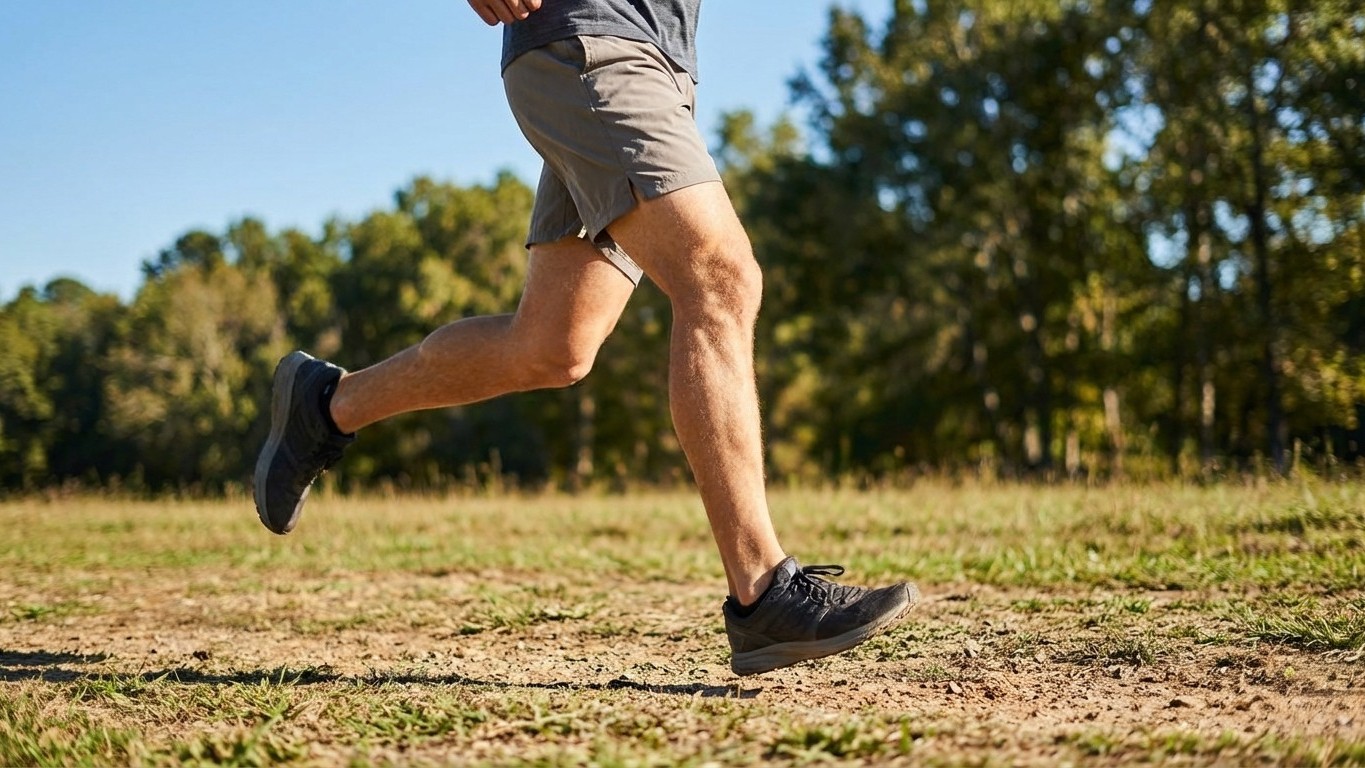
Your knees are doing something extraordinary every time you run. With each stride, they absorb a force roughly two to three times your body weight, and over the course of a typical 5K, that adds up to millions of individual impacts across a lifetime of training. Most runners manage this beautifully for years. Then, quietly, something goes wrong. Not from a single dramatic injury, but from a Mistake that was baked into the very beginning.
Key takeaways
- The one mistake physiotherapists see every week that fills their appointment books
- The running form nobody tells beginners about—but it changes everything for knee health
- Why the recovery myth is costing you weeks of lost training
The Mistake That Physiotherapists See Every Week
Ask any physiotherapist working with a sports clinic what fills their appointment book, and the answer is almost always the same: too much, too soon. The clinical term is “rapid load progression,” and it is, without question, the most common preventable cause of running-related knee injuries. New runners, fired up by a half-marathon goal or a January resolution, go from the sofa to five runs a week in a matter of days. The cardiovascular system adapts relatively quickly to this new demand. The tendons, cartilage, and the complex tissue structures around the knee do not. They operate on a slower biological clock, and when you outpace them, they let you know.
The 10% rule, the widely repeated guidance that you should increase your weekly mileage by no more than 10% each week — has been debated in sports medicine circles, and the evidence behind the specific figure is not ironclad. But the principle it represents is sound. Connective tissue needs graduated stress to remodel and strengthen. Push past its current capacity too quickly, and you set the stage for patellofemoral pain syndrome (the achingly common “runner’s knee”), iliotibial band syndrome, or patellar tendinopathy. These are not freak occurrences. They are predictable consequences of a predictable mistake.
Running Form: The Thing Nobody Told You to Think About
Here is something most beginners never hear at the start: the way you run matters as much as how far you run. Gait mechanics have a direct influence on how load is distributed across the knee joint, and certain patterns quietly accumulate damage over months before pain ever appears.
One of the most well-documented issues is overstriding, landing with your foot significantly ahead of your centre of mass. This increases the braking force on the knee with every step and, over thousands of repetitions, contributes to anterior knee pain. Research published in sports biomechanics journals has consistently shown that even a modest increase in cadence (the number of steps per minute) can reduce the load on the knee joint meaningfully. The sweet spot varies by individual, but many physiotherapists encourage runners to aim for around 170 to 180 steps per minute as a working target, not a rigid rule.
Hip weakness is the other culprit that rarely gets mentioned at the start line. When the gluteal muscles are underdeveloped or underactivated, the femur (thigh bone) tends to rotate inward during the stance phase of running. This shifts stress to the inner and outer edges of the knee in ways the joint was never designed to sustain repeatedly. Strengthening exercises targeting the glutes and hip abductors, think single-leg squats, clamshells, lateral band walks, are not glamorous. They are also not optional, if knee longevity is the goal.
The Recovery Myth That’s Costing You
There is a particularly stubborn belief in running culture that rest is for the weak and that soreness is simply the price of progress. This is, to put it plainly, wrong, and physiotherapists will tell you it’s one of the main reasons a minor niggle becomes a six-week setback.
Sleep and recovery days are not passive. During sleep, the body undertakes active repair of micro-damage in muscle and connective tissue. Running on consecutive days without planned recovery, especially in the early months of training, prevents this process from completing. The inflammation that should resolve between sessions instead compounds. Over time, what began as routine muscle fatigue becomes a structural problem in the knee.
Cross-training, often dismissed as a compromise, is genuinely protective. Swimming, cycling, and strength work allow the cardiovascular adaptations to continue while giving the knee’s load-bearing structures a different stress pattern (or none at all). The runners who stay injury-free longest tend to be the ones who treat their rest days with the same intentionality as their hard sessions.
Shoes, Surfaces, and the Variables People Overlook
Footwear deserves a mention, though with a caveat: the relationship between running shoes and knee injury is more complicated than the marketing would Suggest. There is no evidence that any single shoe type prevents knee pain across the board. What does matter is finding a shoe suited to your foot mechanics and replacing it before the midsole cushioning breaks down (typically around 500 to 800 kilometres, depending on the shoe and the runner’s weight). Running in shoes that look fine but have lost their structural integrity is a surprisingly common oversight.
Surface variety is underrated. Runners who do all their miles on concrete, the hardest common surface, load the knee more consistently than those who mix in trail running, grass, or even treadmill sessions. The unpredictability of softer terrain also activates smaller stabilising muscles that tarmac simply doesn’t challenge. A mix of surfaces, if your environment allows it, is one of the simpler ways to reduce repetitive strain.
There is something worth sitting with here. Most of the damage that ends running careers was never inevitable. It accumulated quietly, through habits formed in the first few months, before the runner knew enough to know better. The encouraging flip side is that most of it is reversible, or, better still, preventable, with a few deliberate adjustments made early. Your knees have a long career ahead of them. The question is whether the training plan you’re following right now is written with that in mind.
If you are experiencing knee pain during or after running, please consult your GP or a qualified physiotherapist before continuing to train.