The squat is one of the most natural human movements in existence, toddlers do it perfectly without a second thought. Yet for many adults, achieving a deep, controlled squat feels genuinely impossible. The heels lift, the chest collapses forward, the knees cave inward. For years, I assumed this was simply a matter of weak glutes or tight hips. A single appointment with a physiotherapist changed that assumption entirely, and the culprit turned out to be far simpler, and far more fixable, than I’d imagined: restricted ankle mobility.
Key takeaways
- A 30-second test at home reveals whether your squat problems stem from an overlooked weakness
- Your ankles might be silently sabotaging movements you do every single day without you realizing it
- The fix is simpler than you think — and consistency beats intensity in ways that surprise most people
The ankle test that changes everything
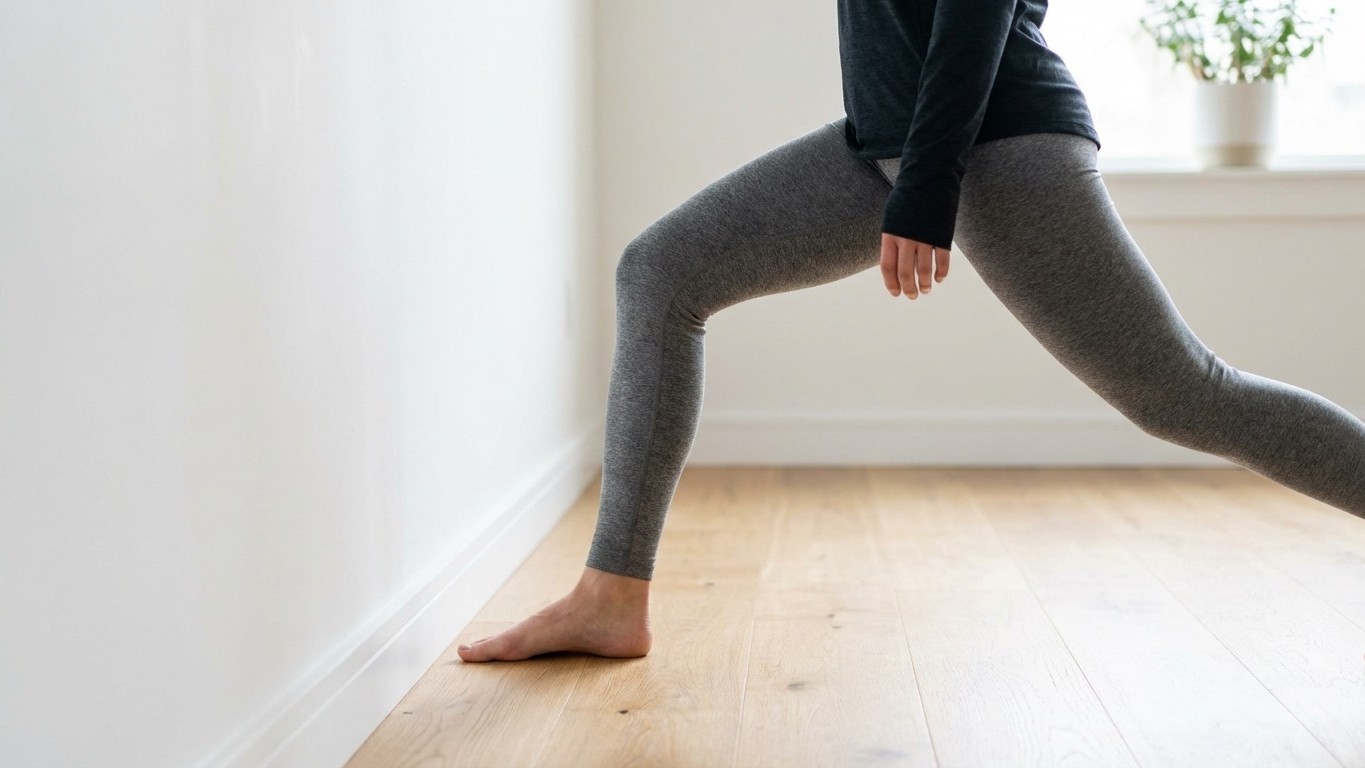
The assessment my physio used is called the knee-to-wall test, and you can do it yourself at home right now. Stand facing a wall, place your big toe roughly five centimetres from the skirting board, and try to drive your knee forward to touch the wall while keeping your heel completely flat on the floor. If your heel lifts, or your knee can’t reach the wall at all, you’ve just identified a meaningful restriction in ankle dorsiflexion, the forward hinge movement your ankle makes every time you squat, walk upstairs, or lunge.
The test sounds almost embarrassingly simple, which is probably why so many people dismiss it. Don’t. Ankle dorsiflexion is the unsung gatekeeper of lower body mechanics. When the ankle can’t move freely through its full range, the body compensates elsewhere: the heel rises to buy more depth, the torso tips forward to shift the centre of gravity, and the knees often track inward as the foot rolls to find a workaround. The result is a squat that looks, and feels, broken, even when your hips, knees and spine are perfectly healthy.
Why does ankle mobility get so restricted in the first place?
Two distinct structures can limit dorsiflexion, and knowing which one is at play Actually matters for how you address it. The first is soft tissue tightness, the calf muscles (specifically the gastrocnemius and soleus) and the Achilles tendon pulling on the heel bone and restricting forward movement. The second is a bony or joint restriction, where the talus bone at the front of the ankle butts up against the tibia before full range is achieved. Soft tissue restrictions tend to respond well to consistent stretching; bony restrictions may need hands-on physiotherapy work, or in rare cases, further investigation.
A practical way to distinguish between the two at home: perform the knee-to-wall test with your knee slightly bent versus fully extended. The gastrocnemius muscle crosses the knee joint, so if your range improves noticeably when the knee is bent, the calf is likely a major contributor. If the range stays limited regardless of knee position, the joint itself may be the issue. Either way, this information is useful to bring to a physiotherapist or your GP if you’re experiencing pain alongside the restriction.
Years of wearing shoes with even a modest heel, long hours of sitting, and a general reduction in the variety of lower body movements most adults do compared to childhood, all of these gradually erode the ankle’s working range. It’s a slow, quiet loss that often goes unnoticed until the day you try to squat and wonder why your body has apparently Forgotten how.
What actually works to improve it
The knee-to-wall test is also, conveniently, one of the most effective drills for improving ankle dorsiflexion. Performed as a stretch rather than just an assessment, you drive the knee gently toward the wall for 10-15 repetitions, progressively moving the foot further from the wall as range improves. Consistency matters more than intensity here. Five minutes daily will outperform a single 30-minute weekly session, largely because you’re retraining a movement pattern as much as lengthening a tissue.
Calf stretching, both straight-leg and bent-leg versions against a wall or step, addresses the gastrocnemius and soleus respectively. Spending time in a deep squat position itself, even just hanging out there with support, holding a door frame or a sturdy piece of furniture — tells the nervous system that this range is safe and usable. The body tends to protect ranges it rarely visits; the antidote is simply visiting them more often.
A foam roller or massage ball applied to the calf belly can reduce tissue tension enough to make the stretches more effective, though the research on foam rolling suggests it’s most useful as a warm-up tool rather than a standalone fix. Think of it as softening the clay before you try to reshape it.
For some people, a physiotherapist will use joint mobilisation techniques, applying graded pressure to improve the way the talus glides backward in the joint during dorsiflexion. This is an area where self-treatment has limits, and a session or two with a qualified physio can produce Changes-for-a-happier-season/”>Changes in range that months of self-directed stretching failed to achieve. If your restriction is significant and affecting how you train or move day-to-day, it’s worth the appointment. Please consult your GP if you have any pain, swelling, or previous ankle injury before attempting these exercises.
The squat you’ve been waiting for
Once ankle mobility improves even modestly, the squat tends to reorganise itself in ways that feel almost miraculous. The heels stay down. The torso can remain more upright. Depth becomes available without strain. The movement that felt like a structural failing turns out to have been a mobility problem with a practical solution all along.
There’s a broader lesson buried in this, something about how we attribute our physical limitations to the wrong source and then stop looking. How many other movement problems are quietly ankle problems, or thoracic spine problems, or breathing pattern problems masquerading as something more dramatic? The knee-to-wall test takes about 30 seconds. It might be the most useful half-minute you spend on your health this week.