
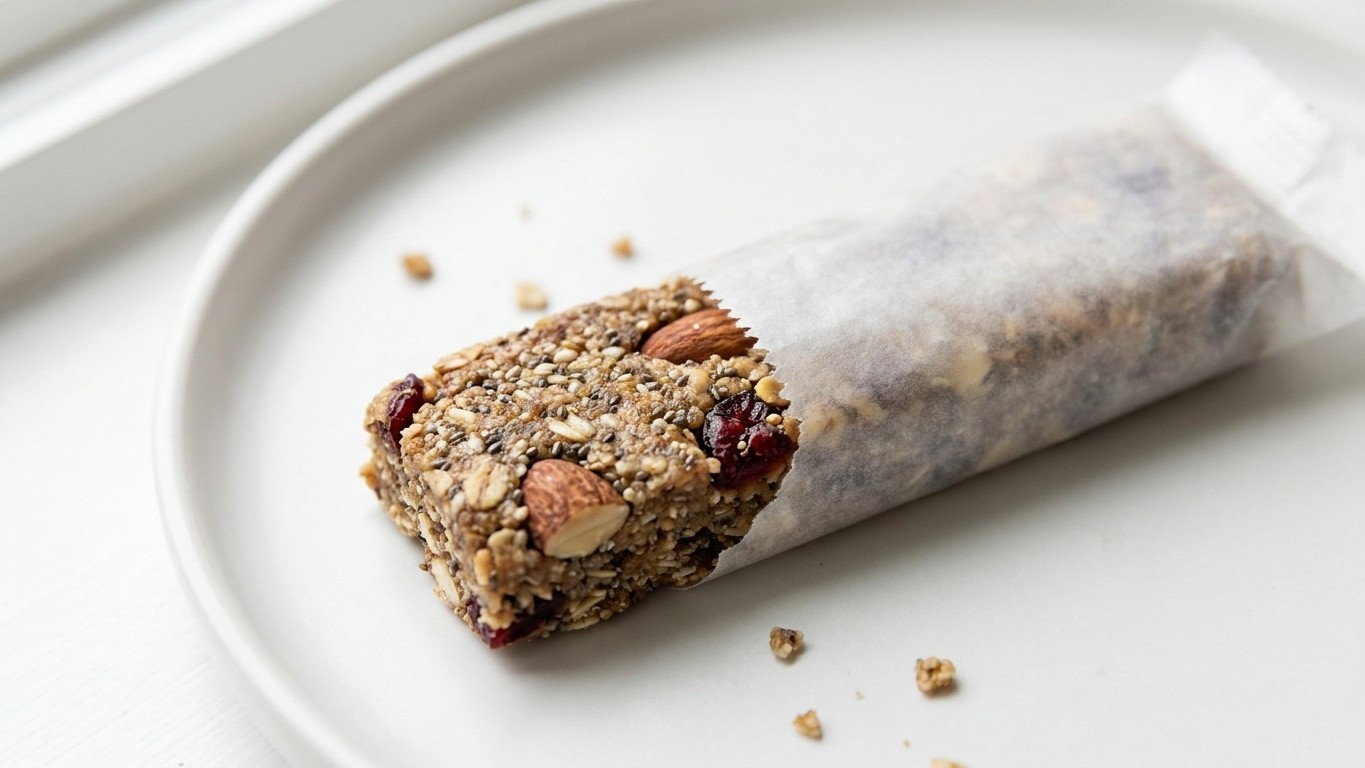
Chicory root, or the inulin extracted from it, is the ingredient behind that mid-set gurgle. It’s added to countless protein and fibre bars to boost the “dietary fibre” line on the label while keeping sugar and calories low, and for a good chunk of gym-goers it ferments into a genuinely uncomfortable amount of gas right when you’re bracing for a heavy set.
The mechanism is straightforward once you understand what inulin actually is. Chicory root is a plant root that contains inulin, a prebiotic fibre that passes through undigested and is broken down in the large intestines by your gut bacteria. That process is entirely normal, in fact it’s the reason inulin gets marketed as “gut-friendly” in the first place. But for others, especially those with IBS, that fermentation can trigger gas, bloating, and abdominal pain, since chicory root and inulin are considered high-FODMAP ingredients. You don’t need a diagnosed condition to feel it, either. Plenty of people with entirely normal digestion still notice it after a concentrated dose.
Key takeaways
- One protein bar can deliver a full day’s worth of inulin in a single dose, fermenting fast when your body is least prepared
- The whole-food matrix matters: isolated inulin powder in bars produces more gas than the same fiber in actual vegetables
- Timing changes everything—eating your bar 2+ hours before training vs. 20 minutes before makes a measurable difference
Why a bar hits harder than a bowl of onions
The dose matters more than most people assume. Research suggests up to 20 grams a day is well tolerated by some, while other studies found adults did fine with amounts up to 10 grams, with more triggering gas and bloating for some. The problem is that a single bar can pack a serious chunk of that daily allowance into one sitting rather than spreading it across meals the way you would with garlic, onions or Jerusalem artichokes eaten in normal portions. One nutrition writer put it plainly after checking her own snack: I’m bothered by the 10 grams in a single Fiber One bar.
There’s also a structural reason isolated inulin behaves worse than the fibre naturally present in a vegetable. A 2024 fermentation study comparing dried chicory root cubes with isolated inulin found that dried chicory root cubes yielded similar total short-chain fatty acids but higher final butyrate levels than chicory root powder or isolated inulin, with less gas produced. the whole-food matrix slows things down; the purified powder added to a bar for its “fibre” credentials doesn’t have that buffer, so it ferments fast and hard.
Then there’s the physiology of the gym itself. Fermentation produces gas as a normal by-product, and the end products of fermentation of these fibres are gases such as carbon dioxide and hydrogen, alongside lactate and short-chain fatty acids. During a heavy set, blood flow shifts toward working muscle and away from the gut, digestion slows, and any gas already building up in your intestine has less chance of moving on quietly. It’s not that lifting creates the gas, it’s that a barbell in your hands is a spectacularly bad moment for your body to have it.
Reading the label properly
Chicory root rarely announces itself as “chicory root” alone. Manufacturers use several names for the same compound, so it’s worth scanning ingredient lists for the actual terms rather than trusting the marketing on the front of the pack. Scan the ingredients list for “inulin,” “chicory root extract,” “oligofructose,” or “soluble corn fiber,” a common substitute with similar effects. There’s also a quick label trick that works well in the supermarket aisle: check the “Total Carbohydrates” line, and if “Dietary Fiber” is unusually high (5 grams or more) while “Sugars” is low (2 grams or less), chicory root fibre is almost certainly the source.
Sensitivity really does vary by individual gut flora, which is why some training partners can demolish two of these bars a day without a flicker of discomfort while others double over after half of one. Bars often introduce concentrated doses of 3 to 8 grams of chicory fibre at once, far exceeding typical baseline intake, and reduced overall food volume around a training session means less gastric buffering and faster transit to the colon, while calorie restriction or rapid dietary change can temporarily reduce the microbial diversity needed to handle a sudden influx of inulin smoothly. That’s a fairly technical way of saying: if you’ve just started a cut and swapped a meal for a bar, your gut hasn’t had time to adjust.
What actually helps before your next session
Timing is the simplest fix. Fermentation isn’t instant, symptoms typically build over one to three hours as bacteria work through the fibre, so eating a chicory-containing bar first thing and training at lunchtime is a very different experience to eating one twenty minutes before you walk into the gym. Building tolerance gradually also genuinely works, since the gut bacteria that ferment inulin can adapt with regular, modest exposure rather than an occasional large dose. And when a bar is non-negotiable pre-workout fuel, checking for lower-fibre formulations or ones using whole dried root rather than isolated inulin is worth the extra thirty seconds of label-reading, given what the fermentation research above suggests about intact plant matrices producing less gas.
One detail that surprises people: chicory belongs to the same plant family as ragweed, and some people with allergies to ragweed may also react to chicory root, since the two are botanically related. If antihistamines are already a fixture of your hay fever season and a “healthy” bar leaves you unexpectedly bloated at the same time of year, that overlap is worth mentioning to your GP rather than blaming your lifting form. As always, if bloating, pain or changes in bowel habits are frequent or severe, it’s worth getting checked rather than simply switching brands.
Sources : alibaba.com | ncbi.nlm.nih.gov