
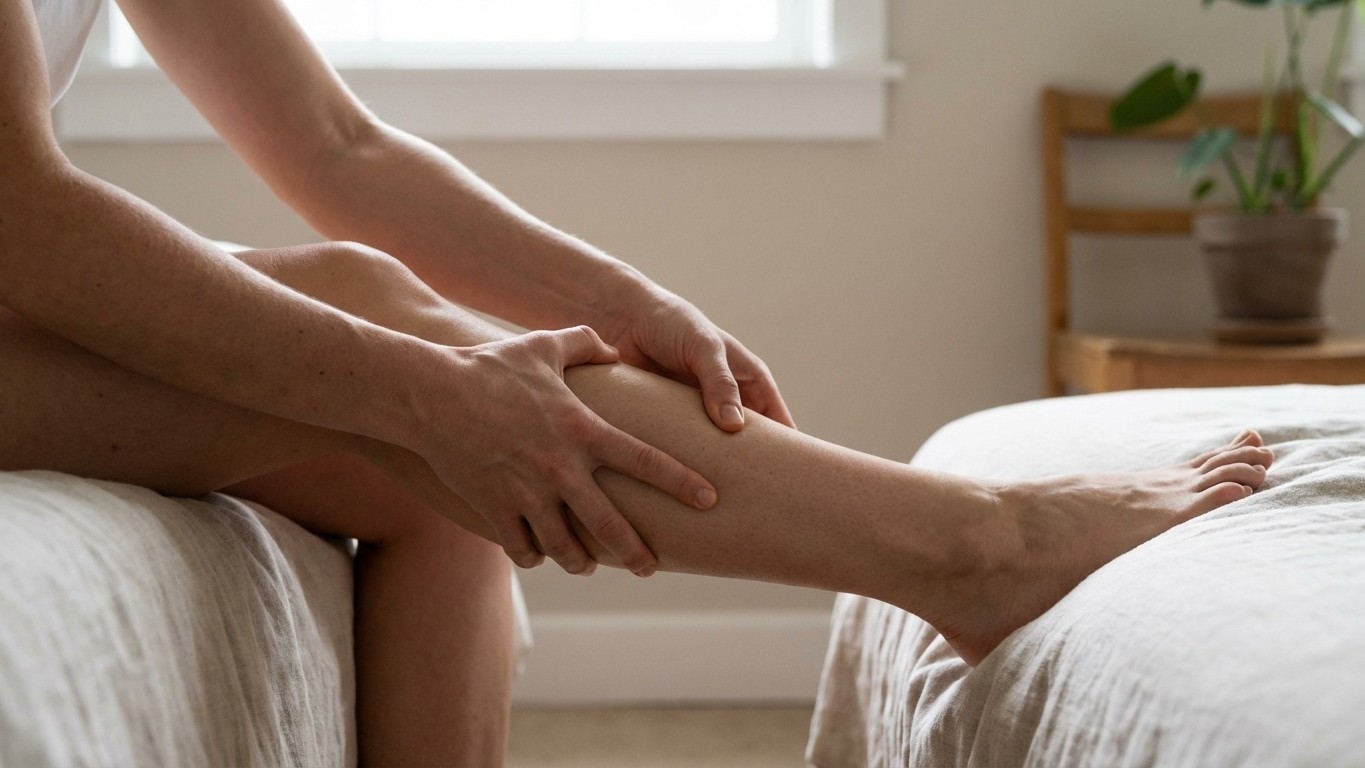
A single demonstration in a Tokyo gym changed my entire approach to post-workout recovery, and not in a way I’d have expected. The trainer barely used any equipment. She took hold of the muscle of my calf between both palms, lifted the tissue slightly away from the bone, and twisted each hand in opposing directions, rhythmically, the way you’d wring out a wet towel. Within about ninety seconds, the tight, bruised-feeling tension I’d carried for two days had softened. The foam roller gathering dust in the corner of the studio suddenly seemed very redundant.
That technique has a name. In the language of sports massage, “wringing” is a method where superficial tissues are grasped in both hands and twisted in opposite directions. The wringing technique consists of lifting and squeezing the muscle forwards and backwards, similar, in feel and in principle, to wringing a towel. It belongs to a broader family of hands-on approaches, and the petrissage techniques, which include kneading, wringing, and scooping strokes, are generally performed with deeper pressure to patient tolerance. Physios and sports massage therapists have been using it for decades. Most of us just never learned we could apply a version of it ourselves.
Key takeaways
- A simple hand technique from Tokyo outperformed expensive foam rolling recovery tools
- The science shows wringing reduces muscle soreness by 38.7% versus foam rollers’ moderate effects
- This ancient practice predates modern fitness gadgets by over a century
What the wringing technique actually does to your muscles
The mechanics are straightforward but the effects are multi-layered. Wringing decreases muscle tightness by increasing the temperature of soft tissues, increasing blood circulation and removing waste products. An increase of temperature and blood circulation allows the muscles to relax, and the removal of waste products relieves tension and helps decrease tone. Think of a muscle that has been sitting in its own metabolic debris after a hard session, lactic acid, inflammatory compounds, Everything that makes you wince when you press on a tender quad the morning after a run. Wringing acts a bit like squeezing out a sponge.
Wringing also increases the temperature of soft tissues and stimulates the release of feel-good hormones. The movements stimulate this temperature increase by raising blood circulation through vasodilation, the widening of blood vessels, which allows more oxygenated blood to be delivered to the muscles. That physiological cascade explains something I’d noticed intuitively: the technique doesn’t just relieve soreness locally, it leaves you feeling genuinely calmer. Wringing also stimulates the release of feel-good hormones in the body, endorphins, serotonin and dopamine, that help stimulate the parasympathetic nervous system, inducing emotions such as calmness and contentment.
The fascia dimension matters too. Because fascia covers and encapsulates muscles, muscle fascicles, and individual muscle fibres, it has a direct effect on how muscles activate and mobilise. Myofascia can atrophy or adhere, which could potentially cause pain, stiffness, or decreased muscular function. Wringing is used to improve tissue elasticity and extensibility, stretching tight fascia and muscle fibres to release tension and mobilise large muscles. the pressure doesn’t just affect the muscle belly you can see and feel, it reaches the connective tissue scaffolding that holds Everything together.
How this stacks up against the foam roller
Foam rolling is, genuinely, not useless. Let’s be clear about that. Studies provide evidence of the beneficial impact of rolling in counteracting DOMS, which can be explained by the mechanical pressure the roller exerts on muscles previously loaded by exercise, it can help increase blood flow by raising arterial pressure and increase muscle temperature as a result of conduction and friction. A 2024 meta-analysis published in the Journal of Bodywork and Movement Therapies found that foam rolling is effective in relieving muscle soreness after exercise, though the effect is moderate.
Where the picture becomes more complicated is in the strength of those effects. Overall, the effects of foam rolling on performance and recovery are rather minor and partly negligible, though they can be relevant in some cases, for instance, to increase sprint performance and flexibility or to reduce muscle pain sensation. Evidence seems to justify the widespread use of foam rolling as a warm-up activity rather than a recovery tool. That last sentence is worth sitting with. We’ve collectively been sold the foam roller as a recovery essential, yet the science positions it more comfortably in the warm-up category.
The wringing technique, as part of petrissage massage, has a rather more consistent evidence base when it comes to soreness reduction. One study found a 38.7% reduction in pain levels after applying petrissage massage, indicating a significant improvement in muscle recovery, a reduction reflecting the positive impact of increased blood flow and muscle relaxation. A broader meta-analysis of sports massage found that massage was associated with small but statistically significant improvements in flexibility and DOMS, leading researchers to conclude that, although sports massage may not improve performance directly, it may somewhat improve flexibility and DOMS.
There is another, less-discussed advantage that no study quite captures: wringing can be applied precisely. A foam roller covers wide terrain in a generalised way, a ball suits focused spots (trigger points) and a roller suits larger muscle groups, but neither gives you the granular, targeted feedback you get from using your own hands. You feel the tissue responding. You adjust pressure. You’re in a conversation with the muscle, not just rolling over it.
How to do it yourself (and do it properly)
The self-applied version of wringing takes a little practice but requires no equipment beyond your own hands. Wringing is a specific massage technique performed onto large areas of muscle, lifting and squeezing the muscle in a forward and backward motion, and it can be performed with different levels of pressure dependent on the desired outcome.
Start with accessible areas, the calf and the front of the thigh are ideal for beginners. Place both hands around the muscle belly, fingers spread, and lift the tissue slightly away from the underlying bone. Then push one hand forward while drawing the other back, then reverse, creating that twisting, rolling motion. Go slowly at first. Slow, sustained pressure is usually more effective and safer than hard, fast force. Wringing is a beneficial treatment to reduce the symptoms of delayed onset muscle soreness. DOMS occurs within 24 to 48 hours after exercise and is the result of microscopic tearing of muscle fibres which can be associated with inflammation and pain. Applying wringing within that window — ideally within a few hours of finishing exercise, and again the following morning, is when you’re likely to feel the most meaningful difference.
A few practical points worth noting. Massage therapists are unlikely to use oil or cream as a lubricant during myofascial release, as they can get a firmer grip on the skin during treatment. The same applies here: work on bare skin without lotion for a firm hold. Breathe throughout. Breathing invites the nervous system to relax, which lets fascia soften more easily. And respect the limits of self-treatment, for many people, gentle, consistent myofascial work can reduce tightness and improve function, but in more complex situations it should be part of a broader plan including movement, sleep, hydration, and professional guidance.
The bigger picture on recovery
While techniques like these can be a helpful tool, they belong in a well-rounded performance and recovery plan for best results, they shouldn’t outrank progressive overload for performance gains. Keeping nutrition, hydration, sleep, and stress levels in check is even more important than any manual technique for recovery. That said, there’s something worth considering about the economics of attention. A foam roller demands you drape yourself across the floor, prop your bodyweight through your arms, and essentially perform a slow series of planks to target your quads. Wringing takes two minutes, can be done sitting on the edge of your bed, and asks nothing more than your own two hands.
The trainer in Tokyo told me afterwards, almost as an aside, that the technique was simply standard practice, something her coaches taught her as a student, long before foam rollers became a fixture in every gym. I’ve thought about that fairly often since. How much of what we consider modern and scientific in the fitness world is, in fact, ancient practice in new packaging? The wringing technique predates the foam roller by well over a century. Which raises the quiet question of whether, in our enthusiasm for novelty, we sometimes trade the actually effective for the merely purchasable.
As always, if you’re experiencing significant muscle pain, unusual stiffness, or any symptoms that concern you, please consult your GP or a qualified physiotherapist. Self-massage techniques are not a substitute for professional medical advice.
Sources : nature.com | pmc.ncbi.nlm.nih.gov