
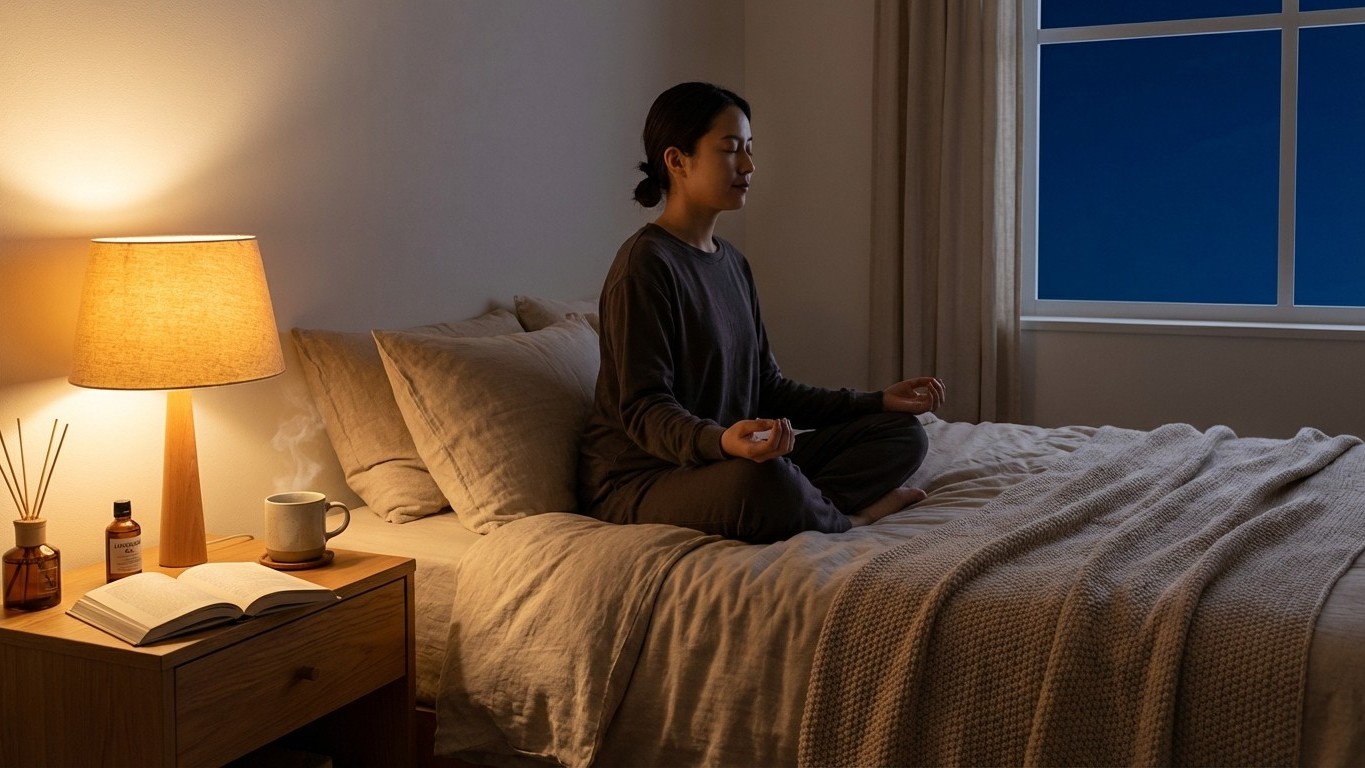
If you’ve ever endured a night of tossing and turning, your mind whirring with tomorrow’s to-do list, you’re far from alone. Stress can sabotage sleep, turning what should be restorative downtime into an endless loop of worry. Neuroscientists have zeroed in on a surprisingly straightforward ritual that soothes the nervous system, gently lowering stress levels before bed: a deliberate, calm wind-down period. It sounds almost too simple, but even small shifts in behaviour can transform the way we rest.
Key takeaways
- Why modern habits keep your brain wired at bedtime.
- A surprisingly simple wind-down ritual that signals your brain to relax.
- How slow breathing reprograms your stress response for better sleep.
Why the Brain Struggles to Switch Off
Modern life doesn’t make it easy for our brains to unwind. Screens flicker late into the night, emails ping, and social media tempts us just before lights out. The result? Daytime stimulation bleeds into bedtime, keeping the nervous system on high alert. Neurological research has shown that these habits increase the time it takes to fall asleep, disrupt the quality of deep sleep, and leave us groggy come morning. In my own circle, friends who scroll through their phones before bed often complain of “mind chatter” that won’t quieten, sound familiar?
Here’s where the science gets intriguing. The brain craves signals that it’s safe to switch into rest mode. Without these cues, levels of stress hormones, especially cortisol, tend to stay elevated even when lying in bed with the lights off. A study published in Current Biology found that even a single session of mindful relaxation before sleep reduced participants’ cortisol levels, paving the way for deeper slumber. Stress isn’t just an annoyance, it changes our neurochemistry, and it takes a deliberate ritual to counteract that effect.
The Power of the Nighttime Wind-Down
So, what exactly is this ritual that neuroscientists advocate? It doesn’t require fancy gadgets or complicated routines. The key is to introduce a period of gentle transition, about 20 to 30 minutes, dedicated to winding down before bed. This buffer, away from stimulation and screens, signals the brain that sleep is coming. Physiologically, heart rate slows, breathing deepens, and the production of melatonin, the body’s sleep hormone, is given a boost.
There are various ways to fill this wind-down space. Reading fiction under a soft light, listening to soothing music, practising slow, deep breathing, each of these acts as a gentle prompt to the brain to relax and let go. The practice isn’t one-size-fits-all, nor does it demand perfection. The key is consistency, giving the ritual its soothing, almost meditative power as the days go by.
Breath: The Brain’s Favourite Relaxation Tool
Deliberate slow breathing has gained special attention in neuroscience circles. Research in Science Advances demonstrated that controlled, slow breaths directly activate neural circuits linked to calm and emotional regulation. Quite literally, breathing slowly tells the amygdala, the brain’s alarm centre, that things are safe. It’s no shock that yogis have leaned on this knowledge for centuries, but modern brain scans now confirm the effect.
Try this: as your evening ritual, sit quietly and inhale for a count of four, then exhale for six. Repeat for several minutes. The simple act of elongating the exhale signals the parasympathetic nervous system to shift into rest-and-digest mode, dampening the body’s stress response.
Small Rituals, Lasting Change
What about the sceptics who expect change overnight (pun intended)? Neuroscientists warn that the benefits accrue over time. Establishing an evening wind-down lifts sleep quality gradually, reducing those 3am wake-up calls that have become a fixture of anxious modern living. People who made the switch reported not just falling asleep faster, but waking more refreshed and less reactive to daily stressors. The mind becomes less of a storm, more of a still pond, at least for a few precious hours each night.
My grandmother always insisted on a cup of camomile tea and a crossword before bed (her own variation of a calming ritual). Years later, studies from several universities have emphasised the value of non-stimulating evening routines. A regular, soothing practice outperforms even some over-the-counter sleep aids, without the risk of dependence or grogginess. There’s something almost rebellious about quietly reclaiming the evening as a sacred transition zone, immune to the day’s hectic pace.
Curating Your Personal Wind-Down: Where to Begin?
If you’re new to the concept, start with the basics. Set a reminder 30 minutes before you’d like to be asleep. Dim the lights, put away screens, and choose a calming activity. This isn’t the moment to catch up on news or organise tomorrow’s work, think gentle, undemanding, and familiar. For some, a notebook by the bed helps to offload persistent thoughts. Others find gentle stretching or aromatherapy, just a drop of lavender oil on a tissue, sets the scene for rest.
Consistency does the heavy lifting. Even if the first night feels awkward, give it a week. The mind, much like a puppy, thrives on clear cues and predictable rhythms. Sometimes the simplest rituals offer the most profound change: the difference between a racing mind and a peaceful drift into sleep can hinge on 20 minutes of calm, repeated night after night.
Of course, no universal recipe fits everyone. Persistent insomnia or overwhelming anxiety at bedtime warrants a chat with your GP, as these may signal underlying health issues that need tailored support. But even alongside medical guidance, a nightly wind-down ritual offers a gentle, accessible way to dial down daily stress.
As you pull the covers up tonight, consider: What message is your evening routine sending to your brain? Are you nurturing stillness, or prolonging the frantic tempo of the day? Sometimes the most powerful acts of self-care start with a single, deliberate pause. Where might this nightly ritual lead you—in sleep, and in waking life?
This article is for information purposes only and does not substitute professional medical advice. Always consult your GP regarding any concerns about stress, sleep, or mental health.