
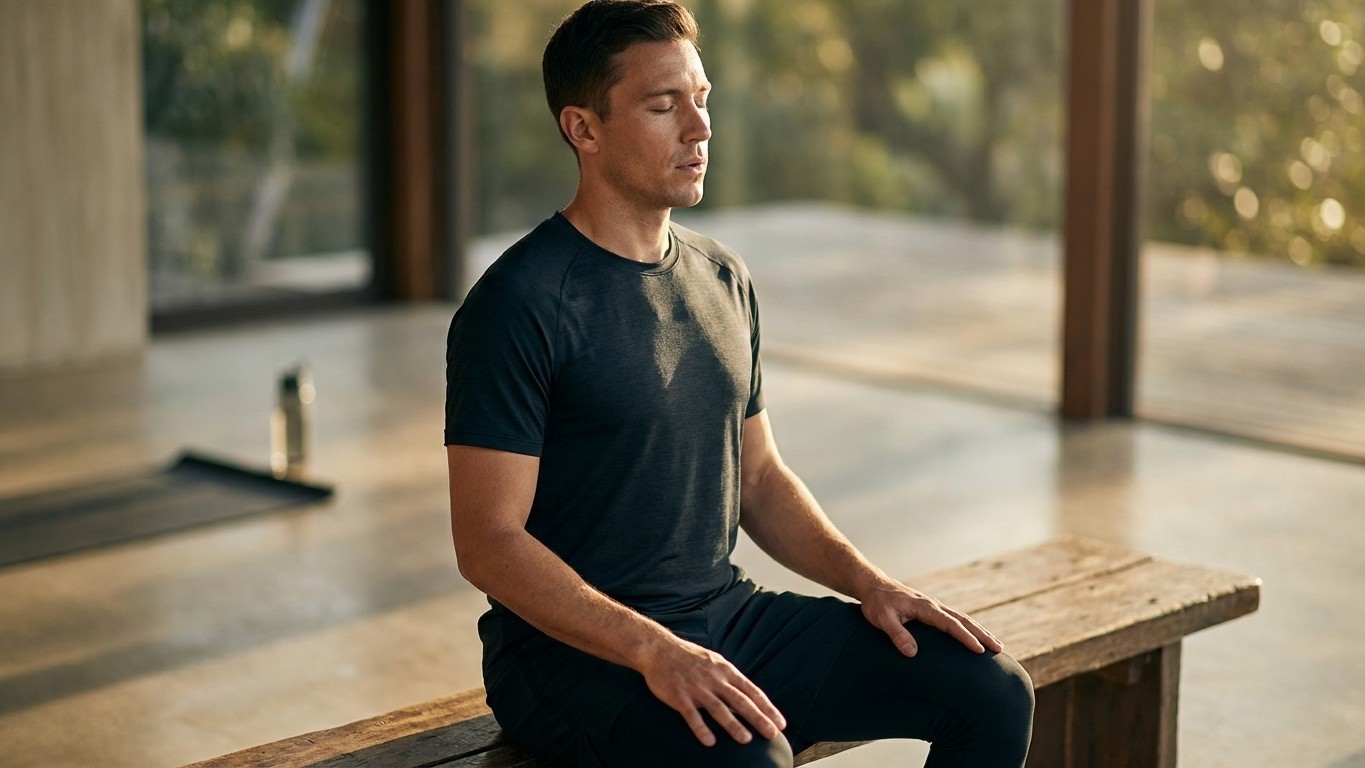
After a tough training session, most of us reach for a protein shake, maybe roll out a foam roller, and call it done. But there’s a recovery practice quietly adopted by endurance athletes, martial artists, and high-performance sports teams that doesn’t involve any equipment, costs nothing, and takes roughly ten Minutes. It’s called seiza breathing, rooted in traditional Japanese seated meditation posture, and physiotherapists across the UK are increasingly recommending a modernised version of it to their patients, weekend warriors and elite competitors alike.
Key takeaways
- A centuries-old Japanese breathing technique is gaining traction among UK physiotherapists and elite sports teams for post-workout recovery
- The science: extended exhales activate your vagus nerve, shifting your body from stress mode to repair mode in minutes
- Athletes who practice this report better sleep, faster recovery, and improved performance—with zero cost or equipment required
What actually happens to your body after exercise
The period immediately following intense physical effort is more complex than it looks. Your heart rate is elevated, your sympathetic nervous system (the “fight or flight” branch) is still firing, stress hormones like cortisol and adrenaline remain in circulation, and your muscles are flooded with metabolic byproducts. Most people treat this window as dead time, the few Minutes of vague stretching before the shower. That’s a missed opportunity.
Recovery isn’t passive. It’s an active physiological process, and the speed at which your body transitions from a state of stress to one of repair depends heavily on how quickly you can shift nervous system dominance from sympathetic to parasympathetic. The parasympathetic branch, sometimes called “rest and digest”, is responsible for reducing heart rate, promoting muscle repair, lowering inflammation, and improving the quality of subsequent sleep. Anything that accelerates this shift means your body spends more time rebuilding and less time wound up.
This is precisely where the Japanese practice comes in. The technique combines a specific seated posture with deliberate diaphragmatic breathing, drawing on principles from zazen (seated Zen meditation) that have been refined over centuries. The posture itself, whether seated cross-legged, in seiza kneeling, or simply upright in a chair, encourages spinal decompression after loading. The breathing pattern does the heavy lifting neurologically.
The breathing mechanics that make it work
The core of the practice is a breathing ratio: a slow inhale followed by an exhale roughly twice as long. A common version is four counts in, eight counts out. This extended exhale is not arbitrary. Exhalation activates the vagus nerve, which runs from the brainstem down through the chest and abdomen and acts as the primary conduit of parasympathetic signals. Prolonging the out-breath essentially turns up the volume on your body’s recovery signal. Research published in journals exploring heart rate variability (HRV) has consistently supported the idea that slow, controlled breathing with extended exhalation increases vagal tone, a widely used marker of recovery readiness in sports science.
What separates the Japanese approach from generic “deep breathing” advice is the intentional stillness and the emphasis on posture as part of the practice, not merely a comfortable accident. Sitting upright with the spine tall means the diaphragm can move through its full range of motion, which maximises both the mechanical and neurological effect of each breath. Slouching after a workout, as most of us do when we collapse onto a bench, compresses the diaphragm and reduces that effect considerably. Small detail, real difference.
Many physiotherapists working with athletes have started integrating a version of this into cool-down protocols specifically because it requires nothing beyond awareness. No equipment, no space, no financial outlay. The barrier to entry is effectively zero, which is somewhat embarrassing given how consistently it gets skipped.
How to actually do it (without overthinking it)
Find somewhere reasonably quiet within a few minutes of finishing exercise. Sit either cross-legged on the floor, kneeling in the traditional seiza position (heels tucked under the buttocks), or upright in a chair with both feet flat on the ground. The priority is a tall, relaxed spine, not rigid, not collapsed. Let your hands rest on your thighs, close your eyes if you’re comfortable doing so, and allow the first minute simply to let your breathing settle without forcing anything.
Once you feel slightly more grounded, begin the ratio breathing. Inhale slowly through the nose for four counts, then exhale through slightly parted lips or the nose for eight counts. Breathe into your belly first, then your ribcage, rather than lifting your shoulders. Aim for eight to ten minutes. If your mind wanders, and it absolutely will, especially after a hard session when the body is still buzzing — gently return your attention to the exhale. The exhale is always the anchor.
Some athletes add a body scan to the final two minutes, simply noticing areas of tension or fatigue without trying to change them. Others prefer silence. Both work. The practice isn’t prescriptive, which is perhaps why it has survived intact for so long in Japanese athletic and martial arts traditions.
The deeper reason physios are paying attention
Sleep quality is where this practice earns its most compelling case. The transition from sympathetic to parasympathetic arousal that this breathing initiates doesn’t simply end when you stand up and get on with your evening. If done within thirty Minutes of training, it appears to carry forward, supporting the body’s natural melatonin production and reducing the cortisol spike that frequently disrupts sleep in people who exercise in the evening. For anyone who has ever finished a 7pm gym session and then spent two hours staring at the ceiling, this is worth knowing.
Your physiotherapist will likely tell you (as mine told a colleague who passed it on to me) that the most underestimated variable in Recovery isn’t nutrition or even sleep duration. It’s the nervous system’s readiness to accept rest. You can be in bed for nine hours and still wake exhausted if your body never fully disengaged from the stress state of exercise. Ten minutes of deliberate breathing, done consistently, shifts that equation.
The real question isn’t whether ten minutes is worth it. It’s why we decided somewhere along the way that recovery had to involve a product to count.
Please consult your GP or chartered physiotherapist before making changes to your exercise or recovery routine, particularly if you have an underlying health condition.