
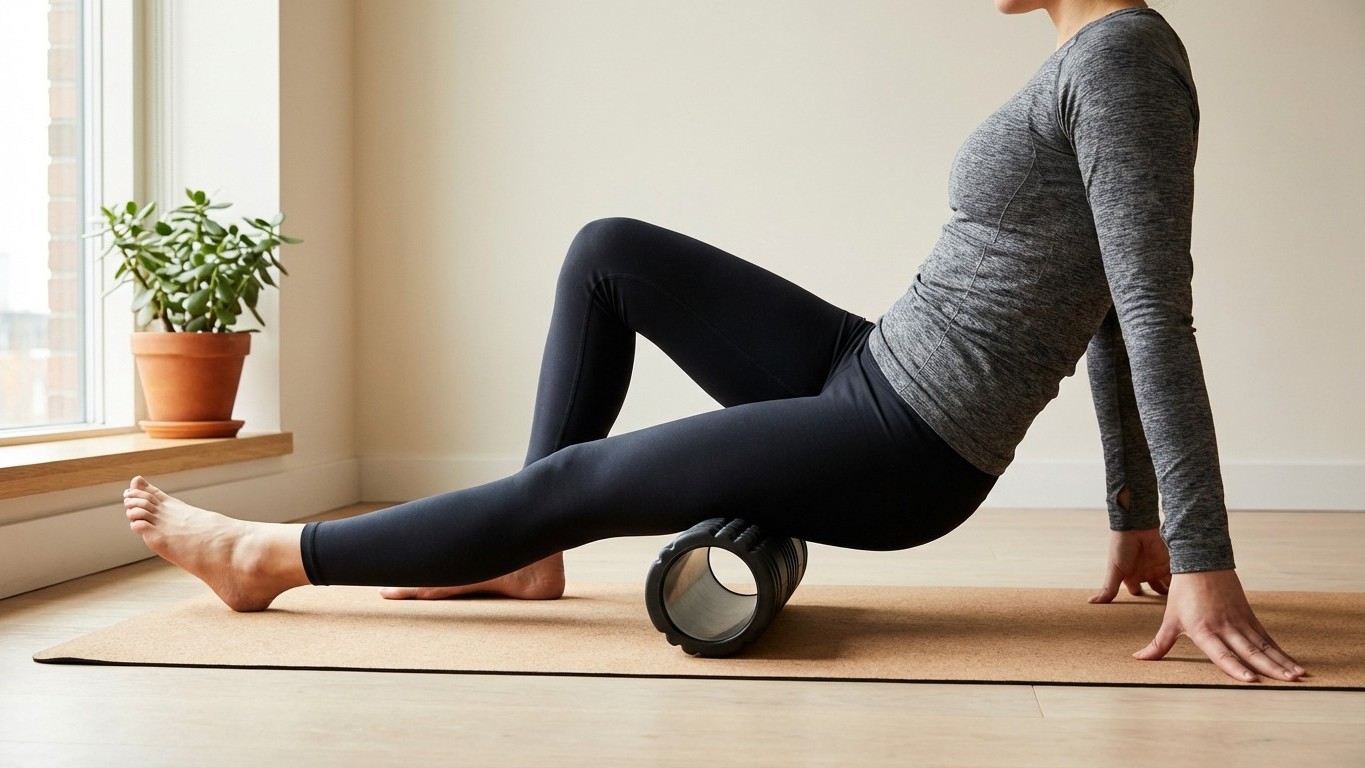
For years, I treated my foam roller like a rolling pin, press down, apply pressure everywhere equally, and assume the job was done. One session with a sports physiotherapist Changed that completely. She pulled out a laminated chart showing the different tissue types across the body, explained why rolling your IT band the same way you’d roll your calf is roughly as logical as ironing a silk blouse on the setting meant for denim, and watched my face fall as I realised I’d been doing this wrong for the better part of three years.
The foam roller has become one of the most popular recovery tools in home fitness, and for good reason. Research into self-myofascial release (SMR), which is the technical term for what you’re doing when you press a roller against your body, suggests it can reduce delayed-onset muscle soreness, improve short-term range of motion, and support recovery between training sessions. But the evidence also points to something most people gloss over: the technique, pressure, and duration that works well for one area of the body can be actively unhelpful, or even harmful, in another.
Key takeaways
- Not all body tissues respond the same way to foam rolling pressure—some areas can be actively harmed by the wrong technique
- A physio’s chart revealed why rolling your IT band like your calf is as logical as ironing silk on a denim setting
- The difference between productive discomfort and actual inflammation during rolling might be hiding in your technique
Why muscle tissue isn’t a one-size-fits-all problem
The body is made up of wildly different structures sitting very close together. A muscle belly (the thick, meaty centre of a muscle) responds quite differently to compression than a tendon, a joint capsule, or a nerve pathway. Your calves, for instance, are relatively safe territory for sustained, moderate pressure. The gastrocnemius and soleus muscles are thick and fleshy, with good blood flow and considerable tolerance for rolling. Spend 60 to 90 seconds there and you’ll likely feel genuine release.
The IT band is a different story entirely. That long strip of connective tissue running down the outside of your thigh isn’t actually a muscle at all, it’s dense fascia, and it doesn’t “release” the way a muscle does under compression. Rolling directly over it repeatedly, especially with aggressive pressure, can irritate the underlying tissue and the lateral knee structures. What most people interpret as a productive “ouch” is sometimes just inflammation in the making. The physio’s chart made this distinction startlingly clear: not all discomfort during rolling is productive discomfort.
The lower back is another area where good intentions go wrong. Rolling directly over the lumbar spine feels intuitive when your back aches, but the vertebrae and the small joints around them (the facet joints) are not suited to the pressure a foam roller delivers. The thoracic spine, the upper and mid back, is a safer and more appropriate target for spinal mobility work with a roller. That distinction alone might be the single most useful piece of information you take from a physio’s chart.
The areas that genuinely respond well to rolling
Once you understand which tissues are appropriate targets, rolling becomes considerably more effective. The quadriceps are ideal candidates. Lying face-down and slowly rolling from just above the knee toward the hip flexor, pausing on any tender spots for 20 to 30 seconds rather than frantically rocking back and forth, gives the muscle time to respond neurologically. That pause matters. Research suggests the nervous system needs a moment to interpret the pressure and begin reducing muscular tone in response.
The thoracic spine, as mentioned, rewards careful attention. Placing the roller horizontally across your upper back, supporting your head with your hands, and gently extending over it can help counteract the forward rounding that accumulates from desk work and screen time. This is one of the few areas where spinal extension over a roller is genuinely supported by physio guidance, though anyone with spinal conditions should check with their GP or physio before trying this.
The glutes deserve more attention than most people give them. Sitting on the roller with one ankle crossed over the opposite knee, then shifting your weight slowly toward the hip of the crossed leg, targets the piriformis and surrounding gluteal muscles in a way that can meaningfully relieve tension in the hips and lower back. It’s less glamorous than the dramatic IT band session you see on social media, but it’s considerably more useful.
How to think about pressure, speed, and timing
The physio’s chart didn’t just map anatomy, it also showed a simple principle I hadn’t considered. Faster rolling tends to stimulate tissue rather than release it. If you’re rolling quickly back and forth, you’re essentially warming the area up, which has its own value before exercise. But if you’re trying to reduce tension and improve mobility after training, slower movement with deliberate pauses is what the evidence supports.
Pressure is trickier. The instinct to press as hard as possible isn’t always the right one. On sensitive areas like the inner thigh or the front of the shin, too much pressure can compress nerves and blood vessels in unhelpful ways. A general rule from physiotherapy practice: if your pain score during rolling is above six or seven out of ten, you’re likely creating more tension than you’re releasing. The body braces against pain, which is rather counterproductive when the goal is muscle release.
Timing matters too. Rolling cold muscles before any warm-up can be uncomfortable and less effective than rolling slightly warmed tissue. Post-exercise, when muscles are already pliable, tends to produce better results for recovery work. The session doesn’t need to be long, two to three minutes per major muscle group, done consistently, outperforms a frantic twenty-minute session once a week.
There’s something quietly humbling about realising that a tool you’ve owned for years hasn’t been used to its potential. The foam roller sitting in the corner of most living rooms is genuinely useful kit. But like most things in fitness, the gap between doing it and doing it well is larger than it first appears. A single session with a sports physio, or even a good anatomy reference, might be worth more than months of uninformed rolling, which, for what it costs, feels like rather good value.
If you have any injuries, joint conditions, or chronic pain, please consult your GP or a registered physiotherapist before beginning any new recovery routine.