
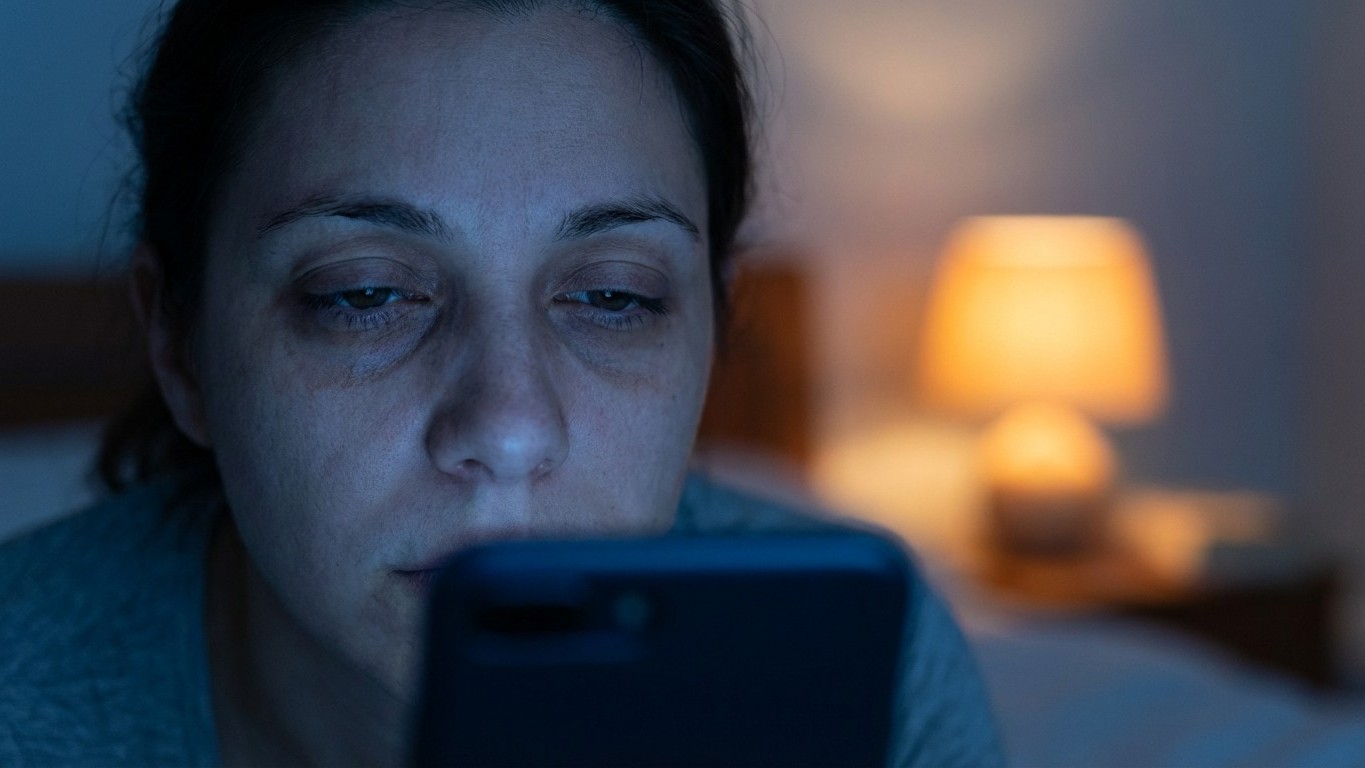
Your phone’s screen at 11pm is doing something rather clever, and not in a good way. It’s mimicking the spectral signature of midday sunlight, sending a very clear message to your brain: stay awake, it’s not time to sleep yet. The result? Your body delays melatonin release, your sleep onset shifts later, and by morning you’ve lost precious restorative sleep, without ever understanding why you feel so tired. The good news is that reducing blue light exposure for better sleep doesn’t require expensive gadgets or drastic lifestyle overhauls. A layered, natural approach combining free software tweaks, smarter habits, and the right lighting choices can make a measurable difference within days.
Why Blue Light Disrupts Sleep: The Biology Behind the Problem
Your Internal Clock and the Light It Fears Most
Deep within the hypothalamus sits your suprachiasmatic nucleus (SCN), a tiny cluster of neurons that acts as your body’s master clock. This clock synchronises your entire circadian rhythm, the roughly 24-hour biological cycle governing sleep, hormone release, body temperature, and metabolism. Light is its primary input signal, and not all wavelengths are equal. Short-wavelength blue light (roughly 415–495 nanometres) is the most potent stimulus for your SCN, precisely because it mimics the blue sky of noon.
Your retina contains specialised photoreceptors called intrinsically photosensitive retinal ganglion cells (ipRGCs), which are exquisitely sensitive to blue wavelengths. When stimulated, they signal the pineal gland to suppress melatonin, the hormone that triggers sleep onset. This is a beautiful evolutionary mechanism during daylight hours. At 10pm, staring at a tablet emitting thousands of lux of blue-enriched light, it becomes a significant problem.
What the Research Actually Shows
Studies published in peer-reviewed journals have consistently shown that evening exposure to blue-enriched light can delay melatonin onset by 90 minutes or more, shorten total sleep duration, and reduce the proportion of slow-wave (deep) sleep. One particularly striking finding from sleep research is that even relatively dim blue light exposure, at levels typical of indoor devices, can suppress melatonin production by up to 50% compared to complete darkness. Children and adolescents appear even more sensitive to this effect, partly because the lens of a younger eye transmits more blue wavelengths to the retina.
What’s often missed in popular discussions is that the timing of exposure matters as much as the intensity. Blue light at 6pm has far less impact on melatonin than the same exposure at 9pm, when your body is biologically preparing for sleep. This is why a one-size-fits-all approach (“just use night mode”) misses the point, the strategy needs to be progressive, timed, and layered across multiple sources of exposure.
Reduce Blue Light for Better Sleep Naturally: Three Pillars of Action
Device Settings: Free Adjustments That Actually Work
Every modern smartphone, tablet, and computer now offers built-in tools to reduce blue light output, and most of them cost nothing to use. The most useful are night mode settings (Night Shift on Apple devices, Night Light on Android and Windows), which shift the display’s colour temperature towards warmer amber tones after a time you set. The key is to schedule these to activate earlier than you think necessary, around 7pm rather than 9pm, giving your circadian system a gradual, natural wind-down signal rather than an abrupt switch.
Beyond colour temperature, reduce screen brightness to its lowest comfortable level in the evening. A brightly lit screen on night mode is still more stimulating than a dimmer, slightly cooler screen. On computers, free software such as f.lux offers more granular control than built-in options, allowing you to set different colour temperatures for different times of day and to customise the transition speed. Slower transitions are better, your eye adapts gradually, which mirrors the natural dimming of daylight at dusk. Television sets also have warm picture modes or ambient light settings; digging into the display menu of your TV is worth fifteen minutes of your time.
For those who want to go further without spending money, most modern smartphones allow you to reduce white point intensity in accessibility settings, creating a warmer, dimmer display even below the standard minimum brightness. This is genuinely useful and underused.
Evening Habits: When Behaviour Matters More Than Technology
Software filters help, but they are not a licence to scroll Instagram until midnight. The behavioural component of reducing blue light is where most of the real gains are made. Establishing a consistent “screens down” point, even 30 to 45 minutes before your target sleep time, creates the mental and physiological space your body needs to transition into sleep mode. This connects directly to building a natural sleep routine that signals your nervous system, night after night, that sleep is approaching.
The challenge, of course, is filling that time with something that doesn’t feel like a punishment. Reading a physical book under a warm lamp, listening to a podcast or audiobook, doing some gentle stretching, or simply having a conversation (without a phone in hand) are all effective alternatives. These aren’t deprivations, they’re replacements that many people discover they genuinely enjoy once they stop reflexively reaching for a screen. For children, this transition is easier to manage when it becomes a shared family ritual rather than a rule imposed on them alone.
Gradual detachment works better than abrupt bans. On Sunday evening, try switching off screens an hour before bed. By Wednesday, you might not miss it.
Lighting Choices: The Overlooked Variable in Your Home
Your phone is not the only blue light source in your bedroom. Overhead LED bulbs, especially cool-white varieties, emit a surprisingly blue-shifted spectrum. Switching to warm-white bulbs (look for a colour temperature of 2700K or lower, sometimes labelled “warm white” or “extra warm white”) in your bedroom and living areas is one of the highest-impact, lowest-effort changes you can make. Salt lamps and candlelight (with appropriate safety precautions) sit at the very warm end of the spectrum and are effectively melatonin-neutral.
Dimmer switches are genuinely worth installing in rooms you use in the evening. Not because they’re trendy, but because reducing light intensity as the evening progresses replicates the natural dimming of dusk, the exact environmental cue your circadian system evolved to interpret as “sleep is coming.” If rewiring is impractical, plug-in dimmer adapters for standard lamps are inexpensive and effective.
Blue Light Glasses, Myths, and Frequently Asked Questions
Do Blue Light Blocking Glasses Actually Work?
This is where marketing and science diverge rather sharply. Blue light blocking glasses are widely sold as a solution for better sleep, and some people do report benefit from wearing them in the evening. The evidence, though, is more nuanced than the advertising suggests. Reviews of the published literature have found mixed results, with some studies showing modest improvements in sleep quality and others finding no significant effect compared to placebo lenses.
The most honest answer is this: glasses that genuinely filter blue wavelengths (amber-tinted lenses, not the barely-there clear lenses marketed as “blue light blocking”) can help, particularly if you have limited ability to modify your environment or screen settings. But they work best as part of a broader strategy, not as a standalone solution. If you’re wearing blue-light glasses while sitting in a brightly lit room under cool-white LEDs, you’re treating a symptom while ignoring most of the cause. They’re a useful tool, not a magic fix.
For children and teenagers, the priority should be earlier and firmer screen curfews rather than gadgets. A 14-year-old’s developing circadian system is better served by putting the phone away at 8:30pm than by wearing filtered glasses until 11pm.
Common Misconceptions Worth Clearing Up
One pervasive myth is that e-readers are perfectly safe for evening reading. Some are, e-ink displays with no backlight are genuinely low in blue emission. But backlit e-readers, especially those with adjustable colour temperature set to cool white, emit enough stimulating light to matter. Warm backlight settings at minimum brightness are fine; cool, bright settings are not meaningfully different from a tablet.
Another common belief is that one bad night of screen exposure ruins your sleep permanently, or conversely, that one night of good habits fixes everything. Circadian rhythms are resilient but they respond to patterns, not single events. Consistency over days and weeks is where the benefit accumulates. This is why the seven-day approach below is structured progressively, small, sustainable changes stack up.
And no, dark mode on your phone is not the same as blue light filtering. Dark mode reduces overall screen brightness and makes the background dark, which is helpful, but it doesn’t shift the colour temperature towards amber. Use both together for the best result.
A Seven-Day Plan to Reduce Blue Light Naturally
The goal here isn’t perfection on day one. It’s building new defaults that eventually feel effortless. Good sleep hygiene tips natural approaches always emphasise gradual habit formation over willpower-dependent cold turkey.
Days 1–2: Schedule Night Shift or Night Light to activate at 7pm on all devices. Enable dark mode. No other changes yet, just observe how your evenings feel.
Days 3–4: Replace the overhead bulb in your bedroom with a warm-white (2700K) equivalent if it isn’t already. Add a 20-minute screen-free window before bed. Use this time for anything you enjoy that doesn’t involve a display.
Days 5–6: Extend the screen-free window to 45 minutes. If you have a lamp in your living area, switch it to a warm-white bulb and use it instead of overhead lighting after 8pm. Reduce all screen brightness to its lowest comfortable setting by 8pm.
Day 7 and beyond: Aim for one hour of screen-free time before sleep. Assess your sleep quality honestly, most people notice they’re falling asleep faster and waking feeling more rested. For deeper strategies on how to fall asleep faster naturally, the principles above integrate seamlessly with breathing techniques, sleep environment optimisation, and relaxation methods.
If you live with children or teenagers, involve them in the process from day one. Explain the biology in simple terms (the light tricks your brain into thinking it’s daytime), make the changes family-wide, and frame the screen-free period as an opportunity rather than a ban. Reading together, board games, or simply talking are underrated as sleep hygiene interventions.
Going Further: Building This Into a Broader Sleep Strategy
Reducing blue light exposure is one pillar of natural sleep improvement, but it works best when connected to the full picture. Your evening environment, stress levels, caffeine timing, and physical activity all interact with your circadian system. A comprehensive look at natural sleep remedies puts blue light management in context alongside plant-based approaches, breathing techniques, and environmental adjustments that together create the conditions for genuinely restorative sleep.
The deeper question is whether our culture’s relationship with screens, particularly in the hours before bed, is serving us. We’ve designed devices to be maximally engaging at exactly the time our biology is asking us to disengage. Reducing blue light is, in a sense, a small act of reclaiming your evenings for your own nervous system. What you choose to do with that quieter, warmer hour before sleep might turn out to be the most interesting part of this experiment.
Please consult your GP if you experience persistent sleep difficulties, as these can sometimes indicate underlying health conditions that benefit from professional assessment.