
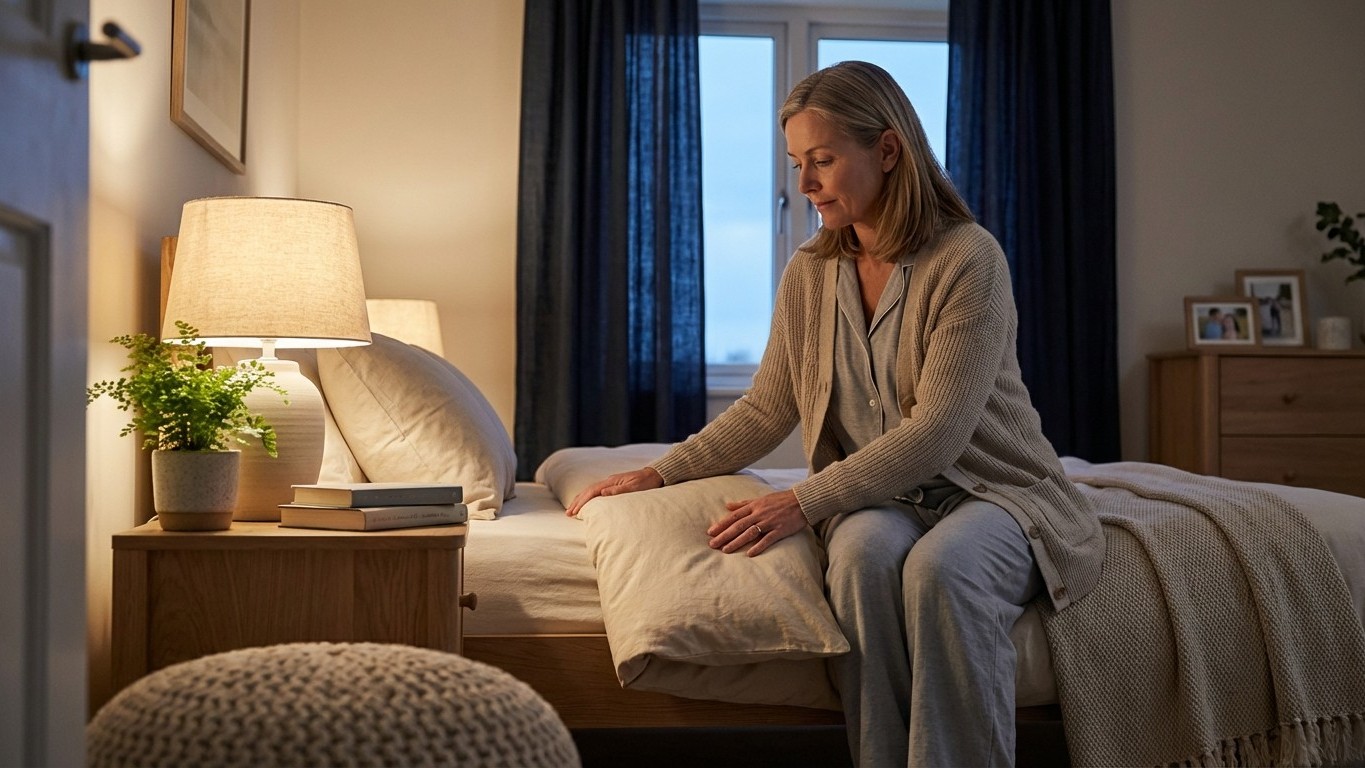
Introduction
Waking up drenched, throwing off the duvet, then shivering a few minutes later is a familiar pattern for many women in perimenopause. Night sweats can feel random, but they often follow understandable triggers: hormonal fluctuation, stress, a warm bedroom, alcohol with dinner, or even the wrong fabric against the skin. The good news is that a practical, low-risk plan usually helps, especially when you combine gentle body-based strategies with smart bedroom adjustments.
This page is designed as a hands-on leaflet for natural sleep remedies for perimenopause night sweats. It focuses on what you can change tonight, what to trial over 2 to 6 weeks, and when it is sensible to involve your GP. No miracle promises, just a structured way to regain comfort and sleep continuity.
Understanding perimenopause night sweats
Why do they happen?
Perimenopause is the transition phase before menopause, when ovarian hormone output becomes more variable. Oestrogen can swing up and down, and that instability affects temperature regulation in the brain. Many women notice their “thermostat” becomes more sensitive, so small internal or external changes can trigger a heat surge and sweating.
Several factors commonly amplify night sweats during perimenopause:
- Stress load: higher cortisol and adrenaline can make the body feel “on alert” at night.
- Alcohol: can widen blood vessels and fragment sleep, increasing flushing and sweating for some women.
- Spicy foods and large late meals: may increase core temperature and reflux risk.
- Warm sleep environment: thick duvets, foam mattresses that hold heat, and poor airflow can trap warmth.
- Smoking: associated with more vasomotor symptoms in observational research.
Not every sweaty night is hormonal, though. Infections, thyroid problems, some medicines, and sleep apnoea can also contribute. If your pattern is new, intense, or accompanied by other symptoms, a medical check is wise.
Link between night sweats and sleep disruption
Night sweats are not only uncomfortable, they can break sleep in multiple ways. A heat surge can wake you directly, then damp skin and bedding can keep your body from settling back into deeper stages of sleep. Many women also develop “anticipatory” insomnia, a learned alertness that comes from expecting a sweaty wake-up.
Research on menopausal and perimenopausal vasomotor symptoms consistently links them with poorer sleep quality. The relationship can become circular: disrupted sleep raises stress sensitivity, which may increase the likelihood of another night sweat.
If you want broader context on gentle approaches for sleep across life stages, you may find this helpful: natural sleep remedies.
Natural solutions to ease perimenopause night sweats
In clinic-style terms, I think of this as a “ladder”. Start with the lowest-risk, highest-return steps, then add targeted options if needed. Aim to change one or two things at a time so you can tell what is helping.
Medicinal plants and herbal teas (sage, black cohosh and more)
Herbal approaches are popular because they feel gentle and self-directed. Evidence quality varies, and safety depends on your health history and any medicines you take. As of March 2026, the best-supported options for vasomotor symptoms tend to be standardised extracts rather than casual “a bit of herb in a teabag”, but many women still find warm, caffeine-free drinks soothing as part of a wind-down routine.
- Sage (Salvia officinalis): Traditionally used for excessive sweating. Some clinical studies suggest sage extracts may reduce hot flushes, though study designs and products differ, so results are not perfectly consistent. If you try sage as a tea, keep expectations realistic and track symptoms for a few weeks.
- Black cohosh (Actaea racemosa): Often used for hot flushes. Evidence is mixed, with some trials showing benefit and others not, partly due to variation in preparations. It may not be appropriate if you have certain liver conditions, and it can interact with medicines. Discuss with your pharmacist or GP before using it.
- Hops (Humulus lupulus): Contains phytoestrogen-like compounds and is sometimes used for sleep and menopausal symptoms. Early research suggests potential benefit, but robust conclusions are limited.
- Valerian, chamomile, lemon balm: More aligned with anxiety and sleep onset than sweating itself. They can be useful if your main issue is lying awake after a sweat episode.
Practical way to trial teas: choose one caffeine-free option, take it 60 to 90 minutes before bed, and keep everything else stable for 10 to 14 nights. If there is no change, move on.
If you are looking for menopause-specific natural approaches (many apply to late perimenopause too), these pages may help: natural sleep remedies for menopause and natural sleep remedies for menopause.
Supplements (magnesium, phytoestrogens and others)
Supplements sit in a grey zone: they can help, but they can also be a waste of money if chosen without a clear aim. Prioritise safety, ingredient transparency, and a single-change trial.
- Magnesium: Not a specific “anti-sweat” supplement, but it may support relaxation, muscle tension, and sleep quality in some people. It can upset the stomach in certain forms or doses. If you are prone to diarrhoea, go low and slow.
- Phytoestrogens (for example, soy isoflavones, red clover extracts): Some research suggests modest improvement in hot flush frequency or severity for some women, but effects are variable and may depend on gut metabolism and the type of extract. If you have a history of hormone-sensitive cancers or you are on hormone-related treatment, get personalised medical advice first.
- Vitamin D and omega-3: Helpful for general health when indicated, but not reliable stand-alone solutions for night sweats.
Two practical rules I use: avoid starting multiple supplements at once, and stop anything that causes new symptoms. Keep a simple log of night sweats, wake-ups, and next-day functioning.
Lifestyle and evening habits
These changes can feel almost too basic, yet they often deliver the biggest improvements because they reduce triggers rather than trying to “override” your physiology.
- Alcohol experiment: Try 2 weeks alcohol-free, or at least avoid alcohol within 4 hours of bedtime, then compare your symptom log.
- Earlier dinner: Aim to finish your main meal 3 hours before bed. If you need something later, keep it light and low-spice.
- Hydration timing: Drink enough in the day, then taper in the last 2 hours before sleep to reduce bathroom wake-ups that can expose you to chills after sweating.
- Gentle movement: Regular daytime activity supports sleep regulation. Intense late-evening workouts can increase core temperature for some women, so trial moving them earlier.
- Smoking support: If you smoke, ask your GP or pharmacist about cessation options, this can benefit vasomotor symptoms and overall health.
My clinical-style opinion: if you only pick one habit change, start with alcohol timing or reduction. It is one of the most common hidden triggers I see in real life.
Relaxation techniques and stress management
Stress does not “cause” perimenopause, but it can raise the intensity of symptoms and make sleep more fragile. The goal is not perfect calm, it is lowering arousal so your nervous system can return to sleep after a wake-up.
- Slow breathing: 5 to 10 minutes of gentle paced breathing before bed can reduce physiological arousal. If counting breaths irritates you, try breathing with a quiet metronome or calming audio.
- Progressive muscle relaxation: Useful if your body feels tense rather than sleepy.
- CBT-I principles: Keeping a consistent wake time, using the bed for sleep and intimacy, and reducing time awake in bed can improve sleep efficiency over weeks. CBT-I has strong evidence for insomnia in general, including midlife insomnia.
- “After-sweat reset” plan: Keep a spare dry top by the bed, do 60 seconds of slow breathing, change quickly, then return to bed. Limit clock-checking, it tends to increase alertness.
Set up your bedroom to reduce night sweats
Bedroom adjustments are sometimes underestimated. When hormones make you heat-sensitive, the room becomes part of the treatment plan. Small environmental tweaks can reduce the peak intensity of heat surges and shorten the time it takes to cool down.
Ideal temperature and ventilation
Many sleep guidelines suggest a cool room for adults, often around 16 to 19°C, but the “best” temperature is personal. With perimenopause night sweats, I usually recommend starting cooler than you think you need, then layering bedding so you can adjust quickly.
- Start with a bedroom temperature you can tolerate without shivering, then trial 1°C lower for 5 to 7 nights.
- Ventilate before bed: open the window for 10 to 20 minutes if safe and practical, or use mechanical ventilation.
- Keep a glass of cool water nearby if it helps you settle, but avoid large volumes that increase night-time urination.
Choose breathable bedding and nightwear
Fabric choice matters because it changes how heat and moisture move away from your skin. Breathable, moisture-managing textiles often feel more comfortable during sweats.
- Nightwear: Lightweight cotton, bamboo viscose, or merino blends can be comfortable. Avoid tight waistbands that can feel clammy and restrictive.
- Sheets: Percale cotton tends to feel cooler than brushed cotton. If you dislike crisp fabrics, trial a lighter weave rather than a thicker one.
- Layering: Use two lighter blankets instead of one heavy duvet, so you can peel off a layer during a heat surge.
- Mattress heat: Some mattresses trap heat. If you consistently wake hot, consider a breathable mattress topper or natural fibre layers.
A simple but effective idea is the “swap kit”: a spare pillowcase and thin top sheet within reach, plus a towel you can place over damp patches without fully remaking the bed at 3 am.
Optimise airflow and humidity
Humidity changes how sweat feels. High humidity reduces evaporation, so you feel wetter and hotter. Very dry air can irritate nasal passages and worsen snoring for some people.
- If your room feels muggy, increase airflow with a fan positioned to circulate air rather than blowing directly on a sweaty body, which can lead to chills.
- If condensation is common on windows, consider a dehumidifier and address any damp issues.
- If the air is very dry, modest humidification can improve comfort, but keep devices clean to reduce mould risk.
Essential oils (lavender, clary sage) safely
Essential oils are not a primary treatment for vasomotor symptoms, but they can support relaxation and bedtime conditioning when used safely. Evidence for direct reduction of hot flushes is limited, and quality varies by product and method of use.
- Lavender: Often used for relaxation. Some studies suggest it may support sleep quality in certain settings, though results are mixed.
- Clary sage: Sometimes marketed for hormonal balance. Treat claims cautiously. If you like the scent, use it as a calming cue rather than expecting it to stop sweating.
- Safety basics: Do not apply neat oils to skin, avoid ingestion, keep away from children and pets, and stop if you notice headaches, nausea, or skin irritation. If you have asthma, be cautious with diffusers.
A perimenopause-friendly sleep routine
A step-by-step evening guide to feel calmer and sleep better
This routine is designed to reduce heat load, lower arousal, and make sweaty wake-ups easier to handle. Adapt it to your life, consistency matters more than perfection.
- 3 hours before bed: Finish your main meal. Keep it moderate in portion size, and go easy on chilli, rich sauces, and heavy desserts.
- 2 hours before bed: Dim lights at home where possible. If you need to work or handle family admin, keep it contained to a defined window so it does not spill into bedtime.
- 90 minutes before bed: Warm shower or bath if you enjoy it, then allow time to cool down afterwards. The cooling phase can support sleepiness.
- 60 minutes before bed: Prepare the bedroom, set a cooler temperature, layer the bedding, put a dry top and spare pillowcase within reach.
- 30 minutes before bed: Choose one calming practice, paced breathing, reading on paper, gentle stretching, or a short mindfulness track.
- In bed: If you wake with a sweat, change quickly, do a brief breathing reset, and keep lights low.
Tracking helps personalise. Rate each night sweat episode by intensity (mild, moderate, drenching) and note likely triggers such as alcohol, stress, room temperature, and duvet type.
What to avoid in the evening (food, stimulants, screens)
- Caffeine late in the day: Sensitivity changes in perimenopause. If you struggle with 3 am wake-ups, trial shifting caffeine earlier or reducing total intake.
- Alcohol close to bedtime: Often worsens sweating and sleep fragmentation.
- Nicotine: Stimulating and linked with more vasomotor symptoms.
- Overheating: Hot yoga, saunas, and very warm baths late at night can raise core temperature.
- Scrolling in bed: Mental stimulation and bright light can delay sleep. If you use screens, reduce brightness and stop 30 to 60 minutes before bed when possible.
One more note: if you are also supporting someone else’s sleep in the household, for example a partner with snoring or a child waking frequently, your own night sweats may feel worse simply because your sleep has fewer chances to consolidate. In that situation, solving the “household sleep ecology” can be as helpful as any herb.
When to seek medical advice: checking the basics while staying natural
Natural strategies are a sensible starting point for mild to moderate symptoms, but persistent night sweats deserve a proper review. Consult your GP for medical advice if any of the following apply:
- Night sweats are new, severe, or rapidly worsening.
- You have fever, unexplained weight loss, persistent cough, enlarged lymph nodes, or significant fatigue.
- Bleeding changes are concerning, for example very heavy bleeding, bleeding after sex, or bleeding between periods.
- Sleep disruption is affecting mood, work performance, driving safety, or your ability to function.
- You have thyroid symptoms, or you are on medicines that may contribute to sweating.
A GP can rule out other causes, discuss perimenopause management options, and help you weigh benefits and risks of different approaches. Staying “natural” should never mean tolerating symptoms that are undermining your health.
If you are comparing natural sleep options across life stages for safety reasons, this overview can be useful: natural sleep remedies for menopause. If pregnancy is relevant to you or your household, use pregnancy-specific guidance rather than general herbal advice: natural sleep remedies during pregnancy.
Frequently asked questions (FAQ)
How can I calm perimenopause night sweats without medication?
Start with the highest-yield basics for 2 weeks: reduce or stop alcohol, keep dinner earlier and lighter, cool the bedroom, switch to breathable layers, and create a quick “after-sweat” reset plan so you can return to sleep fast. Add one relaxation practice most evenings. If symptoms remain disruptive after a month of consistent trials, speak with your GP to check for other causes and discuss options.
Which natural remedies have the biggest impact on night-time hot flushes?
For many women, the biggest impact comes from reducing triggers and heat load rather than a single supplement: alcohol timing, bedroom temperature, breathable bedding, and stress downshifting. Herbal options such as sage and black cohosh may help some women, but responses vary and product quality matters. Phytoestrogen supplements can be modestly helpful for some, but they are not appropriate for everyone, especially with certain medical histories.
How do I adapt my bedroom to reduce hormone-related night sweats?
Use a cooler room temperature, create airflow, and prioritise breathable fabrics. Layer your bedding so you can adjust quickly during a heat surge, and keep a spare top and pillowcase within reach. If humidity is high, dehumidifying and better ventilation can make sweat evaporate more effectively, reducing that clammy feeling.
Are herbal teas (sage, black cohosh) genuinely effective for perimenopause night sweats?
Evidence is mixed. Sage has traditional use for sweating and some clinical studies suggest benefit, particularly with extracts. Black cohosh has also been studied for hot flushes, with variable results across trials. Teas can still support a bedtime routine, but they are usually not strong enough on their own for frequent drenching sweats. If you try herbs, use a time-limited trial, track your symptoms, and check safety with a pharmacist or GP, especially if you take regular medication or have liver concerns.
How long should I trial a natural approach before changing it?
Give bedroom and habit adjustments 10 to 14 nights if you can keep conditions similar. For supplements and herbal extracts, 4 to 8 weeks is a common trial window, unless you have side effects earlier. Changing too many variables at once makes it hard to identify what is working.
Next steps: build your personalised plan
Pick three actions to start tonight: cool the room and layer bedding, set up a bedside “swap kit”, and trial a calm-down practice for 5 minutes before sleep. Over the next two weeks, add one targeted change, such as adjusting alcohol timing or trialling a single herbal option, and keep a simple log so you can see patterns rather than relying on memory. If your nights are still derailed after consistent trials, bring that log to your GP, it can speed up decision-making and help you choose the next step with confidence. Which variable do you suspect is your biggest trigger, heat, stress, alcohol, or something else entirely?
Disclaimer: This article is for information and does not replace personalised medical advice. Consult your GP for medical advice, diagnosis, or treatment decisions.