
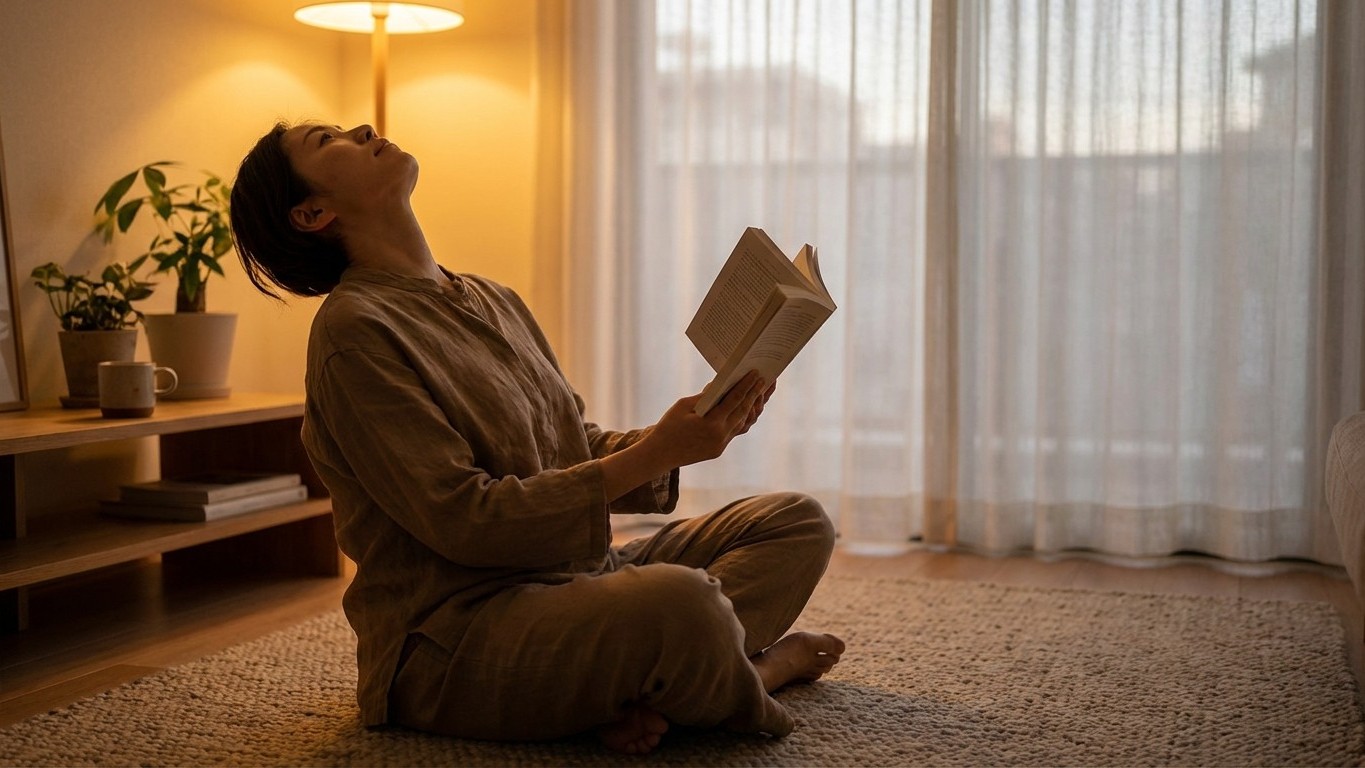
Swapping the phone for something more intentional in the evenings sounds deceptively simple. But if you’ve ever tried and failed, you’ll know that breaking the scroll habit requires more than willpower, it needs a genuine replacement that your nervous system actually enjoys. That’s where a structured 20-minute wind-down ritual comes in, and the research behind it is surprisingly compelling.
Key takeaways
- What happens to your brain when you scroll right before bed (and why willpower alone never works)
- The exact 20-minute sequence that shifts your nervous system from wired to restful—supported by sleep research
- The unexpected side effect nobody talks about: how better sleep architecture changes your entire next day
Why evening scrolling quietly wrecks your sleep
Most people know, in a vague sort of way, that phones before bed aren’t ideal. The reality is a bit more specific than that. The blue-wavelength light emitted by screens suppresses melatonin production, the hormone that signals to your body that darkness has arrived and sleep is approaching. Studies published in sleep medicine journals have consistently shown that screen exposure in the 90 Minutes before bed delays sleep onset and reduces overall sleep quality, even when the content itself isn’t stressful.
The content, though, often is stressful. Social media feeds are engineered to provoke emotional responses, outrage, envy, amusement, anxiety, because emotional engagement keeps you scrolling. Your brain, flooded with micro-doses of cortisol and dopamine in turns, doesn’t receive the gradual deceleration signal it needs to transition toward rest. You lie down wired and vaguely unsettled, unsure why.
After about three months of tracking my own sleep patterns (using a wearable device) and noticing that my worst nights consistently followed heavy evening phone use, I decided the experiment was worth running. Twenty minutes. No phone after dinner. Something deliberate instead.
What the 20-minute ritual actually looks like
The ritual I settled into combines three elements: light movement, slow breathing, and something I think of as “analogue input.” The whole thing takes between 18 and 22 minutes, which is short enough to feel manageable even on tired evenings.
The movement portion lasts around seven minutes and consists of gentle stretching, specifically targeting the hips, lower back and shoulders, the areas most compressed by desk work and sofa sitting. This isn’t yoga in any formal sense. It’s closer to what a physio might call “joint mobilisation.” The point is to send a signal through the proprioceptive nervous system that the day’s physical demands are over. Research on progressive muscle Relaxation supports the idea that deliberate physical release in the evening measurably reduces the time it takes to fall asleep.
Then five minutes of slow, diaphragmatic breathing. A 4-7-8 pattern (inhale for four counts, hold for seven, exhale for eight) has become something of a wellness cliché, but there’s genuine physiological logic behind it. Extended exhalations activate the parasympathetic nervous system, shifting the body from the “fight or flight” state that a full day of stimulation can maintain, toward the “rest and digest” state that sleep requires. Even five minutes makes a noticeable difference to how tightly wound you feel.
The final stretch, roughly eight Minutes-of-cardio-what-tokyo-university-research-really-found/”>Minutes, is what I call the analogue input: reading a physical book. Not a Kindle, not an e-reader with a warm-light setting. An actual paper book. There’s something about the tactile reality of it, the weight in your hands, the slight roughness of a page turning, that feels genuinely restorative in a way a backlit screen simply doesn’t replicate. A 2009 study from the University of Sussex found that reading for just six minutes reduced participants’ stress levels by 68%. I can’t speak to the exact methodology, but the subjective experience tracks, your mind narrows pleasantly around a single narrative, and the wider noise of the day recedes.
The changes I noticed (and what the science suggests)
After two weeks, I was falling asleep faster. After a month, I was waking up less frequently in the night. By the end of three months, my sleep tracker data showed a genuine improvement in deep sleep duration, which is the stage most responsible for physical recovery and immune function.
The change I hadn’t anticipated was the effect on my mood the following morning. There’s a concept in sleep research called “sleep inertia”, that groggy, foggy state you sometimes wake into — and its severity is partly linked to how well your nervous system wound down the night before. When you go to bed still carrying cortisol from a scroll session, your sleep architecture tends to be shallower. Better wind-down, better architecture, less inertia. I started reaching for my phone less first thing in the morning too, almost as a side effect.
There’s also something to be said for the psychological act of bookending your day. The ritual creates a clear line between “day mode” and “rest mode,” which matters more than people realise in an era when work notifications, news alerts and social media blur that boundary almost entirely. You’re not just protecting your sleep, you’re reasserting some control over your own attention.
Making it stick
The biggest obstacle most people face is the pull of the phone itself. Habit researchers describe this as a “cue-routine-reward” loop: the dinner table, or the sofa, or the feeling of having nothing to do, becomes a cue that triggers the scrolling routine, which delivers the dopamine reward. To replace it, you need your new ritual to offer its own reward quickly enough to compete.
Laying out your book in advance helps. So does choosing a stretch of reading material that you’re genuinely curious about, not something virtuous but dull. The movement and breathing portions become easier once you associate them with how good you feel afterwards, which typically takes about ten days of consistency to establish.
One small reframe that helped me: I stopped thinking of it as “giving up” screen time and started thinking of it as reclaiming a part of the evening that had been quietly colonised. Twenty minutes that belong entirely to your own nervous system, not to an algorithm’s engagement targets. What would you do with that time, if not hand it over by default?
Always consult your GP if you’re experiencing persistent sleep difficulties, as these can sometimes indicate underlying health conditions that warrant professional assessment.