
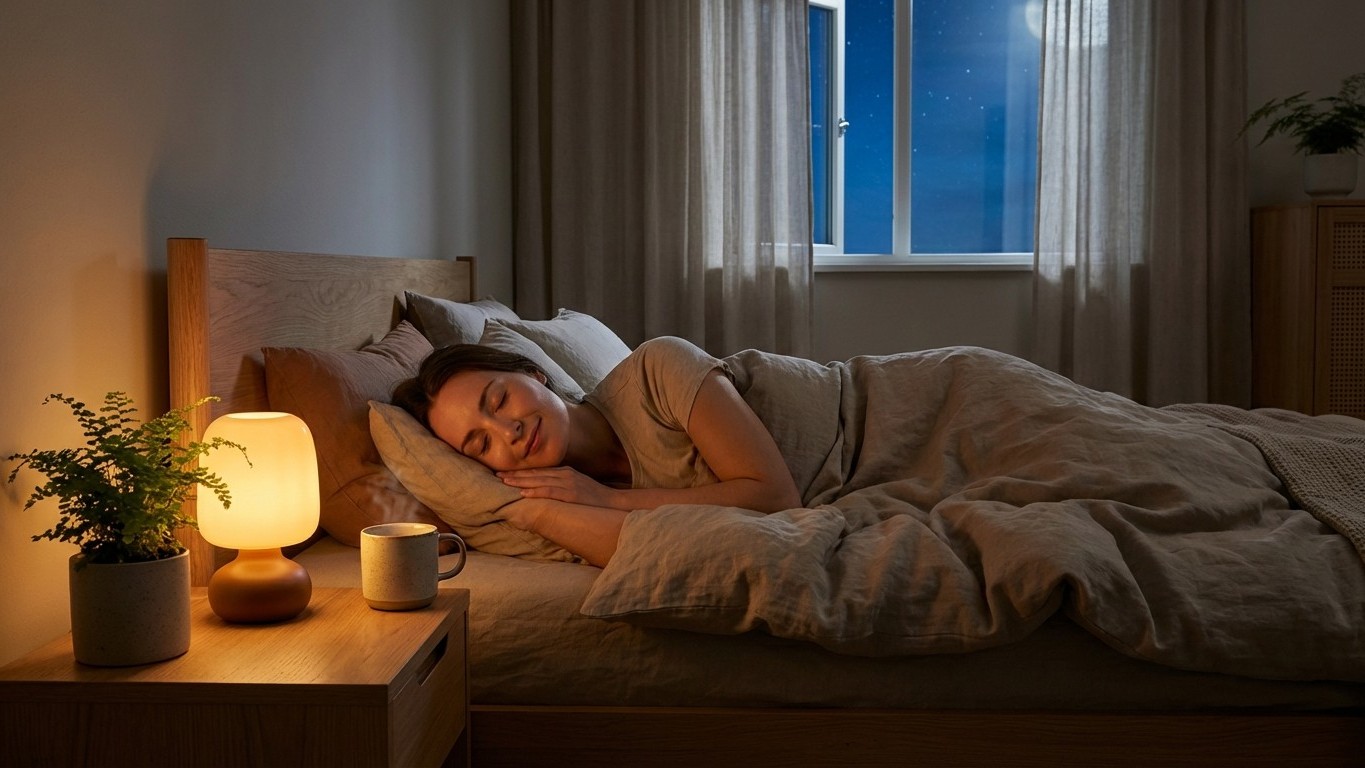
Sleeping through the night, naturally, is often about removing “micro-disruptions”
Many people can fall asleep quickly, then wake at 1 am, 3 am, or just before dawn, sometimes several times. If that sounds familiar, you are not alone, and it does not automatically mean anything is “wrong” with you. Night-time awakenings are a normal part of sleep architecture, but they become a problem when you fully wake, stay alert for long stretches, or feel unrefreshed the next day.
This guide is a practical, evidence-based way to approach how to stay asleep naturally. You will learn how to identify your most likely triggers, then layer simple changes across environment, routines, food and drink, and calming techniques. I will also cover when it is sensible to speak to your GP, especially if symptoms are persistent or you have red flags.
Why fragmented sleep is so common, and the natural causes behind it
Difficulty falling asleep vs difficulty staying asleep
These are related, but they often have different drivers:
- Sleep-onset insomnia tends to link to “high arousal” at bedtime, for example stress, late-night screens, caffeine, pain, or an irregular schedule.
- Sleep-maintenance problems often come from lighter sleep in the second half of the night, circadian timing, alcohol or heavy meals, room temperature, noise, bladder signals, anxiety spikes, or untreated conditions like sleep apnoea.
It helps to track which pattern you have, because the best natural strategy for one is not always the best for the other. If you want a symptom-led approach that covers both falling asleep and night wakings, see natural remedies for insomnia.
Internal factors: circadian rhythm, stress, anxiety, age
Your body clock (circadian rhythm) influences when you feel sleepy and when you become more alert. In the early hours, many people get a natural rise in cortisol and body temperature, which can make it easier to wake fully. If your sleep window is slightly “off”, for example going to bed much earlier than your internal clock expects, you can end up with long wake periods in the middle of the night.
Stress and anxiety amplify this. Hypervigilance, even at low levels, makes the brain more likely to interpret normal arousals as a reason to wake up and problem-solve. This is one reason cognitive behavioural therapy for insomnia (CBT-I) is recommended by many clinical guidelines as a first-line approach for chronic insomnia. CBT-I has strong evidence for improving sleep continuity, including reducing time awake after sleep onset.
Age also plays a role. Sleep tends to become lighter and more fragmented with age, and many people spend less time in deep sleep. Hormonal changes can matter too. During perimenopause and menopause, night sweats and temperature instability can disrupt sleep continuity. None of this means you cannot improve your nights, it simply means “more soothing” and “more consistent” often works better than “more effort”.
Environmental influences: noise, light, temperature
Sleep is sensitive to the environment, especially in the second half of the night when sleep pressure is lower. Common culprits include:
- Intermittent noise (traffic peaks, neighbours, a partner’s snoring).
- Light leaks, including early sunrise, street lighting, or phone notifications.
- Overheating, which can provoke wake-ups even if you do not feel sweaty.
- An uncomfortable mattress or pillow that triggers micro-pain and repositioning.
In my experience, many people focus on supplements first, when a temperature or light tweak would deliver a bigger change within a week.
Habits that help you stay asleep all night
Optimise the sleep environment (cool, dark, quiet)
Small environmental adjustments can reduce the number of “full awakenings” by lowering the chance that a normal sleep-stage shift becomes a conscious wake-up.
- Temperature: Aim for a comfortably cool room. Many people sleep better with layered bedding that can be adjusted quickly after a wake-up. If you wake hot around 3 to 5 am, try a lighter duvet, breathable sleepwear, or a fan set to low.
- Darkness: Block light sources, including standby LEDs. Consider blackout curtains if early light wakes you. Keep the route to the bathroom dim, using a low, warm nightlight rather than bright overhead lighting.
- Noise: If unpredictable noise wakes you, a consistent sound (like a fan or white noise) can be more protective than silence, because it masks spikes. Earplugs can help, but comfort and safety matter.
For frequent 3 am awakenings in particular, patterns can be useful to explore in more detail here: natural remedies for waking up at 3am.
Adjust your sleep timing: consistent hours and a stable wind-down
Regular timing trains your circadian rhythm to expect sleep, and it can make awakenings shorter because your brain is more confident that “night is for sleeping”.
- Keep wake time steady most days, including weekends. A 60 to 90 minute lie-in can shift your clock enough to trigger mid-night wakefulness the next night.
- Choose a realistic bedtime window rather than an early bedtime driven by fatigue. If you go to bed before you are sleepy, you increase the risk of long awake stretches later.
- Build a repeatable pre-sleep routine of 20 to 40 minutes. Think: low light, calm music or reading, a warm shower, light stretching, then bed. Keep it boring.
If you often wake and then start checking the time, consider turning the clock face away. Clock-watching is a reliable way to push the brain into problem-solving mode.
Reduce night awakenings linked to food and drink
What and when you eat can influence blood sugar stability, reflux, and bladder signals, all of which can fragment sleep.
- Caffeine: If you wake often, trial a stricter cut-off. Many people need caffeine only in the Morning to protect sleep continuity, even if they can fall asleep after an afternoon coffee.
- Alcohol: Alcohol can make you drowsy at first, but it is well known to disrupt sleep later in the night, increasing awakenings and reducing REM sleep. If you are working on how to stay asleep naturally, alcohol reduction is one of the most reliable levers.
- Late heavy meals: Large, rich meals close to bedtime can increase reflux risk and body temperature. A lighter evening meal earlier can help.
- Fluid timing: If nocturia (night-time urination) wakes you, shift more fluids earlier in the day and reduce drinks in the 2 hours before bed, while staying well hydrated overall.
A small, balanced snack can help some people who wake hungry or wired, especially if dinner is early. Options that combine complex carbohydrate plus a little protein or fat are often better tolerated than sugary snacks.
Exercise and daylight exposure: support your circadian rhythm
Daylight is a powerful circadian cue. A morning outdoor walk, even on cloudy UK days, helps anchor your body clock and can improve sleep consolidation over time. Exercise also supports sleep quality, although very intense late-night workouts can keep some people alert.
As a practical plan, aim for:
- 10 to 30 minutes of outdoor light exposure in the morning, ideally within the first hour or two after waking.
- Regular activity most days, mixing gentle movement with two or more strength sessions per week if appropriate for you.
- A calmer “landing” in the evening, with bright lights reduced in the last hour before bed.
Natural remedies that may help you sleep longer
Natural does not automatically mean safe for everyone. If you are pregnant, breastfeeding, have a long-term condition, or take regular medication, check with a pharmacist or your GP before trying supplements or herbal products. Quality and dosing vary widely.
For a broader overview across plants, routines, supplements, and techniques, you can also read natural sleep remedies.
Herbs and teas: which ones may reduce night wakings
Herbal teas can be useful mainly through two routes: mild sedative effects from certain plants, and the ritual of winding down. The evidence base varies by herb, and studies often focus on overall sleep quality rather than specifically measuring night awakenings.
- Chamomile: commonly used for mild anxiety and sleep complaints. Evidence is mixed but suggests potential benefits for subjective sleep quality in some groups.
- Valerian: studied for insomnia with mixed results. Some people find it helpful, others notice no effect. It can interact with sedatives and may not suit everyone.
- Passionflower and lemon balm: traditionally used for restlessness, with limited but emerging evidence for anxiety-related sleep difficulty.
Practical tip: if your main problem is waking to urinate, large mugs of tea right before bed can backfire. In that case, drink earlier in the evening, or use a smaller cup as part of the routine.
Supplements with some evidence (magnesium, Glycine, 5-HTP and more)
Research on supplements for sleep maintenance is still evolving as of February 2026. Results vary depending on the population studied, baseline deficiency, and the outcome measures. If you try supplements, treat it as a time-limited experiment with one change at a time for 2 to 4 weeks, keeping a brief sleep diary.
- Magnesium: If dietary intake is low, magnesium may support sleep quality, particularly in older adults in some studies. It can cause gastrointestinal upset in some forms and doses, so start low and assess tolerance.
- Glycine: Some small studies suggest glycine before bed may improve subjective sleep quality and next-day alertness. It is generally well tolerated, but robust evidence for night-waking reduction is limited.
- 5-HTP: Used to support serotonin pathways and sometimes sleep. Evidence is not strong enough to recommend broadly, and it can interact with antidepressants and other serotonergic medications. Medical guidance is sensible here.
- Melatonin: Often more helpful for circadian timing issues than for “staying asleep” in people whose clock is already well aligned. If you suspect a circadian problem, discuss this with your GP rather than self-prescribing long-term.
Food-first is worth trying alongside supplements. Magnesium-rich choices include leafy greens, legumes, nuts, seeds, and wholegrains. Kiwifruit and tart cherry are often discussed in sleep circles, but evidence is mixed, and responses are personal.
Relaxation techniques and body-based anchoring (breathing, body scan, meditation)
When awakenings are driven by physiological arousal, techniques that shift the nervous system toward calm can shorten the time you stay awake. A systematic review in JAMA Internal Medicine (2015) found mindfulness meditation programmes can improve sleep quality in older adults with moderate sleep disturbances. Evidence for specific methods varies, but the overall direction is encouraging, particularly when practised consistently.
- Slow breathing: Gentle nasal breathing with a longer exhale can reduce arousal. Keep it comfortable, not forceful.
- Body scan: Move attention slowly through the body, relaxing muscles as you go. This reduces mental “grip” on thoughts.
- Progressive muscle relaxation: Tense then release muscle groups, helping the body recognise and drop tension.
I favour body-based methods for middle-of-the-night wake-ups because they require less thinking, which is exactly what you want at 3 am.
Managing anxiety or racing thoughts without getting out of bed
A quick protocol for the moment you wake up
If you wake at night, your goal is not to “try harder to sleep”. It is to prevent escalation into full alertness. Keep the steps simple and repetitive:
- Step 1: Do not check the time. If you already did, let it go.
- Step 2: Breathe slowly for 2 to 3 minutes, focusing on a longer exhale. Keep shoulders heavy and jaw unclenched.
- Step 3: Do a 60-second body scan. Notice forehead, tongue, throat, chest, belly, hips, legs. Soften what you can.
- Step 4: Choose one neutral “anchor”, for example the feeling of the duvet, or counting breaths from 1 to 10 and starting again.
If anxiety is a consistent driver for you, a more detailed set of tools is here: natural remedy for middle of the night anxiety.
An anti-rumination checklist to avoid reactivating the brain
Rumination often starts with a single spark: a Thought about tomorrow, health worries, a replay of a conversation. The trick is to recognise the pattern early and refuse to engage with it.
- Label the thought as “planning” or “worrying”, rather than treating it as urgent.
- Park it for tomorrow. If you tend to worry at night, keep a notepad by the bed and write a short cue, not a detailed analysis, then return to the anchor. Avoid bright screens.
- Drop safety behaviours that keep you awake, such as searching symptoms on your phone, checking emails, or doing mental arithmetic about how tired you will be.
- Use a phrase that closes the loop, such as “Not now, morning job”, repeated gently.
When wake-ups are frequent, it is also worth reviewing daytime load. A packed evening, constant notifications, and no decompression time can set you up for night-time mental spillover.
Should you seek help or change your strategy? When to be concerned
Red flags and when to explore things further
Natural strategies are appropriate for many people, but persistent fragmented sleep sometimes signals an underlying issue worth assessing. Speak to your GP if you have:
- Loud snoring, witnessed pauses in breathing, or waking gasping, which can suggest sleep apnoea.
- Strong urges to move the legs at night, or unpleasant leg sensations relieved by movement, which may fit restless legs syndrome.
- Regular reflux symptoms, night-time wheezing, or chronic pain that disturbs sleep.
- Low mood, loss of interest, or significant anxiety that is affecting daily life.
- Night sweats, unintentional weight loss, or other systemic symptoms.
- Insomnia most nights for 3 months or more, especially if it impairs daytime function.
CBT-I is widely supported as an effective treatment for chronic insomnia and is available through various services, including digital CBT-I options in some regions. Your GP can advise what is appropriate for you.
Tailor your approach by life stage and context
A single “perfect routine” rarely exists. The best plan reflects your likely drivers.
- Perimenopause and menopause: prioritise cooling strategies, moisture-wicking bedding, and consider discussing symptom management with your GP. Sleep disruption can be multifactorial here.
- High stress periods: reduce evening stimulation, add a longer wind-down, and use brief daytime stress “offloading”, such as a 10-Minute walk or journalling earlier in the day.
- Older age: morning light exposure and steady wake time often help. Naps can be useful, but long or late naps may worsen night sleep for some people.
- Parents and carers: fragmented sleep may be partly unavoidable. In that case, focus on shortening wake time, protecting wind-down routines, and avoiding caffeine escalation that backfires later.
FAQ and common myths about staying asleep naturally
Myths and sensible precautions with natural solutions
- Myth: “If it’s herbal, it can’t do harm.” Some herbs and supplements interact with medicines, affect blood pressure, or cause sedation. Check first if you take regular medication.
- Myth: “You must get eight hours unbroken.” Sleep continuity matters, but so does overall sleep time and how you feel. Many healthy sleepers wake briefly without noticing.
- Myth: “More time in bed fixes it.” Extra time in bed can sometimes worsen sleep maintenance by lowering sleep drive, leading to more wakefulness at night.
What are the best natural methods to stop waking in the night?
The most reliable combination is usually: a cool, dark bedroom, consistent wake time, less alcohol, a realistic bedtime, and a simple wind-down routine. Add one calming technique for wake-ups, like slow breathing plus a body scan. If you change five things at once, it becomes hard to know what worked.
Is there a food or plant that really helps maintain deep sleep?
No single food guarantees deep sleep. A balanced evening meal that does not trigger reflux, plus limiting alcohol, often helps more than any “superfood”. For plants, chamomile, valerian, lemon balm, and passionflower are commonly used, but responses vary and evidence is mixed. If a tea relaxes you and does not increase night-time urination, it can be a useful part of your routine.
Why do I wake up at the same time every night, and how can I prevent it naturally?
Waking at a consistent time can reflect circadian timing, a habitual arousal pattern, environmental triggers (like heating cycles or early traffic), or a physiological cue such as blood sugar shifts or bladder signals. Start by checking the environment (light, noise, temperature), then look at alcohol, late meals, and stress patterns. If it is specifically around 3 am, the dedicated guide above can help you narrow down the likely cause: natural remedies for waking up at 3am.
Are herbal teas effective for staying asleep all night?
Teas can support relaxation, which may reduce the chance that a normal awakening turns into a long wake period. Their direct effect on sleep maintenance is usually modest, and drinking too much fluid late can increase toilet trips. If you want to trial tea, keep the dose consistent for a week, drink it earlier in the evening, and note whether awakenings change.
How can I calm anxiety that wakes me at night without medication?
Use body-led techniques first: slow breathing, a short body scan, and a neutral attention anchor. Avoid time-checking and bright light. If your mind starts planning, write a one-line “parking note” and return to your anchor. Many people benefit from structured approaches like CBT-I or mindfulness training for recurring night anxiety, and your GP can help you access appropriate support. You may also find targeted ideas in natural remedy for middle of the night anxiety.
A simple 14-day plan to test what works for you
For most readers trying to master how to stay asleep naturally, a short, organised experiment beats endless guessing.
- Days 1 to 3: Fix the bedroom first, cooler temperature, darker room, noise strategy. Stop checking the time at night.
- Days 4 to 7: Lock in wake time and a 30-minute wind-down. Reduce alcohol and set a caffeine cut-off that feels realistic.
- Days 8 to 10: Add morning outdoor light and moderate daytime activity. Keep evenings calmer and dimmer.
- Days 11 to 14: Trial one natural aid, either a herbal tea earlier in the evening or a single supplement, and continue the night-waking protocol.
If you would like a deeper menu of options, including symptom-matched strategies for different types of insomnia and awakenings, browse natural remedies for insomnia and the broader hub on natural sleep remedies.
Next steps and medical disclaimer
Fragmented sleep usually improves when you combine a supportive sleep environment, consistent timing, and a low-effort response to night awakenings that prevents the mind from switching fully on. If you have tried a steady routine for several weeks and are still waking for long periods, or you have symptoms like loud snoring, gasping, significant mood changes, or troublesome night sweats, it is worth discussing with your GP.
This article is for general information and does not replace personalised medical advice. Please consult your GP for medical guidance, diagnosis, or treatment.
Once your nights start to settle, the interesting question becomes sustainability: which two or three habits will you keep on your busiest weeks, so your sleep continuity does not depend on a “perfect” routine?