
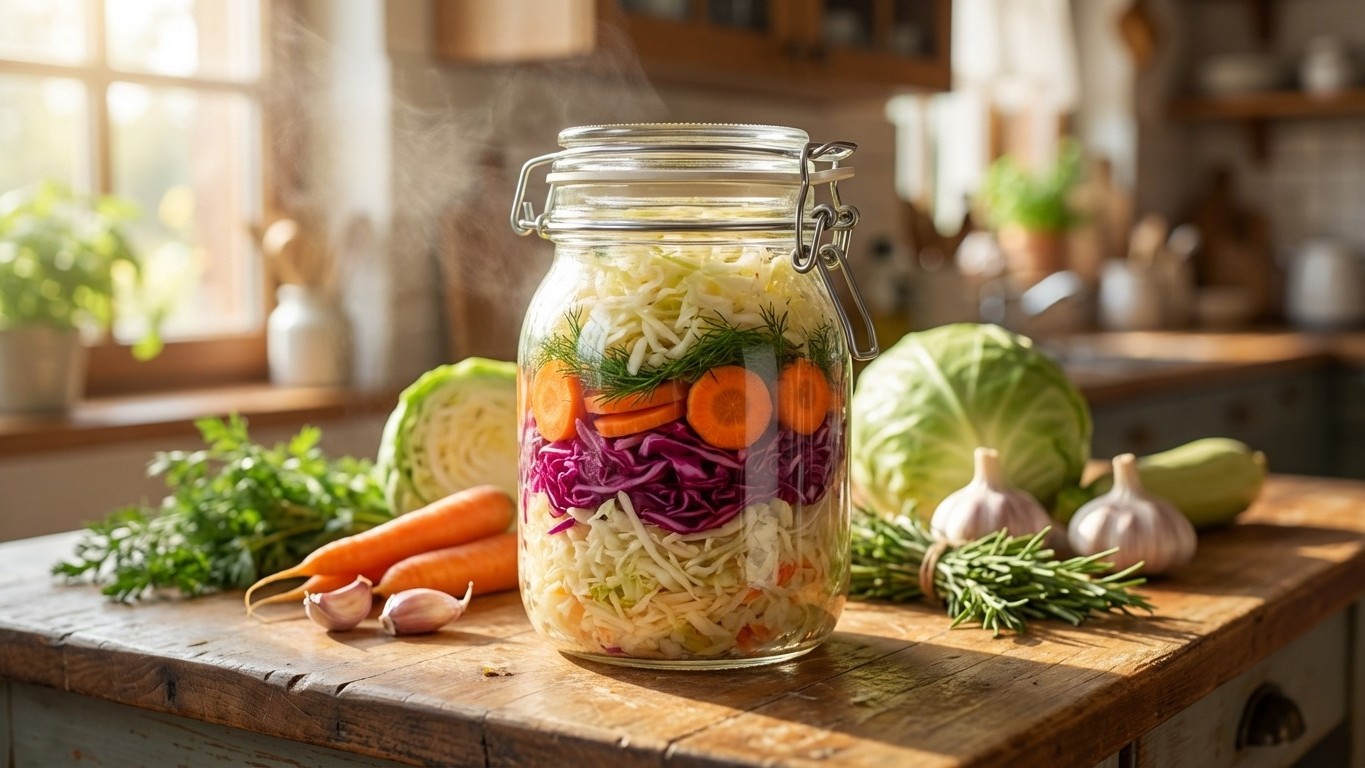
Bloating can creep up on you, twisting an ordinary afternoon into a sluggish fog of discomfort. A surprising twist: for me, everything changed with a humble glass jar on my kitchen counter. Not a new supplement or gadget, but a jar layered with fresh vegetables, destined for fermentation. That’s right : I stumbled into the world of homemade fermented foods, and my stubborn bloating gradually became a far rarer guest.
Key takeaways
- A mysterious kitchen jar shifted my battle with bloating in unexpected ways.
- The science behind fermented veggies and their powerful gut benefits.
- Why this old-world ritual might be the surprising secret your digestion needs.
How a Jar of Ferments Turned Things Around
Years spent working on health and wellness stories, and yet I’d barely dabbled in fermented foods at home. Kimchi, sauerkraut, live yoghurt, plenty are familiar with the concept, but these “gut-friendly” foods often slide to the fringes of a British diet. Gut health felt like a bit of a wellness buzzword, until personal battles with relentless post-meal bloat had me reading research I’d previously skimmed past.
A cluster of studies has examined the link between regular consumption of fermented foods and improved digestive comfort. One small trial by Stanford University, published in 2021, even reported that participants who increased their intake of fermented foods experienced greater microbial diversity and reduced markers of inflammation, both linked with reduced issues like bloating over time. This wasn’t prescriptive evidence, nor did it guarantee results, but it intrigued me enough to try.
The process itself felt old-fashioned but oddly comforting. Slicing up cabbage, submerging it in salted water, then screwing the lid on tight. After a few days on the counter (the kitchen filled with a faint, tangy aroma), I had my first homemade batch. Each day at lunch, I added a small forkful to my salad or sandwich. The shift wasn’t instant, but over the following fortnight, something quietly changed: I started to feel lighter after meals. No more reaching for the elastic-waist leggings as night fell.
Why Fermentation Helps Bloating
What’s this kitchen alchemy really doing? Fermented vegetables teem with beneficial bacteria, naturally occurring probiotics, that thrive in the brine and break down vegetable sugars. When you eat these foods, the theory is that the live cultures survive the acidic journey through your stomach, reaching your intestines where they support existing populations of “good” bacteria. This process is believed to help keep the digestive system humming along, reduce gas production, and ease the heavy, slow feeling we call bloating.
Our modern, processed diets rarely feature live, active microbes. Even shop-bought versions of sauerkraut or pickles are often pasteurised, stripping away much of their microbial diversity. By contrast, home-fermented vegetables contain live cultures, and preparing them yourself gives you control, no hidden sugars, preservatives or artificial flavourings. After decades of research, the NHS now acknowledges that probiotics can be beneficial in certain digestive complaints, including some forms of bloating, although not everyone responds the same way.
What surprised me most was how this tiny change shifted my entire attitude to eating. The simple daily rhythm of tending to a fermenting jar, tasting as the flavour matured, somehow made me more attentive to everything else I prepared. I started slicing carrot batons to ferment with ginger. Radishes soon followed. The habit became almost meditative, transforming my kitchen counter into a little science project. And my gut, sluggish and resentful for too long, seemed to approve.
Making It Work: What to Try in Your Jar
Adopting this habit doesn’t require extensive kit or a chemistry degree. A plain glass jar, some coarse salt, filtered water, and a fistful of hardy vegetables are all you need to get started. Cabbage is the standby for classic sauerkraut, but crunchy greens like cucumbers, green beans or even cauliflower take well to brine. Wash, chop, toss with salt, and press down so the liquid rises above the solids, this underwater world is where the magic happens.
After a handful of days, quicker in summer warmth, slower in winter chill, that sharp, tangy aroma signals the presence of lactic acid bacteria. Taste as you go; your ferment can be mild and crisp or sour and punchy, depending on how long you let it sit. Refrigeration slows the whole show, so you can stretch the snacking over weeks.
Building fermented vegetables into your daily routine is easier than you’d expect. Try them as a side to eggs in the morning, tucked into a sandwich, or even as a topping for a takeaway curry. There’s no need to eat heaps, a forkful or two can get you started. Keep an eye out for any signs of spoilage (off smells, slimy textures), and if you’re new to ferments, introduce them gradually to avoid overwhelming your system.
Why Bloating Has Many Stories : And Why the Jar Isn’t a Cure-All
Not everyone’s bloating story has the same trigger. For some, underlying conditions like irritable bowel syndrome or lactose intolerance are part of the picture. There’s a touch of irony here: in rare cases, people sensitive to histamines or FODMAPs may find certain ferments worsen their symptoms. What worked for me may not work for you, and science is still unpicking precisely who stands to benefit most.
Nonetheless, the World Gastroenterology Organisation recognises that fermented foods can play a supporting role in promoting digestive comfort and microbial diversity. That simple jar on my kitchen counter did more than improve my digestive habits; it reconnected me to an old-world ritual, one that values time, patience, and curiosity over quick fixes or false promises.
If you’re ready to experiment, remember: homemade ferments aren’t a magic bullet, and recurring or severe digestive symptoms deserve a proper check-up with your GP. Still, it’s oddly satisfying how such a basic habit, just a jar, salt, and £2 worth of veg, can invite you to look at the familiar, tedious battle with bloating in a fresh light. Who knows what other Forgotten kitchen traditions could rewrite our relationship with our bodies next?