
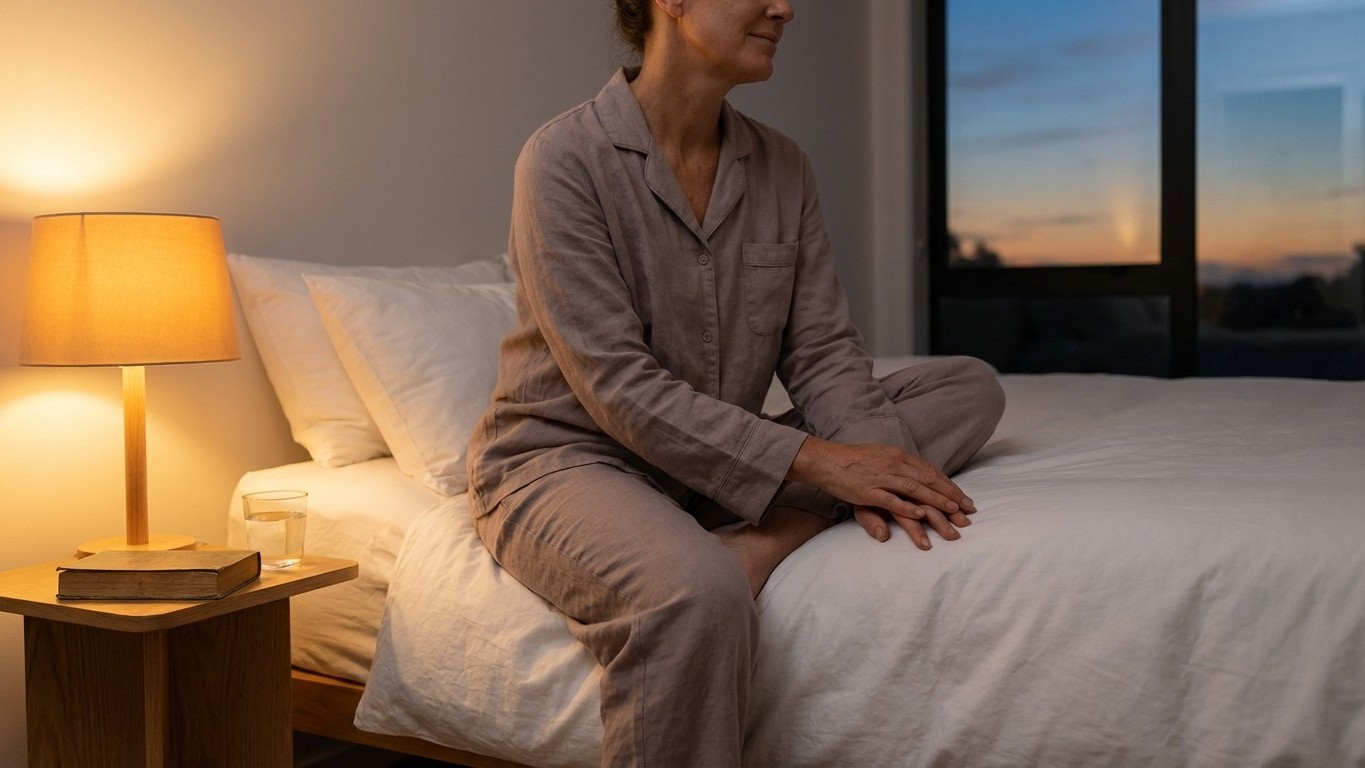
Most adults know they should wind down before bed. Far fewer actually do it in a way that works. A structured bedtime routine isn’t a luxury reserved for toddlers or wellness influencers, sleep science consistently shows that the hour before bed shapes the quality of every hour spent sleeping. The good news: you don’t need supplements, expensive gadgets, or a complete lifestyle overhaul. What you need is a sequence that your nervous system can learn to recognise as a reliable signal that rest is coming.
This guide gives you exactly that, a practical, minute-by-minute example you can follow tonight, alongside the reasoning behind each step and real guidance for adapting it to your life.
Why a Bedtime Routine Actually Matters for Adults
Sleep doesn’t start when your head hits the pillow. It starts well before, in the gradual physiological shift from wakefulness to rest. The body’s release of melatonin, the drop in core temperature, the slowing of brainwave activity, all of these processes take time, and they’re sensitive to the signals your environment and behaviour send throughout the evening.
Research published in journals studying circadian biology has repeatedly confirmed that consistent pre-sleep behaviour helps regulate the internal body clock, reducing what’s known as sleep onset latency (the time it takes to fall asleep). Adults who follow a consistent natural sleep routine tend to report better sleep quality, improved mood the following day, and lower perceived stress levels overall. The mechanism isn’t magic: repetition creates association. When the brain repeatedly encounters the same sequence of stimuli before sleep, it begins to treat those stimuli as cues, accelerating the transition to drowsiness.
For adults specifically, the challenge is that modern evenings are saturated with stimulation, screens, work notifications, social media, intense conversations, news cycles. Each of these activates the sympathetic nervous system to some degree. A deliberate routine creates a buffer zone, a conscious decompression that your biology genuinely needs.
The Principles Behind an Effective Evening Wind-Down
Going Screen-Free, Stimulant-Free, and Genuinely Calm
Blue light from screens suppresses melatonin production, but the problem with evening screen use goes beyond the light itself. The content, the scroll, the reply, the quick email check, keeps the prefrontal cortex engaged and alert. Even “passive” viewing of stimulating content (news, thrillers, heated debate) can elevate cortisol. The ideal wind-down starts by removing these inputs gradually rather than cutting them abruptly at bedtime, which can actually create frustration rather than calm.
Caffeine’s half-life in the body is roughly five to seven hours for most adults, which means a 3pm coffee still has a meaningful presence in your system at 8pm. Alcohol, often thought of as a sleep aid, disrupts the second half of the sleep cycle and reduces restorative REM sleep. Both are worth managing well before your routine begins. For more on this, the broader sleep hygiene tips natural framework covers the full picture.
How Long Should Your Routine Be?
Thirty minutes is the minimum most adults need to meaningfully shift their physiological state. Sixty minutes is better, especially if your evenings tend to be busy or stressful. The structure matters as much as the duration: the first half of the routine is about preparation (physical tasks, environment setup, stopping stimulating activities), while the second half is about active relaxation (breathing, gentle movement, sensory comfort). Trying to meditate while your phone is still buzzing with notifications, or lying in bed with a racing mind because you skipped the decompression phase, rarely works.
A Minute-by-Minute Bedtime Routine for Adults
The following example assumes a target sleep time of 10:30pm. Adjust the clock times to suit your schedule, the intervals are what matter.
9:30pm : The Soft Landing (60 Minutes Before Sleep)
This is the formal start of your wind-down, even if it doesn’t feel like “sleep prep” yet. Put your phone on Do Not Disturb. If you haven’t already, close work tabs and move away from your desk. Dim the overhead lights in your living space, warm-toned, low-intensity lighting signals to your brain that the day is ending. If you have smart bulbs, now is the time to shift them to their warmest setting. This single change, reducing light intensity and colour temperature, is one of the most underrated and lowest-effort steps you can take.
9:45pm : A Warm Drink and a Hard Stop (45 Minutes Before)
Brew a caffeine-free herbal infusion, chamomile, valerian root, lemon balm, or passionflower are all reasonable choices with some supporting evidence for mild relaxation effects. The act of making and holding a warm drink is itself a small sensory ritual that signals comfort. This is also the moment to stop all work and silence notifications definitively, not snooze them. Checking “just one thing” at 9:45pm is how routines unravel.
10:00pm : Hygiene and Sensory Ritual (30 Minutes Before)
A warm shower or bath at this point serves a dual purpose: basic hygiene, and a well-documented physiological effect. When you emerge from a warm bath or shower, your body’s surface temperature rises and then drops as the heat dissipates, this temperature drop mimics the natural cooling the body undergoes as it prepares for sleep. Even a ten-minute warm shower achieves this. Follow it with a skincare routine or moisturiser application if that’s part of your life; the tactile, deliberate quality of these rituals reinforces the wind-down signal. Brush your teeth, handle any other physical care. The key is that these aren’t rushed — they’re slow and intentional.
10:10pm : Relaxation Practice (20 Minutes Before)
This is the heart of the routine. Choose one of the following and stick with it consistently for at least two weeks before evaluating whether it works for you. Options include diaphragmatic breathing (a slow 4-7-8 breath pattern is widely used), progressive muscle relaxation (systematically tensing and releasing muscle groups from feet to face), gentle stretching focused on the hips and lower back, or a short guided body scan. The point isn’t to achieve a zen state, it’s to give the thinking mind something to focus on other than tomorrow’s to-do list. For a deeper guide on this, the article on how to fall asleep faster naturally covers twelve specific techniques with practical detail.
10:20pm : Environment Preparation (10 Minutes Before)
Before getting into bed, set up the room. The ideal sleep environment is cool (between 16 and 19 degrees Celsius for most adults), dark, and quiet. Open a window briefly if the outdoor temperature allows, or use a fan on low. Blackout curtains or a sleep mask are worth considering if streetlights are an issue. Pull back the duvet, straighten the pillows. This isn’t fussy, it’s the physical equivalent of setting a table before a meal. Your brain registers the prepared space as intentional, and that matters.
10:25pm : The Final Five Minutes
Get into bed. Choose one genuinely calming activity: reading a physical book (fiction tends to work better than non-fiction here, as it draws you into a narrative rather than keeping you in analytical mode), writing three things you’re grateful for in a small notebook, or listening to a sleep-specific audio, a guided meditation, soft instrumental music, or ambient sound. Keep this final activity short and undemanding. The moment you feel your eyes growing heavy, put the book down or remove the headphones. Resist the urge to push through to the end of a chapter.
Adapting the Routine to Your Real Life
Variable Schedules, High Stress, and Fragile Sleepers
Shift workers face a genuine challenge: the body clock responds to consistent timing, and irregular schedules disrupt that. The advice here is to maintain the routine structure regardless of the clock time, if your “bedtime” is 3am, your wind-down still starts sixty minutes before. Consistency of sequence, even without consistency of timing, still provides cues. For those under high stress, the relaxation phase (the 10:10pm step above) deserves more time, not less. Stress is the most common reason routines collapse — the temptation to skip “self-care” is highest exactly when you most need it.
If you have chronically poor sleep or suspected insomnia, a routine is a helpful foundation but not a complete solution. Cognitive Behavioural Therapy for Insomnia (CBT-I) is considered the first-line treatment in NHS guidance, and your GP can help with referrals or self-referral to talking therapies.
What to Avoid in the Hours Before Bed
A few behaviours reliably undermine even the best routine. Intense aerobic exercise within two hours of sleep raises core temperature and heart rate in ways that take time to subside (though regular exercise earlier in the day improves sleep quality considerably). Large meals within ninety minutes of bed can cause discomfort and keep digestion active. Scrolling social media in bed is probably the single most widely practised sleep-disruptor among adults under fifty, the combination of blue light, social comparison, and information seeking is a potent alerting cocktail. And lying awake in bed for long periods trying to force sleep tends to create an unhelpful psychological association between your bed and wakefulness; if you’ve been awake for more than twenty minutes, it’s better to get up briefly and do something calm before returning.
Natural Tools Worth Including
Herbs, Audio, Light, and Sensory Rituals
Beyond the core routine, a few additions can deepen the experience. Lavender, in the form of a pillow spray or a few drops of essential oil on a tissue nearby, has modest but replicated evidence for mild relaxation effects. Red or amber-toned lamps (sometimes called “sleep lights”) provide illumination for evening tasks without the melatonin-suppressing effects of white or blue light. Gratitude journalling, mentioned above, has a reasonably solid evidence base for reducing pre-sleep cognitive arousal, the racing thoughts that keep many adults awake. For a comprehensive overview of plant-based and sensory options, the natural sleep remedies guide covers the full evidence landscape.
Weighted blankets deserve a mention. They’re not right for everyone, but for adults who find comfort in gentle pressure, the sensory experience can reduce anxiety and ease the transition to sleep. No special technique required, just the added weight.
Frequently Asked Questions
What counts as a good bedtime routine for adults? A sequence of calming, consistent activities in the sixty minutes before sleep that progressively reduce stimulation and signal to the body that rest is approaching. It doesn’t need to be elaborate, consistency matters more than complexity.
How long should the routine last? Between thirty and sixty minutes is the range most adults find effective. Less than thirty minutes often doesn’t allow enough time for physiological decompression, especially after a stimulating or stressful day.
Do I have to follow the exact times above? The times in the example are illustrative. What matters is the sequence and the intervals, starting sixty minutes before your actual target sleep time, and keeping the structure consistent each night.
What if I fall asleep during the relaxation phase? That’s generally a good sign. Don’t worry about completing every step, the goal is sleep, and if it arrives early, welcome it.
Going Further
The routine above is a starting point. Real improvement in sleep quality comes from combining a solid bedtime practice with good daytime habits, light exposure in the morning, physical activity, and consistent wake times even at weekends. If you want to build the full picture, the guide to sleep hygiene tips natural is a natural next step, as is the detailed natural sleep routine seven-day plan for those who prefer a more structured approach to building the habit from scratch.
Sleep is not a passive activity you wait for, it’s a state you prepare for. The question worth sitting with tonight: which part of your current evening is actually working against your rest, and what’s one small change you could make before tomorrow?