
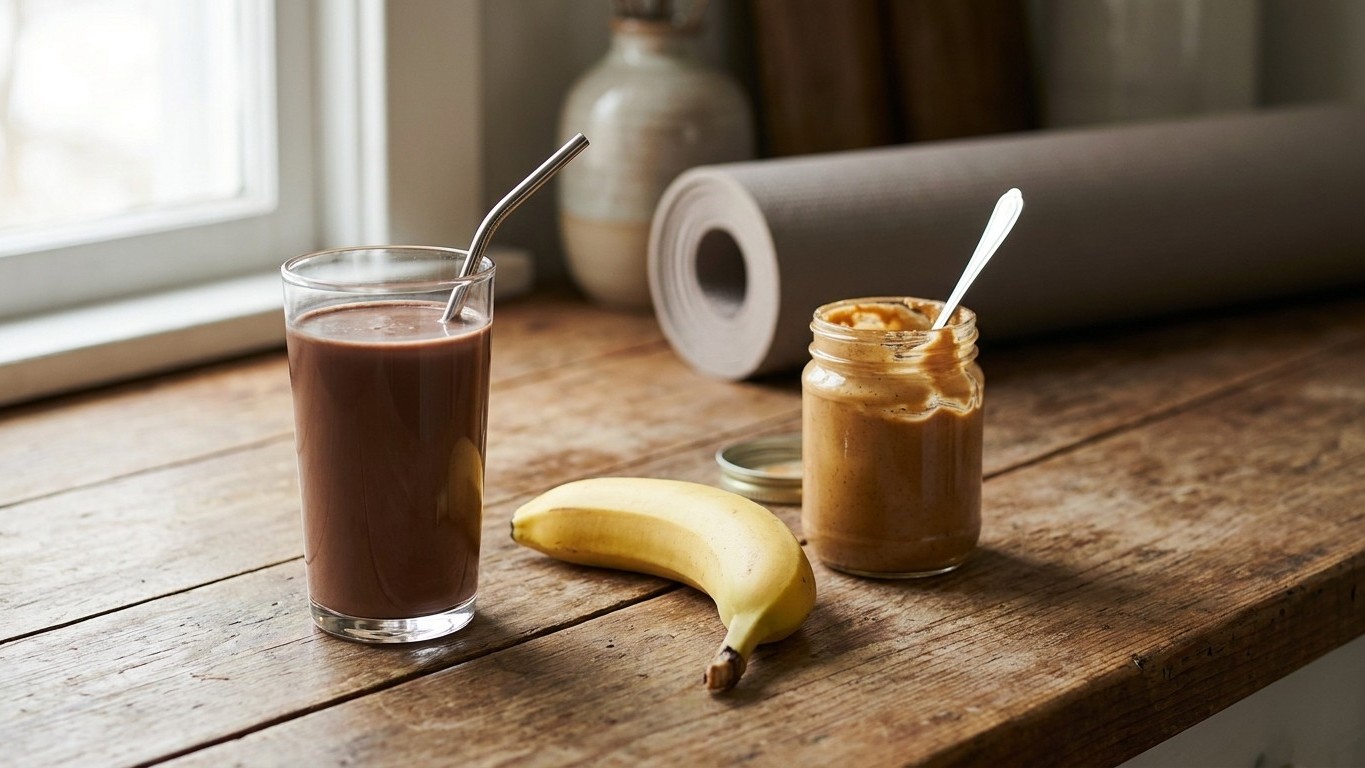
Grab a pint of semi-skimmed milk, a banana and a spoonful of peanut butter, and you’ve got more genuine recovery power than most shop-bought shakes costing three times as much. A standard 45-minute gym session, spin class or five-a-side kickabout simply doesn’t burn through enough glycogen or muscle protein to justify the 250kcal, sugar-heavy bottles lining supermarket fridges. What your body actually needs after that kind of effort is a modest, well-balanced combination of carbohydrate and protein, and the ingredients are almost certainly already sitting in your cupboard.
Key takeaways
- Why the recovery shake industry markets products for the wrong audience entirely
- What actually happens to your body during a typical 45-minute workout versus endurance training
- The simple kitchen ingredients that hit the exact nutritional targets sports scientists recommend
Why the shake habit doesn’t match the workout
Most commercial recovery drinks are formulated with endurance athletes in mind, people who’ve just finished a two-hour ride or a marathon and genuinely need to replace vast amounts of depleted glycogen fast. A marathon runner finishing a two-hour training session has different recovery needs than someone who just completed a 45-minute strength workout, because the type of exercise determines how depleted your glycogen stores are and how much muscle repair is required. For a typical gym-goer, that 250kcal bottle drunk in two minutes flat is often overkill, delivering more sugar than the session burned and arriving faster than the body can actually use it.
The physiology is more nuanced than “drink it fast or lose the benefit”. The practical window for effective recovery nutrition is 0-2 hours post-exercise, and total daily protein intake matters far more than the timing of individual meals, with nutrient timing creating only a 5-10% difference in muscle growth outcomes. That’s a genuinely reassuring finding. It means there’s no need to down anything within ninety seconds of racking the last weight, and it means the humble contents of your fridge have plenty of time to do their job properly.
What a 45-minute session actually costs your body
Strength training and shorter cardio sessions behave differently to endurance efforts. Strength training and high-intensity interval training typically cause more muscle damage than they deplete glycogen stores when compared with long endurance exercise, so protein intake becomes a higher priority after training to support muscle protein synthesis, reduce muscle breakdown, and facilitate recovery. That’s a meaningful distinction from the carb-loaded shakes marketed at everyone regardless of what they’ve just done.
The numbers back this up. For strength training, aim for 2:1 to 3:1 carbs to protein and consume 20-40g protein within 30-45 minutes post-workout per ISSN guidelines. Translate that into food rather than powder and you’re looking at something like 30-40g of carbohydrate alongside 20g of protein, hardly an exotic ask. Immediately after an intense workout, when glycogen stores are depleted, production of the enzymes that convert glucose into glycogen is increased, and these enzyme levels only remain elevated for about 30-45 minutes. So there is a sensible window worth respecting, just not one that demands a specialist product.
The kitchen staples that genuinely do the job
Chocolate milk has become something of a cliché in sports nutrition circles, but it earns its reputation honestly: it naturally lands close to that 3:1 carbohydrate-to-protein ratio, plus it brings fluid and a little sodium for rehydration in one glass. A banana with a couple of tablespoons of natural yoghurt does something similar, pairing quick-release carbohydrate with a protein hit, while two slices of wholemeal toast with a scraped tablespoon of peanut butter covers both bases for under a pound in ingredients.
Eggs deserve more credit here than they usually get. Two scrambled eggs on toast after a session delivers roughly 20g of quality protein plus the carbohydrate from the bread, hitting the ISSN range without a single scoop of powder involved. For anyone training first thing and rushing out the door, even a glass of milk with a small bowl of cereal covers the essentials until a proper meal follows. None of this requires precision, and the British Nutrition Foundation is unequivocal on the wider point: whilst adequate amounts of protein and carbohydrate are both essential in maximising performance and promoting recovery, most people should be able to get all the nutrients they need by eating a healthy, varied diet, so supplements are generally not necessary.
Where powders do earn their keep is convenience rather than superiority. After competition or an intense training session, high quality protein powders can be more convenient and transportable, especially when there is limited access to food or if an individual does not feel hungry around exercise. That’s a legitimate use case for someone training in a work car park or between meetings, not a reason to assume the shake is nutritionally superior to what’s in the fridge at home.
Hydration is the part people forget
Carbohydrate and protein tend to dominate the recovery conversation, but fluid replacement matters just as much for a 45-minute sweaty session, particularly in summer. The BDA’s own guidance on sport nutrition includes a simple home-made sports drink (200ml squash [not low calorie] combined with water and a pinch of salt as a perfectly adequate rehydration option, no branded electrolyte tablets required. Weigh yourself before and after a hard session once or twice if you’re curious. Most people training for 45 minutes lose far less fluid than they assume, and a couple of large glasses of water alongside that banana and yoghurt will usually put things right.
None of this is medical advice, and anyone managing a health condition, training for competition, or recovering from injury should speak to their GP or a registered dietitian before making changes to how they fuel around exercise. But for the vast majority of people doing a standard 45-minute session three or four times a week, the fridge does the job the shake was sold to do, usually for a fraction of the cost and without the added sugar most people don’t need in the first place.
Sources : zeropointonept.com | proteinsoda.com