White noise machines and apps have become a staple of the modern bedtime routine, sold to us as the ultimate solution for noisy neighbours, restless partners, and over-stimulated minds. Yet plenty of people find that the steady mechanical hiss of white noise leaves them feeling oddly wired, mildly irritated, or simply unable to sleep without it. If you’ve been searching for white noise alternatives natural enough to use every night without a screen or a subscription, you’re in the right place.
The good news: nature has been producing sleep-inducing soundscapes for millions of years, long before anyone invented a machine to approximate them. Several of these alternatives are free, genuinely effective, and, this matters, less likely to create the dependency that white noise can foster over time.
Why Replace White Noise? Understanding Its Limits
White Noise: What It Is, What It Does, and Where It Falls Short
White noise works by masking sudden acoustic intrusions, a car door slamming, a barking dog, that pull the brain out of light sleep. The constant, broadband hiss essentially “fills” the auditory landscape so that sharp contrasts can’t register as strongly. For many people, this is genuinely helpful, especially in urban environments.
The problem is that white noise is spectrally flat: it gives equal energy to every frequency, which means a lot of high-pitched hiss. Some listeners find this fatiguing rather than soothing. Children and babies are a particular concern. Several paediatric sleep researchers have raised questions about prolonged exposure to high-volume white noise in infants, given that their auditory systems are still developing. The NHS advises keeping any sound machine well away from a baby’s crib and at low volume, guidance that doesn’t always make it onto product packaging.
There’s also the dependency question. When white noise becomes a non-negotiable part of the sleep routine, travelling, power cuts, or a flat phone battery can suddenly make sleep feel impossible. That’s not a minor inconvenience; for some people, it’s genuinely disruptive.
Long-Term Effects of White Noise on Sleep
Research into the long-term effects of nightly white noise exposure is still limited, but what exists suggests caution. Some studies have found that continuous loud background noise during sleep can interfere with slow-wave sleep, the deep, restorative phase that leaves you feeling genuinely rested. The key variable seems to be volume: anything above 50–55 decibels is where concerns begin.
Pink noise, which emphasises lower frequencies and sounds less harsh than white noise — has attracted more positive research attention in recent years. Some small studies suggest it may actually support slow-wave sleep rather than disrupt it. Brown noise, even deeper and more rumbling, is the current favourite on social media for focus and relaxation. Neither is the same as white noise, and that distinction matters when choosing your bedtime soundscape.
Natural White Noise Alternatives: A Practical Overview
Nature Sounds: Rain, Waves, Forest, and Fire
Rain on a window. Waves pulling back over pebbles. Wind threading through pine trees. These sounds have a quality that white noise lacks entirely: they’re alive. They vary slightly, breathe, and carry subtle rhythmic patterns that the brain seems to find deeply reassuring, possibly because they signal environmental safety to an ancient part of our nervous system.
The acoustic profile of rainfall and ocean waves actually resembles pink noise more closely than white noise, which may partly explain why people tend to find them more pleasant. Forest soundscapes introduce bird calls and rustling, which adds gentle variation without alerting the threat-detection circuits in the brain.
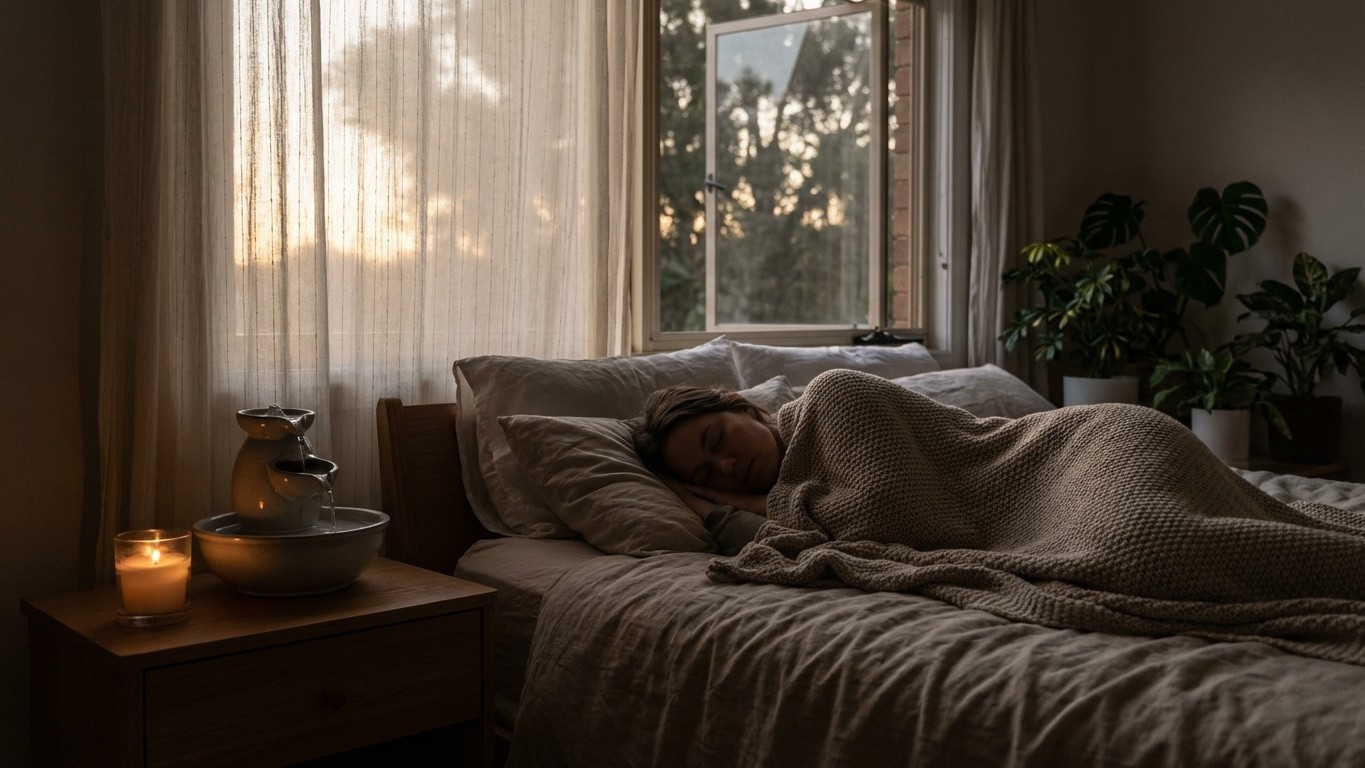
Accessing these sounds for free is easier than ever. YouTube hosts thousands of hours of uninterrupted nature recordings, search for “10-hour rain sounds” or “forest ambience for sleep” and you’ll find options recorded at appropriate volumes. Freesound.org offers downloadable clips under Creative Commons licences. If you’d rather avoid screens altogether, simply opening a window on a rainy night or near a garden is its own form of natural soundscaping. A small indoor water feature can approximate the gentle babble of a stream without any technology at all.
For those looking to build a holistic sleep environment beyond just sound, exploring natural ways to improve sleep environment — including light, temperature, and scent, can make a significant difference to how quickly these sounds work their effect.
Gentle Music and Natural Sonic Relaxation
Soft instrumental music occupies a slightly different category from nature sounds, but its sleep benefits are well-documented. A review published in the Journal of Advanced Nursing found that listening to relaxing music at bedtime significantly improved sleep quality across multiple studies. Tempo matters: music around 60–80 beats per minute tends to synchronise with a resting heart rate, nudging the body towards calm.
Good free options include classical guitar pieces, ambient piano, traditional Indian ragas designed for evening listening, and Tibetan singing bowls. Several public libraries now offer free streaming platforms (Spotify equivalents with no subscription required), worth checking with your local council. The key precaution with music, as opposed to nature sounds: lyrics engage the language-processing parts of the brain, which can actually delay sleep onset. Stick to purely instrumental tracks.
One unexpected option worth trying is binaural beats. These are audio tracks that play slightly different frequencies in each ear, creating a perceived tone that the brain may follow into a more relaxed state. The evidence is preliminary but promising, and they’re freely available on YouTube. You’ll need headphones for them to work, which isn’t ideal for everyone, but for solo sleepers, they’re worth experimenting with.
Soundless Relaxation Techniques: Breath, Visualisation, and Meditation
Sometimes the most radical alternative to white noise is silence, organised, intentional silence, filled with internal rather than external stimuli. Breathwork is the most accessible entry point. The 4-7-8 technique (inhale for four counts, hold for seven, exhale for eight) activates the parasympathetic nervous system in a way that no app can replicate. It costs nothing, requires no electricity, and works anywhere.
Body scan meditation is another tool worth keeping close. Starting at the feet and slowly moving attention upward through the body, consciously releasing tension as you go, tends to produce a state of physical heaviness that frequently tips into sleep before you’ve reached the shoulders. Guided versions are available for free via the NHS’s Every Mind Matters platform and the Insight Timer app (which has a substantial free library).
Visualisation, imagining a calm, familiar landscape in detail, can also function as an internal soundscape. The brain doesn’t always distinguish sharply between remembered and perceived sensory experience, which means a vividly imagined forest walk can produce some of the same calming effects as actually listening to forest sounds.
How to Choose and Implement the Right Alternative for Your Sleep
Testing Different Sounds and Methods: Practical Advice
There’s no universal answer here, and honestly, personal experimentation is the only reliable method. A useful approach is to give each option a fair trial of five to seven nights, too short a test and you’re measuring novelty rather than actual effect. Keep a simple sleep diary noting how long it took you to fall asleep and whether you woke during the night.
Your environment matters too. Urban sleepers dealing with traffic and neighbour noise will likely find that masking sounds (rain, water features, pink noise) work better than silence-based techniques. Rural sleepers or those in quiet homes may find that simple breathwork does the job without any audio at all. Couples and families add another layer: a sound that one person finds soothing might drive their partner to distraction, which is worth discussing before committing to a shared bedtime playlist.
Children respond particularly well to nature sounds at low volume, or to stories told in a slow, monotonous voice (the humble audiobook approach). Babies are a special case: the womb is loud, so some sound does genuinely help, but low-volume, low-frequency options are preferable to high-pitched white noise machines.
Making the Experience Completely Free
Almost everything described in this article costs nothing. A quick checklist of the free resources available: YouTube’s vast library of nature soundscapes, Freesound.org for downloadable clips, the NHS’s free mindfulness resources, Insight Timer’s free meditation library, and your own open window on a rainy or breezy night.
If you want to go further without spending anything, consider the acoustic properties of your bedroom itself. Heavy curtains, bookshelves filled with books, and thick rugs all absorb sound and reduce the echo that makes external noise feel sharper. Pairing these how to sleep better naturally without blackout curtains strategies with thoughtful sound management creates a genuinely restorative sleep space. Temperature also plays a role in how your environment feels at night, a room that’s too warm makes even the loveliest soundscape feel less effective, so it’s worth reading up on the best room temperature for sleep to get the full picture.
FAQ: Natural White Noise Alternatives
Are nature sounds as effective as white noise for sleep? For most adults, yes, and often more so. Nature sounds like rainfall and ocean waves closely resemble pink noise, which some research suggests is gentler on sleep architecture than white noise.
Is pink or brown noise better than white noise? Both tend to be subjectively more pleasant because they emphasise lower frequencies. Some small studies suggest pink noise may support deeper sleep, though the evidence is still developing. Personal preference is a legitimate guide here.
How do I create a calming sound environment without a paid app? YouTube, Freesound.org, and open windows are your starting points. An indoor water feature or a fan at low speed can also provide gentle, consistent background sound without any subscription.
Can I use these alternatives for a baby or young child? Nature sounds at low volume (under 50 decibels, roughly the level of quiet conversation) are generally considered preferable to high-pitched white noise for infants. Always consult your health visitor or GP if you’re unsure what’s appropriate for your child’s age.
Sound is only one piece of the sleep puzzle. If you’re rebuilding your sleep routine from the ground up, the broader picture, including herbal support, evening habits, and light exposure, is covered in this comprehensive guide to natural sleep remedies. The question worth sitting with is this: what does your body actually need to feel safe enough to sleep? The answer might surprise you, and it probably doesn’t require a monthly subscription to find out.