
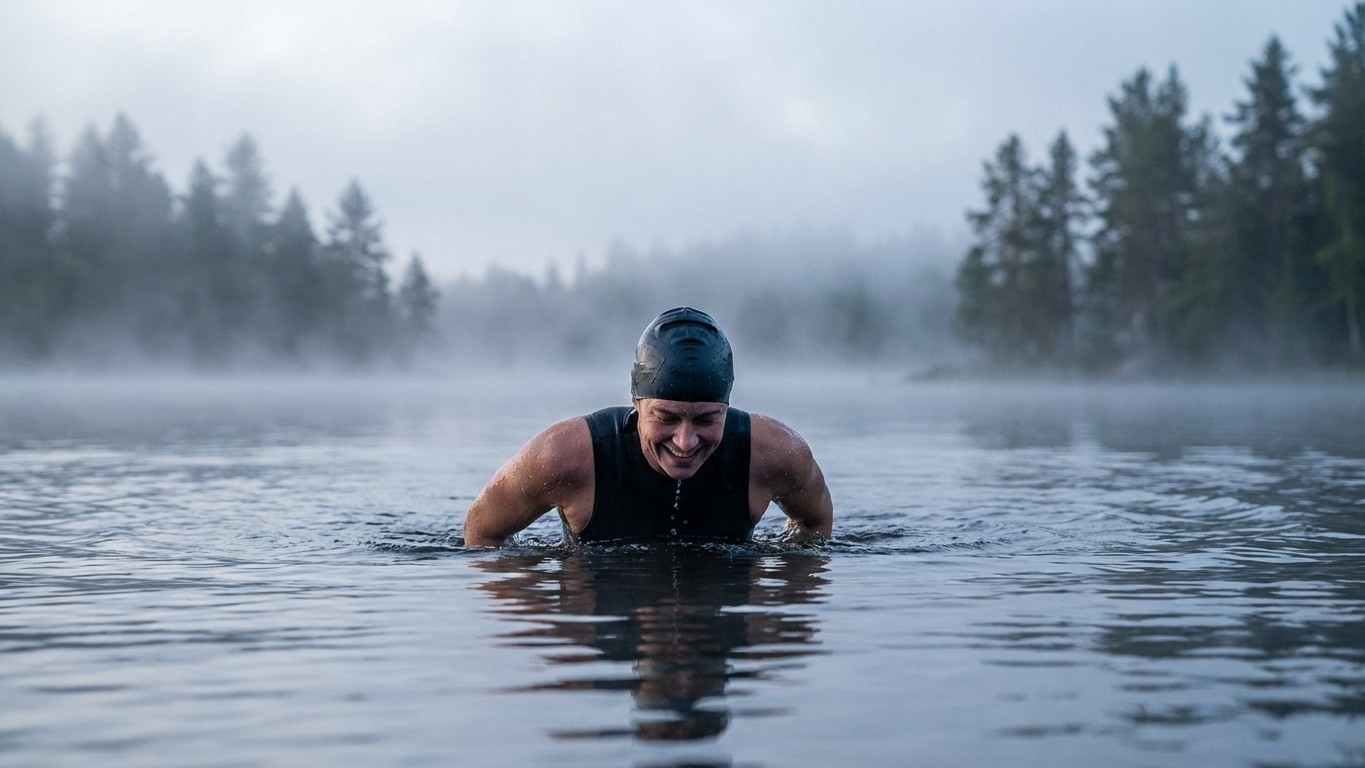
Cold water swimming has gone from fringe hobby to cultural obsession over the past few years, and the claims made on its behalf are extraordinary: better mood, sharper focus, a stronger immune system, even reduced inflammation. So last January, in a moment of what I can only describe as optimistic stubbornness, I set my alarm for 6am and committed to a full month of wild swimming in temperatures hovering between 4°C and 7°C. Here is what the science says about what was actually happening to my body, and what genuinely surprised me along the way.
Key takeaways
- Your body’s cold shock response fades faster than you’d expect—but the first week is genuinely brutal
- The post-swim high is real and neurochemical, involving a neurotransmitter that affects mood and focus
- The biggest surprise had nothing to do with immunity or metabolism, but with how it rewired my relationship with discomfort itself
The first week: survival mode
The initial plunge is nothing like you imagine. The cold hits your skin and your body does something called the cold shock response: you gasp involuntarily, your heart rate spikes, and your breathing becomes rapid and shallow. This is not a character flaw or a sign of weakness. It is a hardwired physiological reflex, and in deep or rough water, it can be genuinely dangerous if you are unprepared. That first week, getting out of the water was actually harder than getting in. My hands were clumsy and uncooperative, a classic sign of peripheral vasoconstriction, where the body pulls blood away from the extremities to protect the vital organs.
What I did not expect was how quickly this began to change. By day five or six, the gasping reflex was already less intense. Research published in sports medicine literature suggests that repeated cold water immersion can reduce the cold shock response relatively quickly, sometimes within as few as six exposures. The body adapts. It has to.
What the physiology actually looks like
By week two, something shifted that I struggle to articulate without sounding evangelical about it. The post-swim feeling, that electric warmth that spreads through your limbs as you dry off and dress, started to feel genuinely addictive. And there is a reason for that. Cold immersion triggers the release of norepinephrine, a neurotransmitter that plays a role in mood, focus and energy. One study found that brief cold water exposure can increase norepinephrine levels by up to 300%. I am not going to pretend I could feel my neurotransmitters, but something was noticeably different about my mornings.
The immune system piece is trickier to evaluate. There is a well-known Czech study involving participants who practised cold exposure regularly over several months, which found some evidence of altered immune markers. But the honest truth is that the research is still patchy. I did not get a cold during my month of swimming, but January is January, and I was also sleeping better and Drinking less alcohol, so drawing a neat causal line would be wishful thinking.
Metabolism is another area where the Science is genuinely interesting, if not yet conclusive. Cold exposure activates brown adipose tissue (brown fat), a type of fat that generates heat by burning calories. Regular cold exposure may increase the amount of brown fat your body holds. This does not mean cold swimming is a weight loss strategy, and anyone selling it as one deserves scepticism. But the metabolic processes involved are real and being actively researched.
The mental dimension nobody talks about honestly
Here is the part that surprised me most. The psychological effect was not about feeling heroic or disciplined, though there is certainly a small, slightly embarrassing amount of that. The deeper change was in my relationship with discomfort itself. Spending two to five Minutes every Morning doing something actively unpleasant, by choice, and surviving it just fine, quietly recalibrated something in how I responded to other uncomfortable moments during the day. A difficult phone call, a dreary commute, a frustrating afternoon. None of these felt quite as formidable after you have voluntarily stood in a freezing lake at dawn.
Psychologists have a term for this: stress inoculation. The idea is that controlled, manageable exposure to stressors can improve resilience more broadly. It is the same principle behind exposure therapy, just applied to Everyday cold rather than clinical anxiety. I found the concept useful, not as a cure for anything, but as a reframe.
Sleep quality improved in a way I did not anticipate. My best working theory, backed loosely by what I have read about circadian rhythms and morning light exposure, is that being outside at dawn, regardless of the swimming, probably played a role. The cold and the light together may have been anchoring my body clock more firmly than a cup of coffee ever had.
What a month taught me about the limits of self-experiment
By week four I was genuinely looking forward to it. Not the cold itself, exactly, but the ritual: the walk to the water, the stillness before the plunge, the almost comical determination of it. The body had adapted enough that I was no longer fighting the experience, just inhabiting it.
There are real risks to cold water swimming that deserve serious mention. Hypothermia, cardiac events triggered by cold shock, and the danger of cold incapacitation (where your muscles simply stop working) are all documented hazards. Swimming alone is inadvisable. Knowing your own cardiovascular health before you start is sensible. Please do consult your GP before beginning any cold water immersion practice, especially if you have heart conditions, Raynaud’s phenomenon, or any respiratory issues.
A month is too short to draw grand conclusions about long-term health benefits. What I can say with some confidence is that my mood was better, my mornings felt more intentional, and I ended January with a slightly bewildered fondness for cold water that I had not arrived with. Whether that is biology or stubbornness or just the satisfaction of doing something hard, I genuinely cannot say. Perhaps that ambiguity is the most honest answer cold water swimming has to offer.