
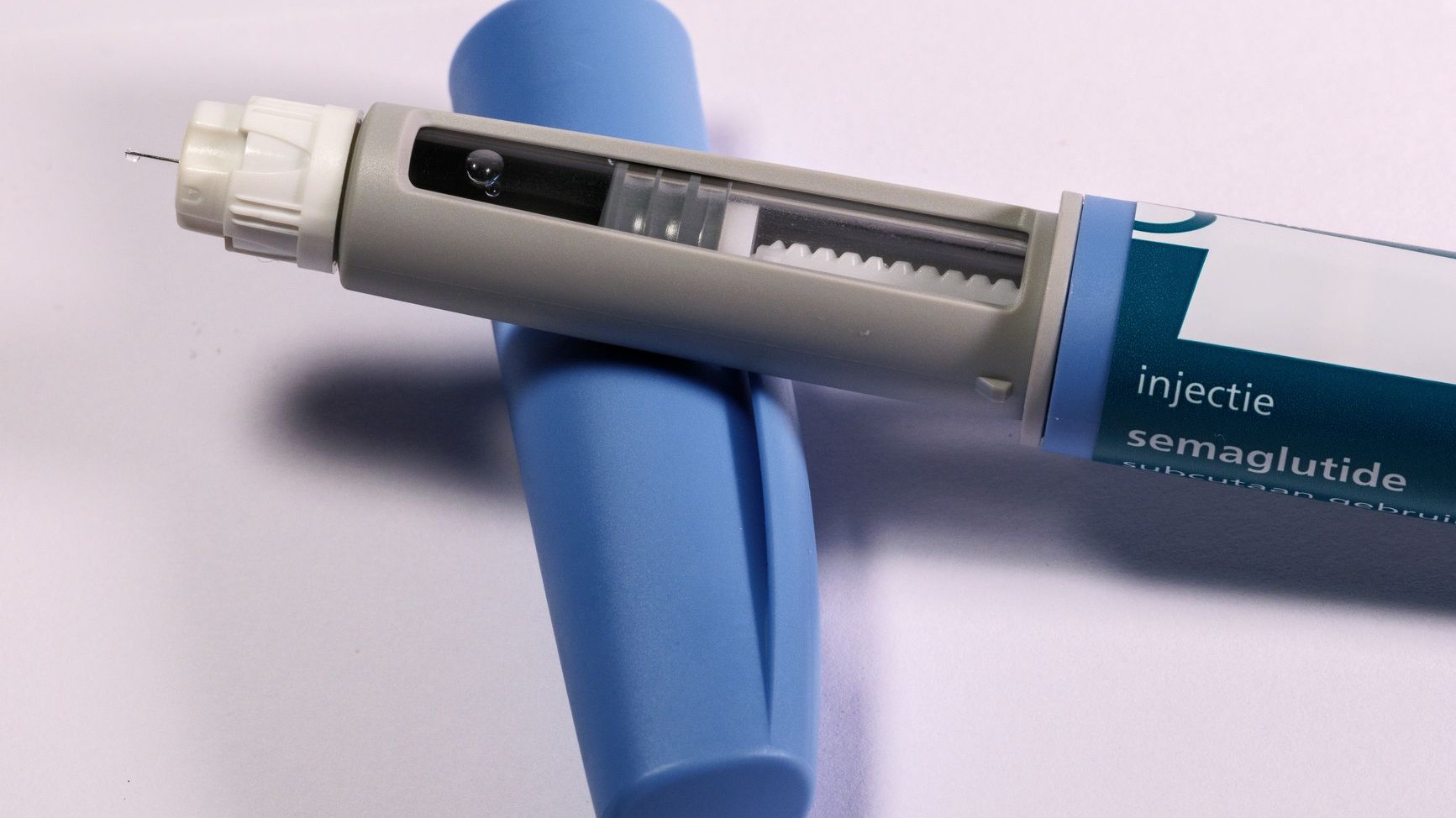
Roughly two out of every five kilograms lost on semaglutide can register on a body scan as lean mass rather than fat, according to the trial data that first triggered this conversation among obesity specialists. That figure isn’t rumour or marketing spin. Scans from the STEP-1 study showed that 39% of the weight lost on semaglutide was lean mass, and the SUSTAIN-8 trial found nearly the same at 40%. For anyone picturing a slimmer version of themselves after months of injections, that statistic lands awkwardly. It raises a fair question: if you’re not just losing fat, what exactly is disappearing?
Key takeaways
- Body scans can’t distinguish between muscle and water loss—the 40% figure likely overstates actual muscle loss
- Real-world data shows people get stronger while scales suggest weakness—a critical contradiction
- Protein intake above 1.3g per kg of body weight combined with resistance training almost eliminates muscle loss risk
What the scans are actually measuring
Before panicking about muscle wasting, it helps to understand what a DEXA (dual-energy X-ray absorptiometry) scan can and cannot tell you. These scans split the body into two broad categories: fat mass and Everything else, lumped together as “lean mass” or “fat-free mass”. The problem is that this second category is far messier than it sounds. Fat-free mass includes water, connective tissue, organs and bone, alongside actual skeletal muscle, and DEXA cannot separate one from the other. As one body composition specialist put it in a recent Medscape discussion, DEXA “does not measure skeletal muscle mass” directly, only the broader fat-free compartment that muscle sits within.
This distinction matters because about 40% and 50% of fat-free mass is skeletal muscle in women and men respectively, and adipose tissue itself also contains fat-free mass, since around 20% of it is fluid and protein. In plain terms: when you shrink a fat cell, some of what leaks away registers on the scan as “lean” loss too, even though no muscle fibre was involved. Some researchers who apply statistical corrections for this quirk find that reported lean mass loss shrinks considerably once the fluid shifts are accounted for, which suggests the raw 40% figure likely overstates true muscle loss for many patients.
What the trial data actually shows
The original STEP 1 trial, which enrolled adults with overweight or obesity, remains the most cited source for this debate. Percentage change in body weight from baseline to week 68 was -15.0% with semaglutide vs -3.6% with placebo. Fat did the heavy lifting: this resulted in reductions from baseline with semaglutide in total fat mass (-19.3%) and regional visceral fat mass (-27.4%), leading to 3.5%-point and 2.0%-point reductions in the proportions of total fat mass and visceral fat mass. But lean mass wasn’t untouched. Total lean body mass decreased from baseline (-9.7%); however, the proportion relative to total body mass increased by 3.0%-points. That last detail is easy to miss but genuinely reassuring, it means that while people lost some lean tissue, they lost proportionally far more fat, so the ratio of muscle to fat actually improved overall.
A broader systematic review looking across six studies involving 1,541 adults found a similarly wide spread. Notable reductions ranging from almost 0% to 40% of total weight reduction were observed in lean mass, which tells you this isn’t a fixed penalty everyone pays, it’s a spectrum shaped heavily by individual factors. Real-world data backs this up. In a study of patients using compounded semaglutide outside a clinical trial setting, individuals lost fat mass (2.67 kg) and trunk fat mass (1.10 kg), while also losing small amounts of lean mass (1.43 kg) and skeletal muscle mass (0.88 kg) over three months, and encouragingly, as a proportion of total weight, fat mass decreased while lean muscle mass and skeletal muscle mass increased.
Perhaps the most useful long-term data comes from the SEMALEAN study, which followed 106 patients with obesity for a full year. Weight loss was significant, with mean reductions of 10% at seven months and 13% at 12 months, while total fat mass decreased by 14% at seven months and 18% at 12 months, and lean mass initially declined (−3 kg at seven months) but stabilised thereafter. Crucially, function didn’t decline alongside the scale. Handgrip strength improved significantly (+4.5 kg at 12 months), and the prevalence of sarcopenic obesity decreased from 49% at baseline to 33% at 12 months. People got weaker on paper according to the lean mass numbers, yet stronger in their hands. That contradiction is the whole story in miniature.
Who should actually worry, and what helps
Not every patient faces the same risk. Age changes the calculation considerably, since bone and muscle loss naturally accelerates from the fifth decade onwards, and starting a GLP-1 medication on top of that decline can compound the problem for older adults. People losing weight very rapidly, those cycling weight up and down repeatedly, and postmenopausal women appear to carry higher stakes when it comes to preserving strength and bone density.
The good news is that the interventions which protect muscle during rapid weight loss aren’t exotic. Protein intake appears to be the single biggest lever available to patients. A meta-analysis of 47 trials and 3,218 adults with overweight or obesity found that higher protein intake significantly protected muscle mass during weight loss, with intake above 1.3 g per kilogram of body weight per day associated with muscle preservation, while intake below 1.0 g/kg/day carried a higher risk of muscle loss. Resistance training compounds that benefit further; combined with adequate protein, it has been shown in controlled conditions to prevent muscle loss even during a substantial calorie deficit, and in some cases to build lean tissue despite the deficit.
Practically, that means a handful of habits matter more than any supplement:
- Prioritising protein at every meal, spread across the day rather than loaded into one sitting
- Two to three sessions of resistance training weekly, even bodyweight work counts
- Requesting a baseline DEXA scan before starting treatment if access allows, so any future changes have context
- Discussing dose escalation pace with your GP if strength or energy dips noticeably
None of this is about discouraging use of these medications, which remain genuinely effective tools for people struggling with obesity. It’s about recognising that the scale alone was never a complete measure of progress, and a body composition scan, imperfect as it is, tells a far more useful story than weight loss percentages ever could on their own. As always, speak with your GP before starting or adjusting any weight loss medication, particularly if you have concerns about muscle strength, mobility or bone health.
Sources : dom-pubs.onlinelibrary.wiley.com | academic.oup.com