Introduction
“Natural” sleep is rarely about a single magic fix. In my experience as a health editor, the changes that last are usually the quiet ones: light at the right time, a bedroom that supports sleep rather than entertainment, and a wind-down that fits your actual life. When people search for sleep hygiene tips natural, they often want something practical that improves sleep quality without medication, dependence, or a complicated shopping list.
This guide focuses on behaviours and environment first, then adds gentle, evidence-informed natural supports. You will also find check-lists you can copy into your notes app and examples that work for different schedules. For medical advice, diagnosis, or treatment, consult your GP.
Why natural sleep hygiene makes a real difference
Definition and key principles of sleep hygiene
Sleep hygiene means the set of habits and conditions that help your body and brain fall asleep, stay asleep, and wake feeling restored. “Natural” sleep hygiene is not about refusing all modern life. It is about aligning daily inputs, such as light, timing, and stimulation, with how human sleep regulation works.
Two biological systems matter most:
- Circadian rhythms: your internal 24-hour timing system, strongly shaped by light and regularity.
- Sleep pressure (homeostatic drive): the longer you are awake, the more your brain builds pressure to sleep. Long lie-ins and late naps can blunt this.
Natural sleep hygiene tips work when they support these systems consistently. One perfect night does less than small, repeated actions over weeks.
Evidence-informed benefits of natural methods vs chemical solutions
Medication can be appropriate for some people under medical guidance, but it is not a long-term strategy for everyone. Many people mainly need better timing, fewer sleep-disrupting behaviours, and a calmer pre-bed routine. Clinical guidelines for insomnia typically recommend behavioural approaches, especially cognitive behavioural therapy for insomnia (CBT-I), as a first-line option because it addresses causes and reduces relapse risk. Sleep hygiene is a smaller piece of that behavioural toolkit, but it is often the easiest place to start.
Natural approaches also tend to avoid common problems associated with sedating products, such as next-day grogginess, tolerance, or interaction risks, though “natural” does not automatically mean safe for everyone. If you are pregnant, breastfeeding, have a long-term condition, or take medicines, check with your GP or pharmacist before using herbs or essential oils.
The pillars of good natural sleep hygiene
Regular timing and the power of routine
Regularity is the hidden lever. Your circadian rhythm learns from repetition, so a stable wake time is usually more powerful than a strict bedtime. Choose a wake time you can keep within about an hour across the week. Once mornings stabilise, evenings often become easier.
- Anchor your Morning-habits-secretly-draining-your-energy-start-feeling-refreshed-today/”>Morning-habit-secretly-sabotaging-your-immune-system-here-s-what-to-do-instead/”>Morning: get out of bed at a consistent time and seek daylight soon after waking, even if the sky is grey.
- Keep bedtime flexible: go to bed when sleepy, not simply when the clock says so.
- Protect sleep pressure: avoid long daytime naps. If you must nap, keep it short and earlier in the day.
If you want a structured plan, see the natural sleep routine page for a gentle 7-day build.
Create a sleep-supportive bedroom (light, temperature, noise, scent)
Your bedroom is an input to your nervous system. The goal is to make sleep the default response when you enter the room at night.
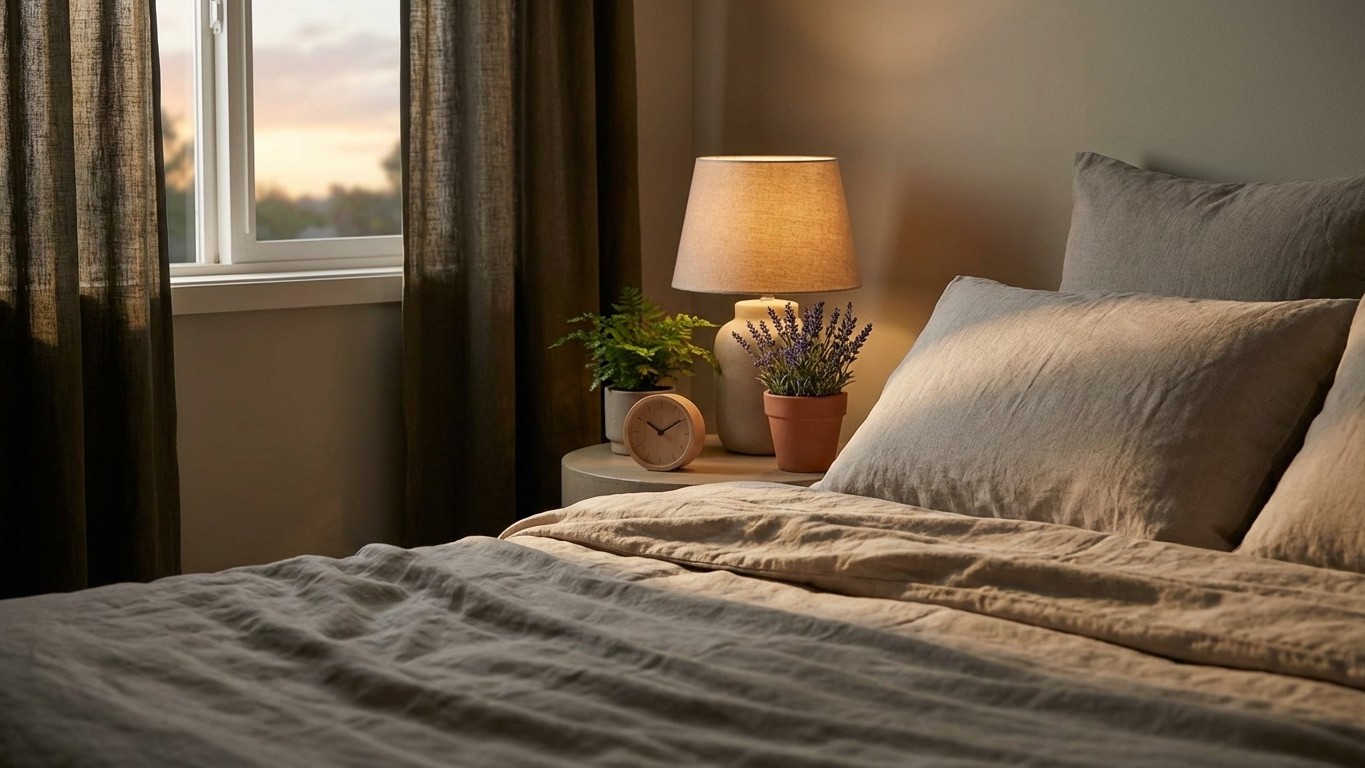
- Light: dim lights 60 to 90 minutes before bed. Keep the room dark while sleeping. If you wake at night, use a low, warm lamp rather than bright overhead lighting.
- Natural light during the day: morning and daytime daylight exposure supports circadian timing and can make evening sleepiness arrive more naturally.
- Temperature: most people sleep best in a slightly cool room. Adjust with breathable bedding, socks if your feet feel cold, and ventilation rather than overheating the whole space.
- Noise: if you cannot control outside sound, consider steady background noise (for example, a fan) to mask sudden changes. Sudden noises are more disruptive than constant ones.
- Smell: some people find lavender or similar calming scents relaxing, but keep it subtle. Strong fragrances can trigger headaches or irritation.
Instead of chasing a “perfect” setup, change one variable at a time for a week. That makes it easier to notice what genuinely improves your sleep depth.
Mental preparation: switching off, calming rituals, stress management
Many adults do not have a sleep problem as much as a downshift problem. Stress and sleep interact in both directions: a wired mind delays sleep, then the poor night increases stress reactivity the next day.
- Set a “last call” time for emails, news, and problem-solving. A realistic starting point is 45 minutes before bed.
- Create a short ritual that signals “day is done”: shower, skincare, stretching, reading, or a calming playlist.
- Use a worry list: write down tomorrow’s tasks and any looping thoughts, then close the notebook. This often reduces bedtime rumination.
If falling asleep is your main challenge, the page how to fall asleep faster naturally goes deeper into targeted techniques.
Food and drink: what helps and what harms sleep
Nutrition is rarely the only factor, but it can push sleep in the right direction, or quietly sabotage it.
- Caffeine: its effects can last longer than people expect. If you are sensitive, try a caffeine cut-off in late morning or early afternoon and see whether sleep improves over 10 to 14 days.
- Alcohol: it can make you feel sleepy, but it often fragments sleep later in the night and reduces perceived sleep quality.
- Heavy meals: large, rich dinners close to bedtime can worsen reflux and discomfort. A lighter evening meal, or finishing dinner earlier, helps many people.
- Going to bed hungry can also backfire. A small, simple snack may help if hunger wakes you.
- Fluids: hydrate earlier in the day. Reducing late-evening drinks can lower night-time bathroom trips.
Practical natural sleep hygiene tips you can use daily
Evening check-list: habits that support better sleep
Save this as your nightly template and tick off what fits. Consistency matters more than perfection.
- Pick a wind-down start time (for example, 60 minutes before bed).
- Lower household lighting and switch to warm lamps.
- Put phone on charge outside the bed area, or at least out of reach.
- Do a 5-minute tidy to reduce visual clutter that can feel mentally “unfinished”.
- Choose one calming activity: reading, gentle stretches, a warm shower, or quiet music.
- Write a quick plan for tomorrow (three priorities is enough).
- Set the bedroom: cool, dark, and comfortable bedding.
- If you wake at night, keep lights low and avoid checking the time.
If you like more structure, follow a minute-by-minute model on best bedtime routine for adults.
Examples of natural routines for different lifestyles
One reason generic sleep advice fails is that it ignores real schedules. Here are adaptable templates.
1) Busy parent or caregiver (limited personal time)
- After the last household task: dim lights immediately, even if you cannot go to bed yet.
- 10 minutes: wash face, brush teeth, brief stretch.
- 5 minutes: write tomorrow’s “minimum viable plan” and park worries on paper.
- In bed: read a few pages of a familiar book, keep it low-stimulation.
Focus on controlling light and mental load. Those two changes often deliver the biggest return when time is tight.
2) Office worker with late scrolling habits
- Set an alarm for “screens down” 45 to 60 minutes before bed.
- Replace scrolling with a fixed alternative: audiobook, stretching, or journalling.
- Keep the phone out of the bedroom if possible, use a basic alarm clock if needed.
Blue-enriched light and emotionally activating content can delay sleepiness. The practical fix is substitution, not willpower.
3) Shift worker or variable schedule
- Keep a consistent “anchor sleep” when possible, even if shorter, then add a nap to top up.
- Use bright light when you need alertness, then reduce light exposure as you move towards your sleep window.
- Protect the sleep environment during daytime sleep: blackout blinds, eye mask, and noise masking can help.
If shift patterns are affecting your health, discuss it with your GP. Individualised advice can be valuable here.
4) People who wake frequently at night
- Check for obvious triggers: late alcohol, overheating, late caffeine, or a too-bright bedroom.
- Use a consistent, low-stimulation response to waking: minimal light, no clock-checking, slow Breathing.
- If you feel wide awake for a prolonged period, consider getting up briefly for a calm activity in dim light, then return to bed when sleepy.
For the next step in this cluster, explore the idea of staying asleep using simple routines, because night wakings often respond to the same levers as falling asleep, just applied more gently and consistently.
Natural add-ons without dependence (teas, essential oils, breathing)
Think of these as supporting actors. They work best when your schedule and sleep environment are already moving in the right direction.
Tisanes and calming drinks
- Herbal teas are often used as part of a wind-down cue. Common choices include chamomile and lemon balm, though individual responses vary.
- Keep the cup modest in size to reduce night-time urination, and finish it 30 to 60 minutes before bed.
Evidence for specific herbs is mixed and product quality varies, so I treat teas mainly as a comforting ritual with a low risk profile for most adults. If you take medicines, ask a pharmacist about interactions.
Essential oils
- If you enjoy scent, use a low concentration and prioritise ventilation.
- Avoid applying undiluted oils to skin. Some can irritate or cause allergic reactions.
- If you have asthma, migraines, pets, or small children, be cautious and consider skipping scents entirely.
Breathing and relaxation exercises
- Try a slow-breath pattern: inhale gently through the nose, then a longer exhale. A longer exhale can feel calming for many people.
- Progressive muscle relaxation can reduce physical tension, especially if stress sits in your shoulders, jaw, or hands.
- A brief body scan helps shift attention away from racing thoughts and towards sensory grounding.
For a broader set of options, including routines and complementary approaches, see natural sleep remedies.
Common Mistakes and myths about “natural” sleep hygiene
The pitfalls of “natural” and limits to know
Natural strategies can be powerful, but a few patterns derail progress.
- Buying instead of building: gadgets, sprays, and supplements may distract from the basics, light, timing, and wind-down behaviour.
- Over-restriction: trying to fix sleep by banning everything enjoyable often creates stress that worsens sleep. Choose the smallest effective changes.
- Clock-watching: tracking every minute can increase performance anxiety. If data makes you tense, reduce monitoring for a few weeks.
- Assuming more time in bed equals more sleep: it can lead to lighter, more fragmented sleep. A stable wake time and a bedtime aligned with sleepiness usually work better.
- “It’s natural so it’s safe”: herbs and oils can still interact with medicines or irritate skin and airways.
How to adjust if classic tips are not enough
If you have applied core sleep hygiene tips natural approaches for two to four weeks and your sleep is still poor, refine rather than abandon.
- Tighten the morning anchor: wake time consistency and early daylight exposure are frequent missing pieces.
- Reduce “micro-stimulation”: intense workouts late evening, heated arguments, suspenseful TV, and doomscrolling can all keep adrenaline higher than you realise.
- Reassess the bedroom: overheating and light leaks are common causes of reduced deep sleep. Simple fixes can be more effective than new supplements.
- Look for patterns: do you sleep worse after late meals, alcohol, or certain stressors? A simple sleep diary for one week can clarify triggers.
- Consider structured behavioural support: CBT-I techniques go beyond hygiene and can be especially helpful for insomnia symptoms.
Seek medical advice promptly if you have loud snoring with choking or gasping, excessive daytime sleepiness, restless legs symptoms, or persistent insomnia affecting daily function. Consult your GP for medical advice.
FAQ: natural sleep hygiene questions
What is natural sleep hygiene and how do I start easily?
Natural sleep hygiene is a set of routines and environmental choices that support circadian rhythms and sleep pressure without relying on medication. Start with two steps: pick a consistent wake time, then dim lights and reduce screen stimulation in the hour before bed. Keep it manageable for seven days before adding more.
Which natural habits are genuinely effective for better sleep without medicines?
The most reliable levers are regular wake timing, daylight exposure in the first part of the day, a darker and cooler bedroom, and a predictable wind-down routine. Relaxation practices, such as slow breathing or progressive muscle relaxation, can help when stress is the main barrier.
How can I adapt my sleep hygiene if I feel stressed or wake frequently?
Prioritise a “downshift plan”: set a cut-off for work and emotionally activating content, write tomorrow’s plan to reduce rumination, and use a consistent response to night wakings with low light and calm breathing. If you wake due to stress, a short worry list earlier in the evening often helps more than trying to force your mind quiet in bed.
Do herbal teas and plants for sleep improve deep sleep?
Some people find herbal teas calming, mainly as part of a bedtime ritual. Robust evidence for large, consistent effects on deep sleep is limited and product quality varies, so treat them as optional support rather than the foundation. If you are considering herbs in supplement form, check with your GP or pharmacist, particularly if you take other medicines.
What is the ideal bedroom temperature for sleep?
Most people prefer a slightly cool room, but there is no single “perfect” number that fits everyone. Use comfort as your guide: cool air, breathable bedding, and avoiding overheating tend to support more stable sleep.
Action plan: a natural sleep hygiene routine you can follow
If you want a simple, organised way to apply sleep hygiene tips natural ideas, use this three-layer plan for the next 14 days.
- Layer 1 (Days 1 to 3): choose a consistent wake time, get daylight early, dim lights 60 minutes before bed.
- Layer 2 (Days 4 to 7): make the bedroom darker and cooler, move your phone away from the bed, reduce late caffeine or bring the cut-off earlier.
- Layer 3 (Days 8 to 14): add one calming practice, such as slow breathing, a brief stretch routine, or a worry list, and keep alcohol and late meals under review.
For medical advice, diagnosis, or treatment, consult your GP. If you would like a guided structure with examples you can follow night by night, build your next week using the natural sleep routine framework, then decide which lever you want to improve next: falling asleep faster, staying asleep longer, or waking feeling more refreshed.